
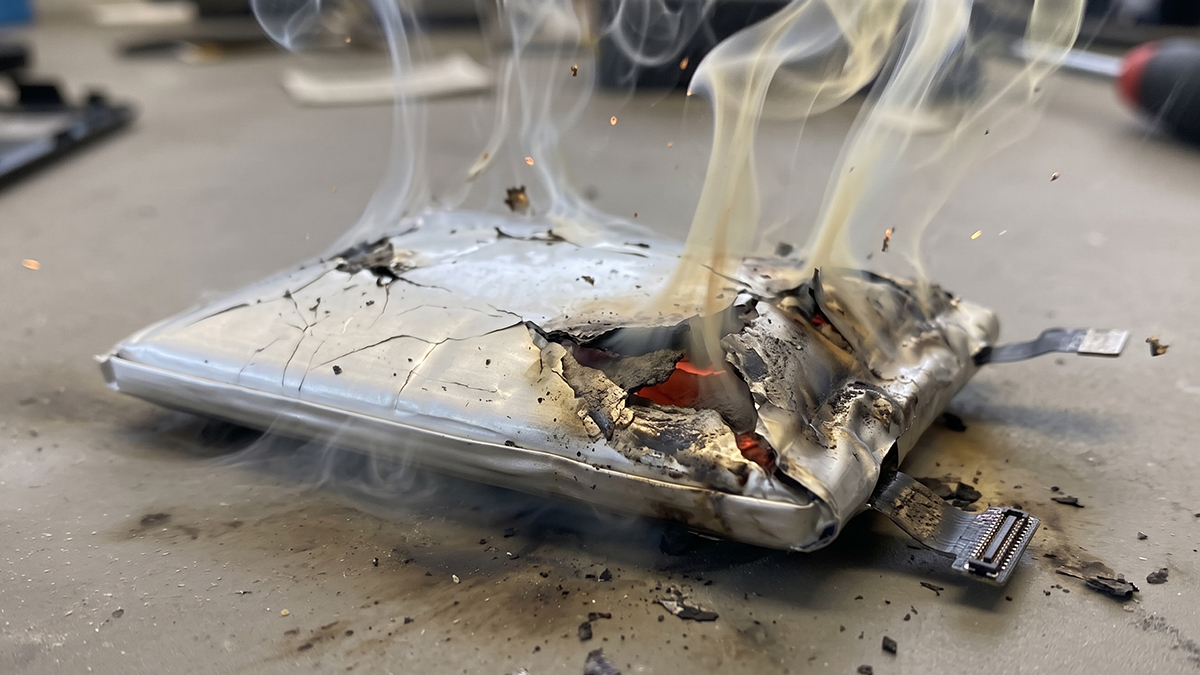
Batteries can present significant health and safety risks if they are damaged, misused or improperly stored.
Lithium-ion (Li-ion) batteries power many devices we use, including laptops, portable power supply packs, e-scooters, Uninterruptible Power Supplies (UPS) and research equipment. However, these batteries can pose serious safety risks such as fire, explosion, electric shock and exposure to toxic chemicals when not handled correctly.
Recent incidents at UNSW have highlighted the severe risks of inappropriate battery use. In one case, an attempt to disassemble a 38.1 kWh lithium-ion battery caused sparks, smoke and a ruptured cell that required Emergency Management to isolate it in a metal battery storage box. In other incidents, swollen laptop batteries have caused hardware damage, and the unsafe charging of personal transport devices has created potential fire hazards on campus.
When a lithium-ion battery fails, it can release highly toxic and flammable gases, vapours and smoke. In some situations, thermal runaway can occur, where heat rapidly builds and can lead to fire or explosion with no warning.
Follow these safe battery handling practices
Most battery-related incidents can be prevented through safe handling, storage and charging practices.
You are encouraged to:
- store lithium-ion batteries in a cool, dry place away from direct sunlight, heat sources and flammable materials
- regularly check batteries for signs of damage or swelling and stop using them if you notice abnormalities
- never attempt to disassemble a lithium-ion battery, contact the UNSW Safety Team for advice
- ensure any hazardous work involving batteries has an approved Risk Management Form (RMF), Safe Work Procedure (SWP) and written supervisor approval
- consider emergency response arrangements when undertaking fieldwork or offsite activities, particularly if batteries become damaged, swollen or compromised while away from campus
- do not charge large personal batteries, such as e-bikes and e-scooters, in offices or other indoor areas, and talk to your supervisor about suitable charging locations
- always use the manufacturer's approved charger for your device, disconnect the charger once charging is complete and never leave batteries charging overnight or unattended for extended periods
- stop using any battery that shows signs of damage, including unusual odours, hissing or crackling noises, overheating, bulging or leaking fluid.
Dispose of batteries safely
Never dispose of batteries in general waste or red bins as this can cause fires. Before disposing, cover battery terminals (the ends) with non-conductive tape, such as electrical, duct or clear adhesive tape.
Undamaged single-use and rechargeable batteries up to D size can be deposited in battery recycling boxes located at:
- UNSW Library Level 2 (near the main entrance)
- Arc Reception
- Basser College.
Find battery drop-off locations on the campus sustainability map.
For UNSW Canberra, ADFA battery recycling bins are located at Building 33 (AAFCANS). For battery disposal at UNSW Canberra City Campus, contact the Facilities Manager.
For larger quantities or damaged batteries:
- place in a clear plastic bag or glass jar
- complete the highlighted fields in the waste inventory form and email it to emgeneralservices@unsw.edu.au to arrange collection
- never place damaged, swollen or leaking batteries in collection tubes
- contact your local Safety Advisor for advice on how to safely handle damaged batteries before collection
- don’t store unwanted batteries in offices or workspaces for extended periods before disposal.
What should you do in an emergency?
If a battery begins off-gassing, smoking or catches fire, don’t attempt to extinguish it yourself.
You should:
- evacuate the area immediately
- close doors if it is safe to do so
- notify UNSW Security on 9385 6666 who will assist emergency services with site access and coordination and manage the broader campus response.
If you have any questions or need further information, contact safety@unsw.edu.au.
- Log in to post comments