
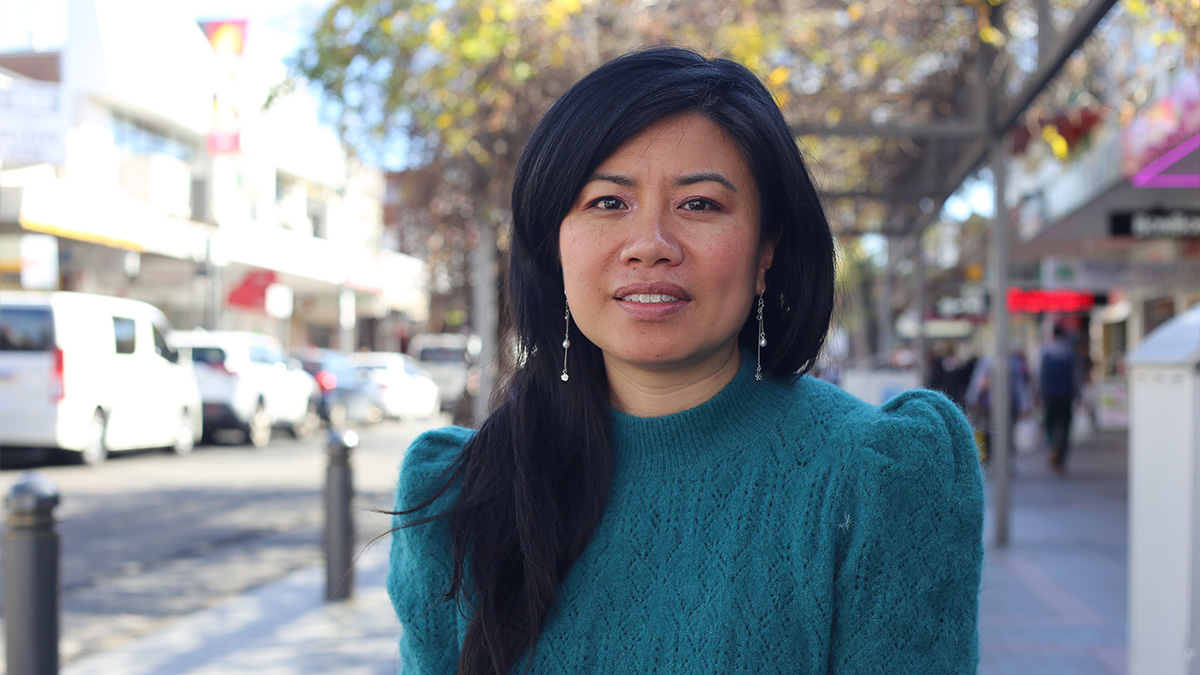
The Art & Design Senior Lecturer discovered metalworking as an outlet for her creativity, shaping a practice that brings together material experimentation, cultural identity and a love of learning.
Dr Bic Tieu describes herself as a “refugee baby” from a multilingual Chinese-Vietnamese family. Her grandfather migrated from China to Vietnam, and her family later left Vietnam after the war, eventually reaching Indonesia.
“They took that risk, they took that chance and jumped on a boat … and ended up on one of the islands in Indonesia, where I was born,” she says.
Bic grew up in Fairfield West and Cabramatta, where established migrant communities gave her family access to familiar food and culture.
“There are a lot of migrant communities out that way, and that’s why my parents chose to live in that area,” she says.
Finding her material
Crafting was part of Bic’s family life before she studied design. Her mother sewed and taught her how to cut fabric and make things at home, while her father worked as a labourer in a steel factory.
“My dad was a watchmaker as well, so he was always fiddling with small things … He used to bring home cut-out maps of countries like Australia and models of things made out of steel.”
While studying at the College of Fine Arts (CoFA), now the School of Art & Design, Bic had one career path in mind, but her studies soon took her in a different direction.
“I was always creative. In high school, my objective was to become a graphic designer. Then I took an elective in contemporary craft and jewellery and that completely changed my world. It felt really natural with the material.”
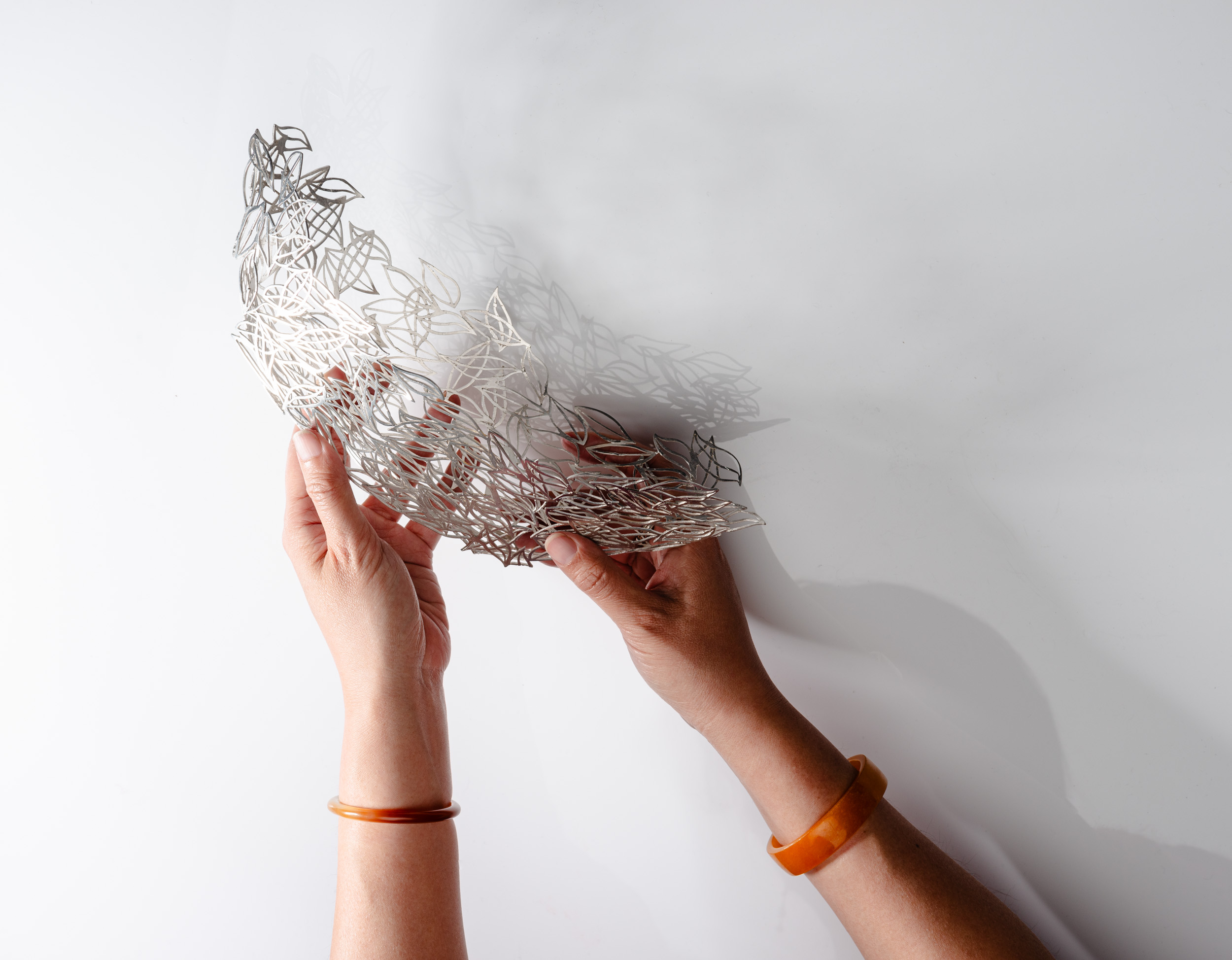
She began spending more time in the college workshops, where she made a sterling silver headpiece, invested in tools and continued developing her skills working with metal. The experience deepened her interest in jewellery and metalwork and helped shape the direction of her studies.
Bic later worked in commercial jewellery design and manufacturing, gaining experience in production, working to briefs and international trade while continuing to exhibit and develop her independent practice.
“I eventually left the commercial jewellery world because I knew that wasn’t in my heart, she says”.
Around that time, Bic was also experimenting with metal and wood as she began exploring the surface qualities of lacquer. Wanting to understand the material more deeply eventually led her to postgraduate study in Vietnam and later to living in Japan, where she continued developing her knowledge of materials and making.
Making identity visible
During her PhD, Bic began looking more closely at how her creative practice intersected with her personal history, particularly her experiences of migration, culture and identity. The research gave her a way to connect those experiences with the materials and making processes that had already become central to her practice.
“I would say my PhD really brought everything together. I’ve been feeling this [intersection of creative practice and personal history] all my life”.
As her project developed, Bic encountered the idea of ‘third space’, which gave her a framework for thinking about identity shaped across more than one cultural experience. It also helped her articulate how those questions could be explored visually through her creative practice.
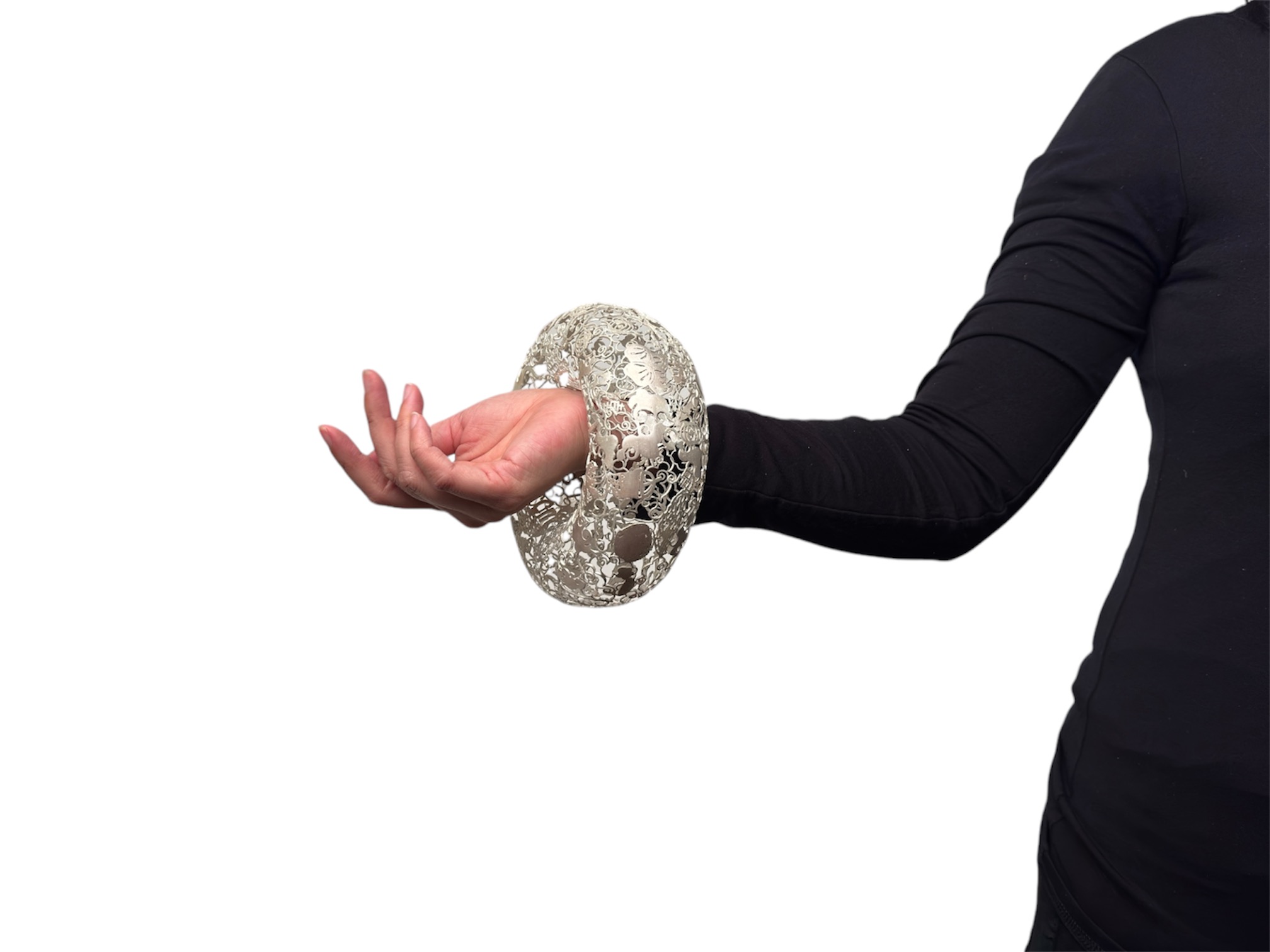
“My research topic was developing a visual language that articulated third space identity … that traverses migration, culture and those types of themes.”
Teaching through making
Experimentation, material knowledge and continued learning are central to Bic’s approach to teaching. For her, learning also extends beyond formal classes, with opportunities for students to spend time together through making.
“I create these jewellery clubs where we get together … I teach them a new skill, and we just hang out in the studios for a few hours and make things.”
Bic also values being able to follow students as their practice develops across their degree, from their first year through to graduation.
“I like to see students at various stages of their program and their journey … from first year to finishing and the in-betweens. Every three years they graduate, and so to build a new group, it’s always really challenging. It is a bit bittersweet, because they finally get to the end, which is what we want, to have great graduates.”
Bic’s curiosity about materials and developing new skills continues to shape the way she approaches learning and what she encourages in her students.
“I love learning materials. I love building skills. University is a place to make mistakes, experiment, do your best, try and shine. Our entire life is an iteration … I’m still learning. It’s just learning, training to be better, she says”.
Passing knowledge on
Bic remains closely connected to family traditions that continue throughout the year. Each April, she visits the cemetery for Tomb Sweeping Day, while the lead-up to the Moon Festival brings another annual ritual for her family.
For the festival, her family makes a particular mooncake that is prepared only once a year. The process of making it has become a familiar part of the annual celebration.
“It brings everyone together … there’s ceremony, there’s ritual, there’s family gathering and it’s intergenerational passing on knowledge.”
What’s something about you that might surprise your colleagues?
My Japan residency in learning and training traditional lacquer were supported by two patrons and art collectors from Melbourne. I would have never imagined that selling shoes in my undergraduate years would lead to patronage to work in a traditional lacquer studio in Japan years later. I am eternally grateful for this support and rare and unique experience.
What makes you happy?
Family gathering to make traditional moon cake. It’s a whole affair, bringing many hands together. I only get to eat moon cake once a year and it is so good.
What’s the best piece of advice you’ve ever received?
Be kind to all living things.
If you could relive one day in your life, which day would it be and why?
The early ’90s, just to see my A-gong (grandfather) preparing Lunar New Year dishes for celebration. He was an excellent chef.
What’s the best thing you’ve read in the last year?
I started reading Pachinko by Min Jin Lee. Then the University term started. I hope to finish it this summer.
- Log in to post comments