
As AI enters workplaces, homes and communities, a UNSW Canberra researcher explores how emerging technologies can support more inclusive, collaborative, joyful and sustainable living with technology.
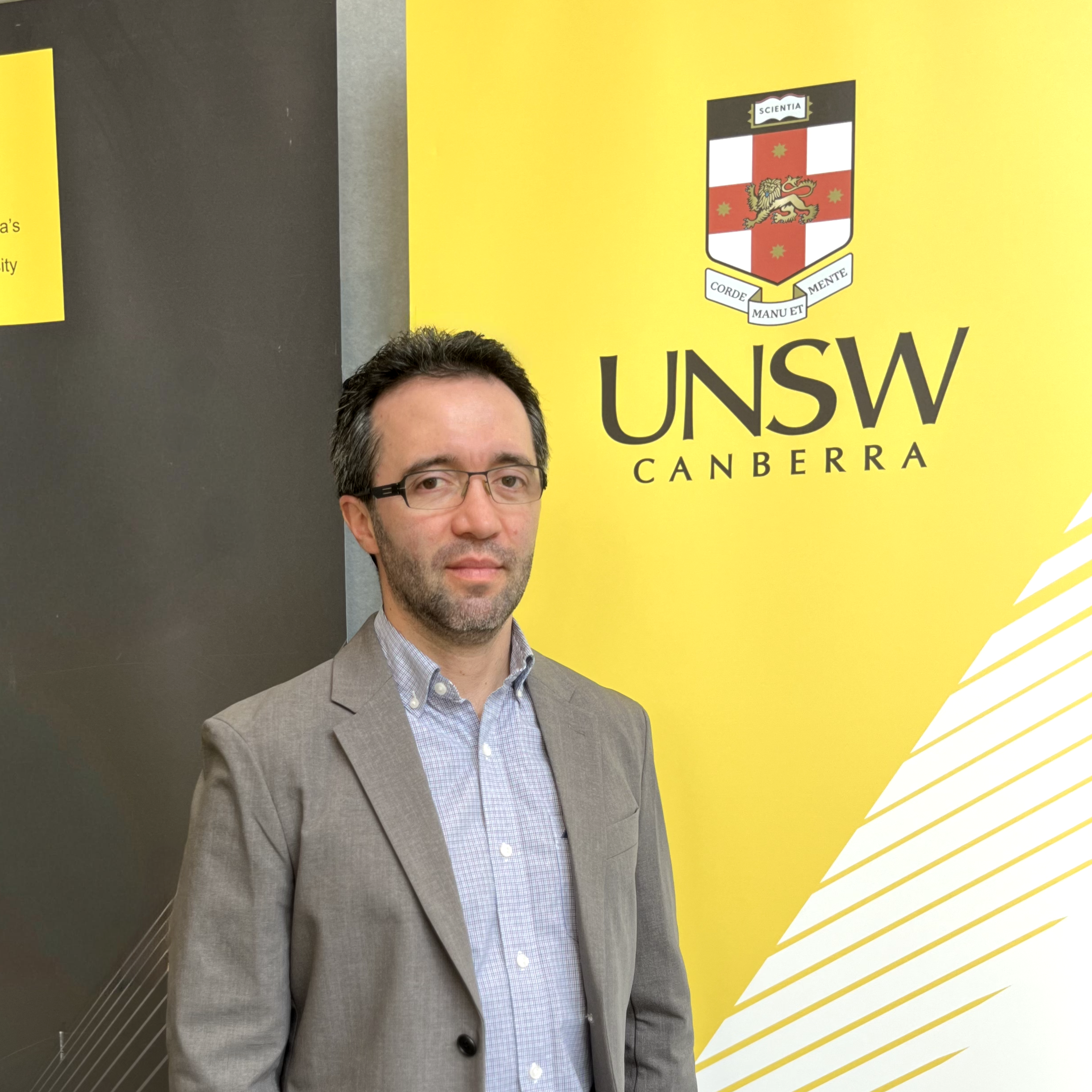
Dr Josh Andres in the School of Systems and Computing at UNSW Canberra co-leads the Human–Machine Experience Group (HuMaX), where researchers investigate the design, experience and futures of emerging technologies. His work in human–computer interaction and interaction design examines how people use technology, and how communities can actively shape the technologies that are becoming part of their lives.
“By designing and prototyping how emerging technologies might enter existing relationships early on, before models, datasets or interfaces are developed and deployed, we encounter questions around fairness, accountability, transparency and social dynamics that can help shape the technology,” Dr Andres says.
For Dr Andres, this means moving beyond the idea of AI as simply a ‘tool’ used by an individual. Increasingly agentic, multimodal and physical forms of AI can play more active roles than traditional technologies, from asking questions and responding to people and environments, to influencing how information, decisions and inquiry unfold.
“Recognising this larger picture beyond technology optimisation is important to carefully shape the technologies we are creating today and the futures they may enable,” Dr Andres says.
Translating and activating research for impact
Across Dr Andres’s research, these questions are explored in areas including people’s participation in the energy transition, supporting veterans as they move into civilian life and work, technologies for health and wellbeing, and AI in outdoor experiences.
While each of these areas is different, they raise a common question around what happens when technology becomes embedded in activities, relationships and places that people value.
An AI system introduced into a workplace, for example, can change more than how quickly someone completes a task. It can influence how decisions are made, how people collaborate and where responsibility sits. An intelligent machine entering a home can similarly reshape relationships between technology, care and independence.
For Dr Andres’s group, addressing these questions means working beyond disciplinary and institutional boundaries. His research involves collaboration across schools and with communities, government, industry, policy, other universities and research institutes.
“Building those communities is vital. We need to understand people’s needs and experiences and involve them throughout the research journey to shape the technologies that may become part of their lives,” Dr Andres says.
This also shapes how the group is building its approach to research, embedding from the start ways to make findings and insights accessible through activities, reports and recommendations, and to work with the communities helping shape the research to translate those insights into practice.
The aim is to create technologies, methods and design approaches that are explainable, ethical, usable and enjoyable, to support communities and organisations to make more deliberate choices about where and how emerging technologies could be designed and used.
Looking five years ahead
When considering AI’s future, Dr Andres points to the way debate is often framed as a binary choice between technological utopia and catastrophe.
“There is the Terminator scenario and the Astro Boy scenario,” he says. “In the Terminator scenario, AI goes rogue. And in the Astro Boy scenario, AI represents the best of humanity.”
For Dr Andres, these extremes leave out a much larger space of possible futures that societies can actively shape.
“We need new stories that help us imagine and shape future technologies beyond this binary,” he says.
Over the next five years, Dr Andres hopes to see greater attention given to how AI capabilities shape the kinds of lives, relationships and environments we create.
That means asking how emerging technologies might support health and wellbeing, contribute meaningfully to the energy transition, support people through major life changes, and complement rather than displace valued experiences such as being outdoors.
The future of AI is about where technology belongs, what role it plays and how we want to live with it.
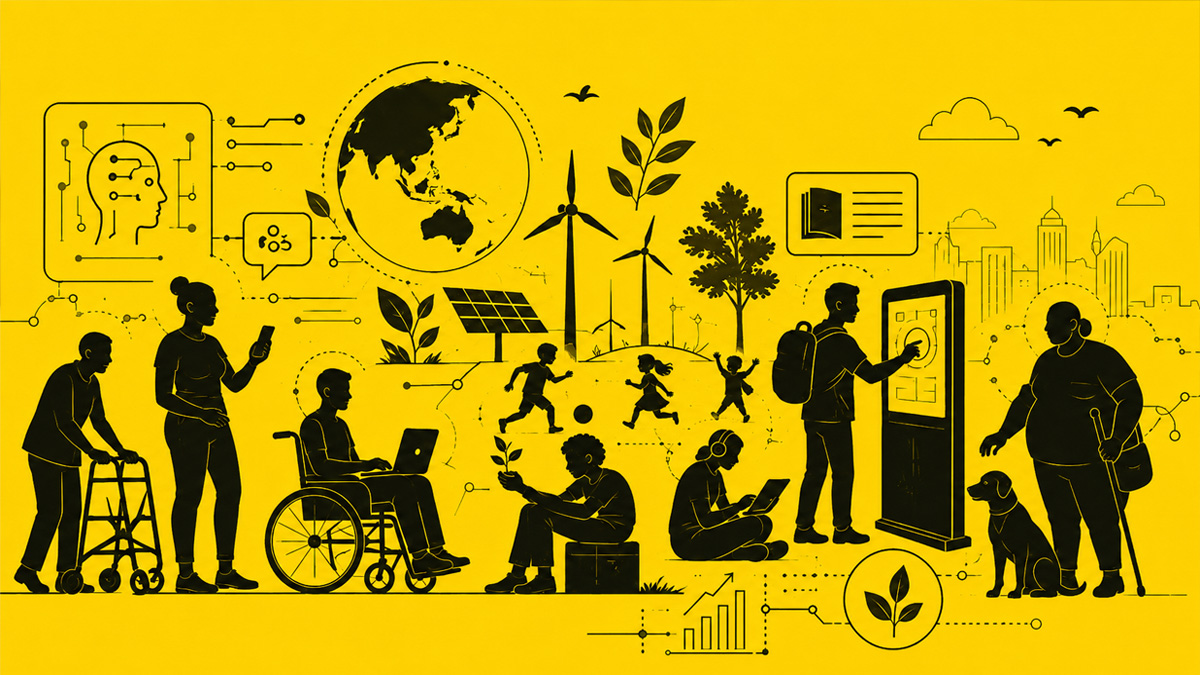
Photo: Sourced using AI: ChatGPT with the prompt "Illustration depicting people of varied ages, body types, and abilities learning, using technology, alongside children playing outdoors, animals, trees, and renewable energy".
- Log in to post comments