
UNSW Resilient Democracy Lab and the Centre for Public Integrity co-hosted the Money, Power and Democracy workshop.
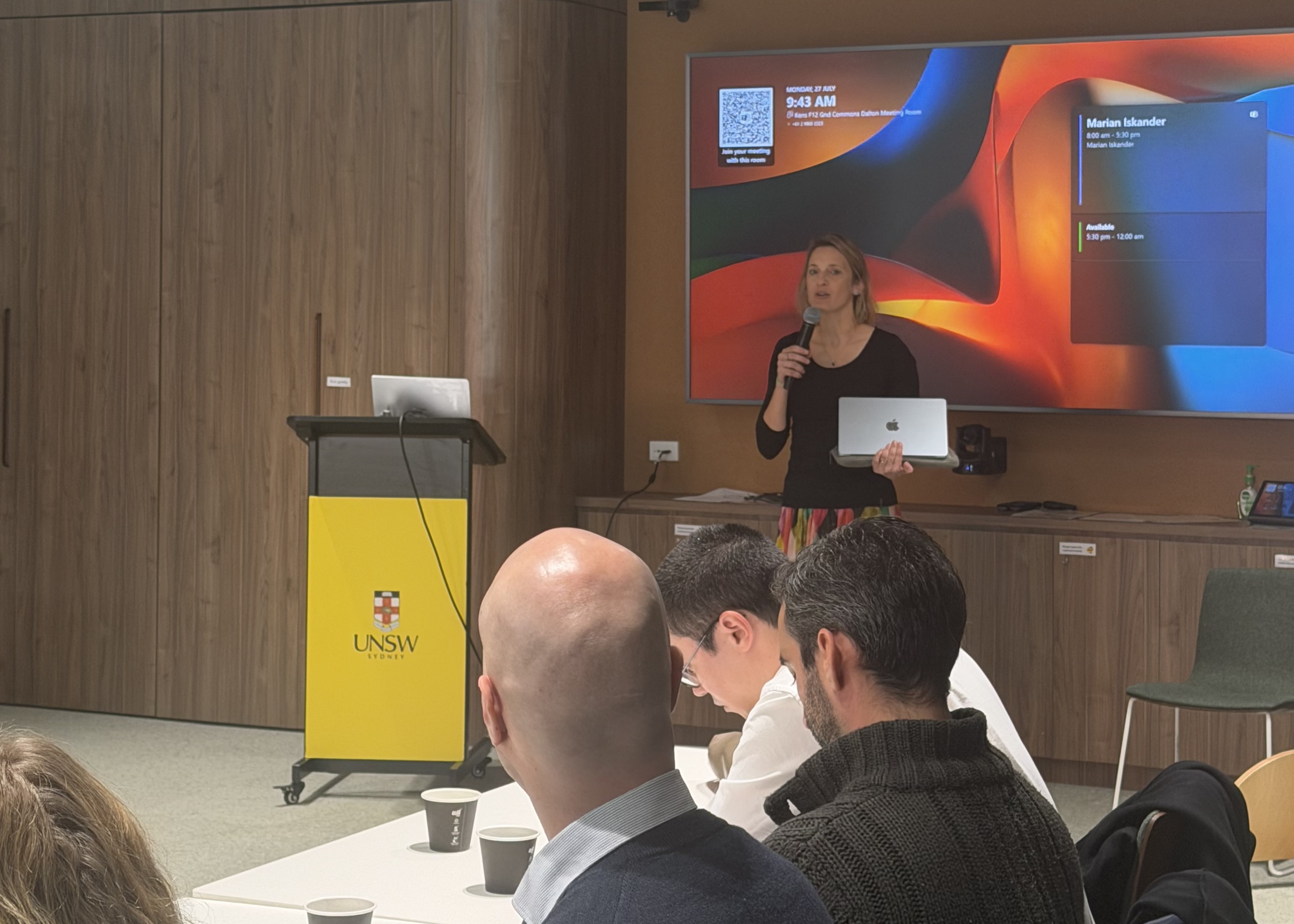
Recently, the UNSW Resilient Democracy Lab and the Centre for Public Integrity co-hosted Money, Power and Democracy. The workshop brought together leading Australian and international experts to examine how to regulate the relationship between money, political power and democratic participation.
A genuinely multidisciplinary group of scholars, practitioners and reformers, including political scientists, economists, legal academics, practising lawyers, advocates and policy experts attended. Across the day, participants explored how the different disciplines might inform reforms to Australia's political finance system, drawing on research on the political economy of money and power, campaign finance regulation, constitutional law, electoral administration and institutional design.
New challenges and transparency
New research presented at the workshop highlighted new challenges for campaign finance and lobbying regulation in an era of increasing market concentration, superstar firms and Big Tech platforms.
Professor Matilde Bombardini (UC Berkeley) presented new evidence that the rise of passive investing is redirecting lobbying and campaign finance activity towards more concentrated interests. Professor Gabriele Gratton (UNSW Business School) identified mechanisms through which firms with substantial market power may acquire political influence beyond the reach of conventional campaign finance and lobbying rules. Using new data on personal connections between business owners and politicians, Assistant Professor Kieu-Trang Nguyen (University of Melbourne) showed how greater media and voter scrutiny can reduce business influence over politics.
Participants also noted the limited transparency and availability of Australian political finance data. This constrains Australia-focused research and weakens the capacity of journalists and voters to scrutinise political influence. Greater transparency would both strengthen the evidence base for reform and help limit undue business influence in politics.
From evidence-based diagnosis to concrete proposals
Beyond diagnosis, the workshop focused on institutional design. Led by Dr Catherine Williams, Executive Director at the Centre for Public Integrity, and Professor Gabrielle Appleby (UNSW Law & Justice) and also from the Centre for Public Integrity , participants considered possible new directions for political finance regulation in Australia and worked collaboratively through proposals for reforming Commonwealth electoral finance laws.
The workshop showcased the unique and complementary strengths of the two centres. The UNSW Resilient Democracy Lab brings together multidisciplinary perspectives on the challenges facing modern democracy, while the Centre for Public Integrity is Australia’s leading public law think tank. Together, the Lab and Centre were also able to connect academics and practitioners from across Australia working on these questions – including lawyers advising in this area and representatives of the Grattan Institute, the Australia Institute and the McKinnon Institute.
By combining legal, political and economic expertise with the experience of practitioners and advocates, the workshop was a showcase of the benefits of collaborative research-driven engagement for public policy reform.
- Log in to post comments