
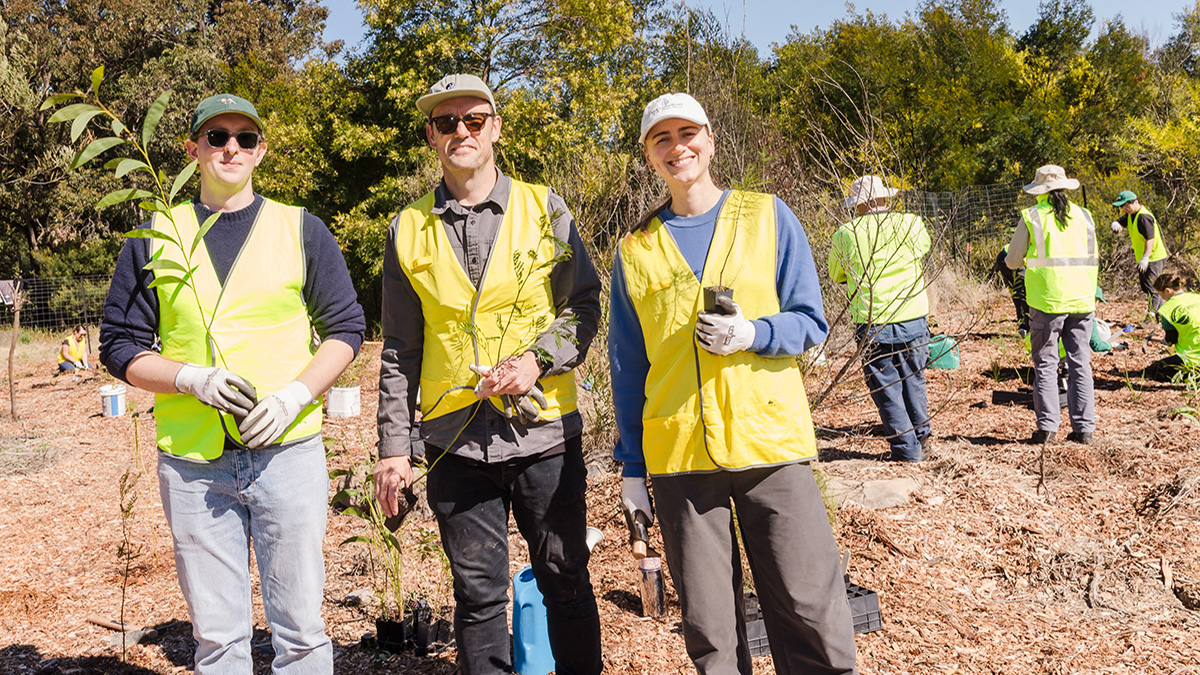
UNSW staff joined Greenfleet at Lucas Heights to plant 1000 native trees, helping restore an endangered forest on Dharawal Country and extend habitat for local wildlife.
In August, UNSW staff joined environmental not-for-profit Greenfleet and volunteers from other organisations to plant native species including Bottlebrush, Silver Stemmed Wattle, Red Mahogany and the endangered Turpentine tree. UNSW staff included , Charles Angew, Head of Sustainability, Sophie Barkla, Sustainability Engagement Manager, and Isaac Gunther, Lab Sustainability Officer.
The planting is helping restore the Sydney Turpentine Ironbark Forest, an endangered ecological community that is legally protected. Extending the conservation area also helps strengthen wildlife habitat and may provide potential habitat for locally endangered koala populations.
“Planting native forest is a practical way we can contribute to restoring biodiversity and supporting healthy ecosystems beyond our campuses. It’s also a great example of how our partnership with Greenfleet turns our sustainability commitments into action,” said Charles.
UNSW has partnered with Greenfleet since 2022 to support the restoration of native forests as part of the University’s approach to addressing its scope 1 greenhouse gas emissions. The projects also help restore biodiversity, improve soil and water quality, provide habitat for wildlife and capture carbon.
The Lucas Heights planting adds another 1000 trees to that ongoing effort – contributing to a healthier native forest for the future.
Photo top (left to right): Isaac Gunther, Charles Angew and Sophie Barkla.
- Log in to post comments