
Dear colleagues
A defining strength of UNSW as a world-leading university is the breadth of fields in which our people are achieving excellence and creating impact. I am delighted to share that a range of UNSW programs and projects have been recognised in the 2026 Australian Good Design Awards. The projects span education, student success, sustainable materials and computational design. These projects demonstrate how our people are addressing important challenges and translating knowledge and innovation into positive outcomes for students and communities.
The UNSW Academic Success Monitor received a Gold Award in the Education Services category, recognising an innovative approach to teaching and student support. Combining predictive analytics, AI-enabled outreach and human expertise, the platform helps identify students who may be at risk of falling behind and connects them with timely, personalised support. It now supports approximately 65,000 students across UNSW, with courses using the platform recording a significant reduction in failure rates. This is an outstanding example of our commitment to ensuring students are supported to succeed throughout their time at UNSW.
BioShelter, a collaboration between UNSW Arch_Manu, UNSW Design Futures Lab and UNSW Computational Design in partnership with Multiplex, Infrastructure NSW and the Sydney Fish Market, received a Best in Class award in Design Research. The innovative 3D-printed reef structures have been placed around Wattle Bay near the new Sydney Fish Markets to help reestablish oyster populations and other sea life in Sydney Harbour.
UNSW’s Centre for Sustainable Materials Research and Technology (SMaRT@UNSW) Green Ceramics – Engineered Surfaces received a Gold Award in Product Design: Hardware and Building, recognising its work to transform problematic waste streams into new hard surface products with high-performance standards that are also silicosis free. SMaRT received the award in collaboration with Liverpool City Council, which operates a Green Ceramics MICROfactorie™ producing engineered ceramic tiles from glass and textile waste.
Further recognition was received by the Kirby Institute’s Count Us In campaign, which won a Good Design Award in the Communications and Advertising Campaigns category, and by UNSW College and blueegg in the Education Services category.
I congratulate all the teams involved. Their achievements reflect the many ways that UNSW is creating positive impact through education, research, innovation and collaboration. Read more about the UNSW projects and programs recognised in the 2026 Good Design Awards Newsroom story.
2026 Australian Mental Health Prize
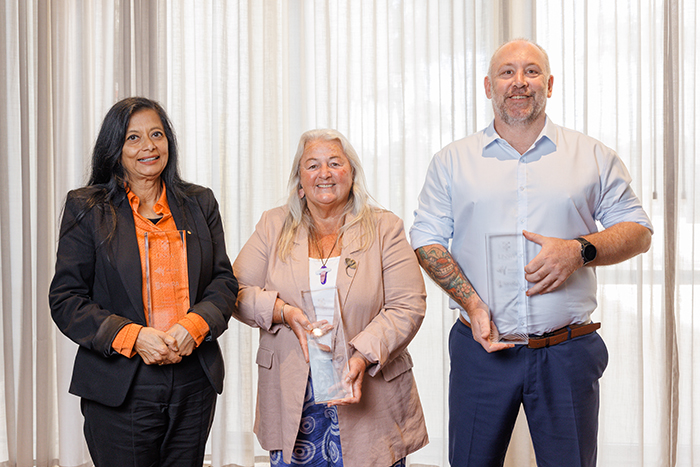
The 2026 Australian Mental Health Prize was held last week, recognising Australians who have made outstanding contributions to the promotion of mental health or the prevention or treatment of mental illness. Congratulations to this year’s winners Dr Elizabeth McEntyre, Michael Elwan, Professor Jayashri Kulkarni AM and Luke Baker.
UNSW is proud of our long association with the Australian Mental Health Prize and our partners, the Black Dog Institute and Neuroscience Research Australia (NeuRA). These partnerships bring together research, clinical expertise, lived experience and community leadership, helping to translate knowledge into meaningful support and positive change for Australians living with mental illness. Read more on the UNSW Newsroom.
Protection for victim-survivors of financial abuse
The Government’s recent response to the Parliamentary Joint Committee inquiry into financial abuse is a milestone for UNSW’s Progress for All research impact. Financial abuse is a form of domestic and family violence where perpetrators use the tax, superannuation and child support systems or coerced debts and liabilities to inflict ongoing coercive control and abuse. Professor Ann Kayis-Kumar from the School of Accounting, Auditing & Taxation has undertaken extensive research and sustained engagement with government to advance law and policy reform in this area. This is a powerful example of UNSW research driving national reform to improve the lives of vulnerable people across Australia. Congratulations to Professor Kayis-Kumar and the UNSW Tax and Business Advisory Clinic for their effective work on preventing financial abuse.
UNSW 2027 NSW Rhodes Scholar-Elect
I’m pleased to share that UNSW graduate Tess Rickard has been named the 2027 NSW Rhodes Scholar-Elect. Tess graduated from UNSW in 2025 with a Bachelor of Engineering (Honours) in Renewable Energy Engineering, achieving First Class Honours and the University Medal and is now an Ausgrid Graduate Engineer.
Her work in renewable energy engineering, combined with her experience in energy systems and sustainability, reflects the kind of purpose-driven leadership our country and the world needs to address some of the world’s most pressing challenges.
At Oxford, she will further explore the economic, political and social dimensions of the energy transition, with the ambition of returning to Australia to contribute to the future of our energy systems. I’m sure you will join me in congratulating Tess on this well-deserved achievement. Read more on the UNSW Newsroom.
Connecting with UNSW alumni in Jakarta
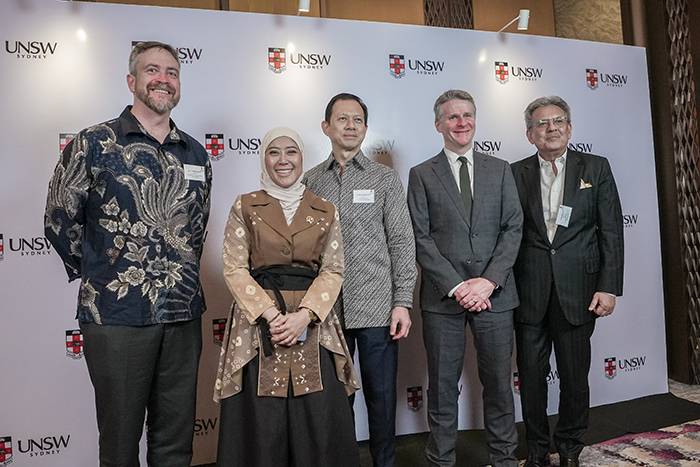
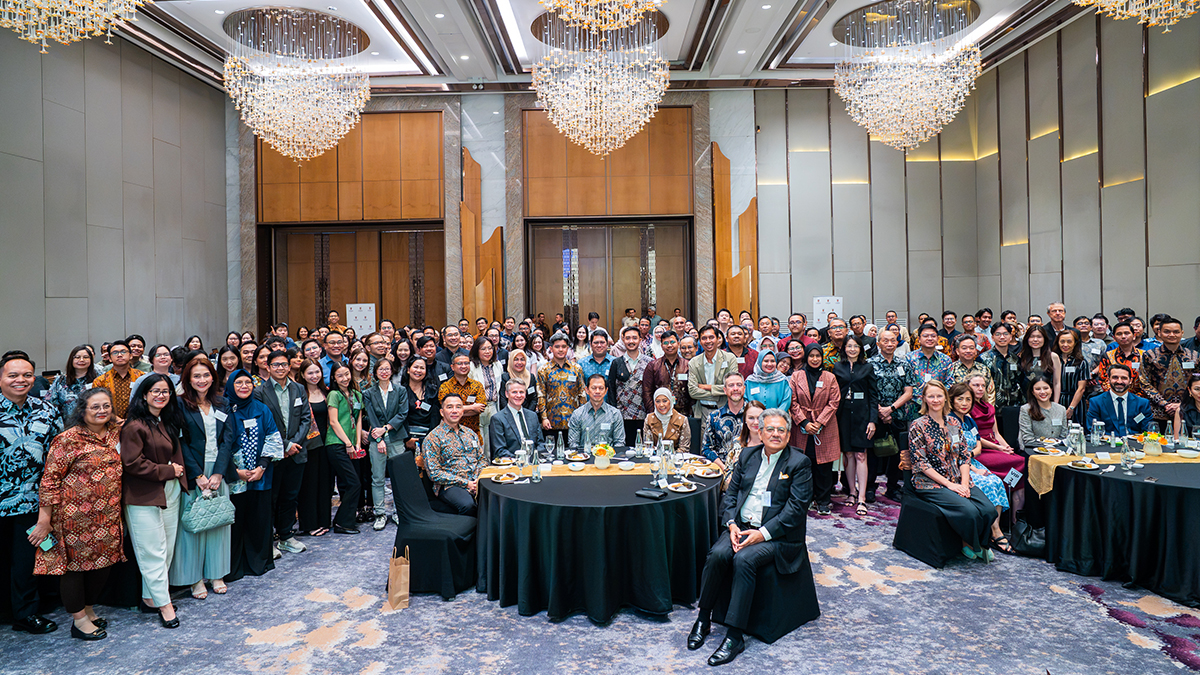
I recently travelled to Indonesia and had the great pleasure of meeting with many alumni, including The Honourable Meutya Hafid, Minister of Communications and Digital Affairs and a proud UNSW graduate, and Darwin Sariaatmadja, one of Indonesia’s prominent business leaders and a proud alumnus. We gathered with partners and friends of UNSW for an alumni event in Jakarta (pictured top). The event celebrated UNSW’s longstanding relationship with Indonesia and marked the reestablishment of the formal UNSW Indonesia Alumni Chapter. We had more than 130 expressions of interest in joining just the Chapter Leadership Committee! This enthusiasm is a wonderful reflection of the strength, commitment and generosity of the UNSW community around the world.
With more than 410,000 alumni across 160 countries, our global alumni network is one of UNSW’s greatest strengths, helping extend our impact and build lifelong connections between the University and the communities we serve.
There’s more to read Inside UNSW …
- Expressions of interest are now open to nominate for positions on the new UNSW Disability Governance Committee. The Committee will report to UNSW’s Council and will provide advice and oversight on UNSW’s work to advance disability inclusion and accessibility.
- UNSW is working with Pacific partners to advance locally led climate solutions and strengthen the region’s voice ahead of COP31. Find out more.
- Nine UNSW Sydney researchers have been elected as new Fellows of the Australian Academy of Health and Medical Sciences (AAHMS), one of the country’s most prestigious honours in health and medical sciences. Congratulations all!
- Professor Michael Thielscher has been developing AI for more than 25 years. In this edition’s AI Insider he discusses two cross-disciplinary projects he is working on with colleagues: a digital assistant for planners, developers, government staff and the public called Urban Copilot, and digital skilled companions, animated life-sized humans on large screens that are helping to deal with issues like loneliness in aged care settings.
- Associate Professor Adam Fish in the School of the Arts & Media is a cultural anthropologist, archaeologist, documentary video producer and interdisciplinary scholar. A recent project, working with the Eastern Kuku Yalinji in Far North Queensland, advocated for a community-led solar and battery system. Read more in this edition’s staff profile.
Best regards
Attila
Professor Attila Brungs
Vice-Chancellor & President
- Log in to post comments