
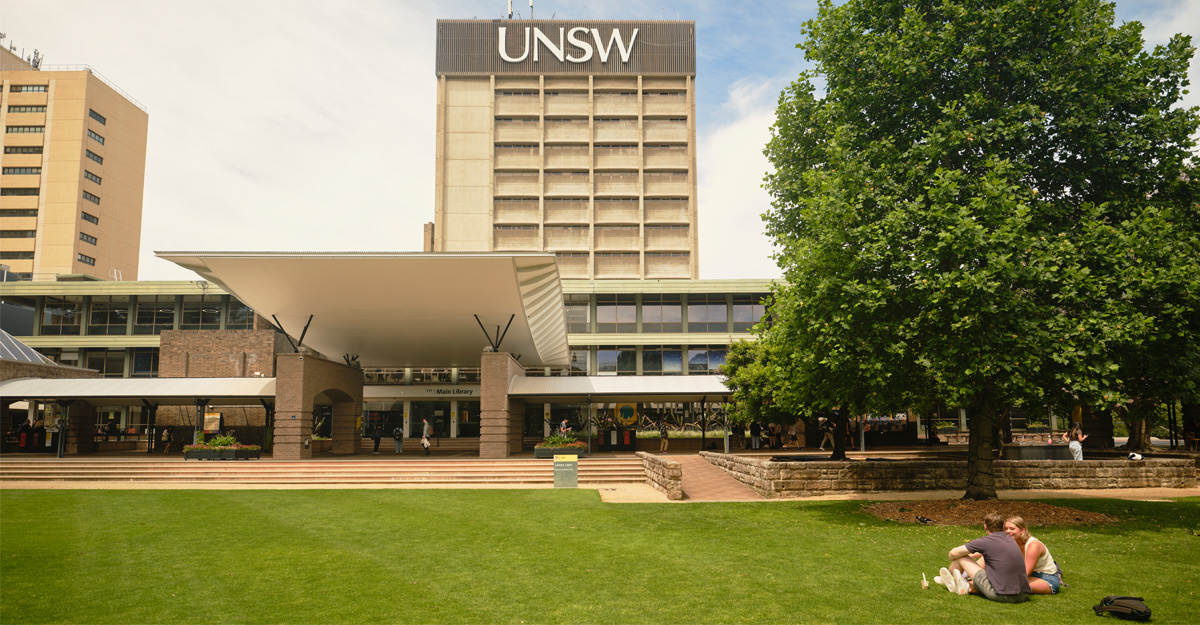
The VC’s visits to faculties and divisions in the second half of 2025 as well as the December All Staff Town Hall highlighted our new UNSW Strategy: Progress for All, pillar by pillar.
This has been another very busy year for UNSW and the higher education sector, with plenty to discuss in the Q&A sessions of the VC’s visits to faculties and divisions. Thank you to all who asked questions and shared insights.
UNSW Strategy: Progress for All
Our new 2035 strategy was launched on 19 February 2025, setting out our mission, values and vision for the next decade. It was an exciting culmination of comprehensive consultation with our community of students, staff, alumni, Council, and industry and government partners.
In his presentations, the VC highlighted our UNSW Strategy: Progress for All, taking staff through each of the nine pillars and providing examples of work we are already doing across the University that draws on UNSW’s unique areas of expertise and areas where we can ‘turn the dial’.
These real-world examples emphasise a different approach to implementing the strategy, embedding it by making it a part of everyone’s day-to-day planning and decision-making. For example, read about the Food Security Strategy, which aligns with multiple strategic pillars, in this issue of Inside UNSW.
The UNSW Strategy: Progress for All places emphasis on the impact of UNSW research – for example, impact on policy – and in 2026 we will be looking more closely at how we shine a light on, measure and celebrate societal impact. Our Societal Impact Framework evaluation will have measures for how successful we are, and our storytelling will be an important part of explaining the value of UNSW research to the broader community, and to government.
Our strategy will be delivered over three-year periods and in October we launched our Triennium One Roadmap (2026-2028) which sets out our key initiatives for the next three years to advance progress for all. Each of these three-year periods will be bro ken down into annual operational plans which will identify what will be delivered each year.
Academic Calendar implementation
On Wednesday, 16 April, UNSW’s new flex-semester calendar – with the flexibility to deliver differentiated learning experience to diverse student cohorts – was announced. It followed 18 months of consultation with thousands of students and staff providing insights and feedback.
The transition to the new calendar, to be introduced in 2028, will be supported by thorough planning, stakeholder engagement and management of workload during major changes.
The Academic Calendar Project Team toured Kensington campus in October and November, hosting six Faculty Roadshows. They are also connecting with colleagues in reference groups, working groups and project streams to ensure the transition is clear and truly student focused. In the new year, the team will launch student communications including an updated student website. Read the team’s monthly update on the Flex-Semester Transition Sharepoint site.
Productivity
At UNSW, productivity is advanced advanced through our university’s ability to generate rigorous, research-driven innovation, develop highly skilled graduates and deliver societal impact that aligns with national priorities. Critically the role of the universityis to drive the government to ensure productivity improvements are broad based productivity, not confined to single sectors of industries, so that all parts of society and all Australians receive the benefits. UNSW works closely with government to ensure policymakers have access to world-leading evidence and expertise, reinforcing a shared commitment to lifting Australia’s broad-based productivity. This is reflected in UNSW’s strong research performance, which fuels innovation, and our position as Australia’s number one institution for employability outcomes, which strengthens the workforce. In addition, UNSW’s leadership in start-ups, spin-outs and industry-engaged HDR pathways help accelerate the diffusion of new ideas into businesses and government.
The recent UNSW Productivity Showcase at Parliament House highlighted these strengths, featuring researchers whose work addresses critical national challenges – from energy storage and cybersecurity to AI, housing, taxation, health and advanced manufacturing. Feedback from government, opposition and crossbench representatives affirmed UNSW’s growing impact, demonstrating that productivity at UNSW is ultimately measured by the positive societal outcomes our University helps create.
The size of the University
UNSW continues to operate in a financially uncertain environment largely driven by government policy, as do all Australian universities, but the core message remains consistent: with ongoing prudence and careful management of discretionary expenditure, our University is well positioned for the future.
We have received our allocation for international and domestic students for 2026, including a reduced number of international students and a cap on domestic student
intake. Despite these constraints, UNSW remains in a sound financial position, and thanks to disciplined spending across the University, we are on track to achieve the self-generated operational surplus required to support our capital program. Over the next four to five years, UNSW will need to generate annual operational surpluses of approximately $300+ million to fund essential campus reinvestment, including refurbishment or replacement of ageing infrastructure, as well as to provide the new student accommodation, new staff amenities, and new research facilities that we require given our scale.
Campus Development Plan
Many of you watched the online all-staff Town Hall last Tuesday, 2 December, where UNSW Vice-President Operations and Chief Operating Officer Tobi Wilson spoke about the Campus Development Plan. This major refurbishment and renewal project will enhance the University’s vital areas including teaching and learning, and research environments, as well as student accommodation. It will be delivered in four stages through to 2040, ensuring a coordinated and strategic approach to refurbishments, new buildings and infrastructure improvements.
The Campus Development Plan aligns with UNSW’s strategic principle of setting our next foundations and equipping the University for future generations. It also aligns with Pillar 5, creating vibrant, open, connected and accessible university environments that inspire our community.
Top of mind for some who attended the VC visits was replacement of the pool and fitness centre. You can rest assured that the old pool and gym won’t close until the new centre is ready to open. It will also change location to make way for new engineering and science facilities.
A recuring question was about affordable student accommodation. Our goal is to create 1000 more student beds on Kensington campus at 50-75% of market rate plus staff units at our Randwick campus. We also have five new colleges planned: University Hall will return to campus, we have received a $30 million grant for a college for women in STEM, International House will have a new location and more places, there will be an Indigenous college with a majority of Indigenous students, and a college yet to be named.
To find out more, see the Campus Development Plan model now on display in the UNSW Library and read more about it in Inside UNSW.
Health and Safety
The Vice Chancellor was pleased to see people so focused on health and safety at the All Staff Q&A, with questions and suggestions on how to improve proposed changes in
response to the consultation on the health and safety workplace change proposal. The plan is to increase both on the ground as well as specialist resources to better support H&S activities. Discussions subsequent to the All Staff have continued to refine and improve the approach, which, for safety advisors, will continue into next year.
UNSW India
There was much support for UNSW’s new UNSW Bengaluru campus – with volunteers wishing to get involved. The Vice Chancellor provided significant detail regarding the rigorous due diligence undertaken, the many differences between UNSW India and the previous Singapore venture, and how the potential benefits will be achieved (read more about UNSW India in this week’s Inside UNSW).
- Log in to post comments