
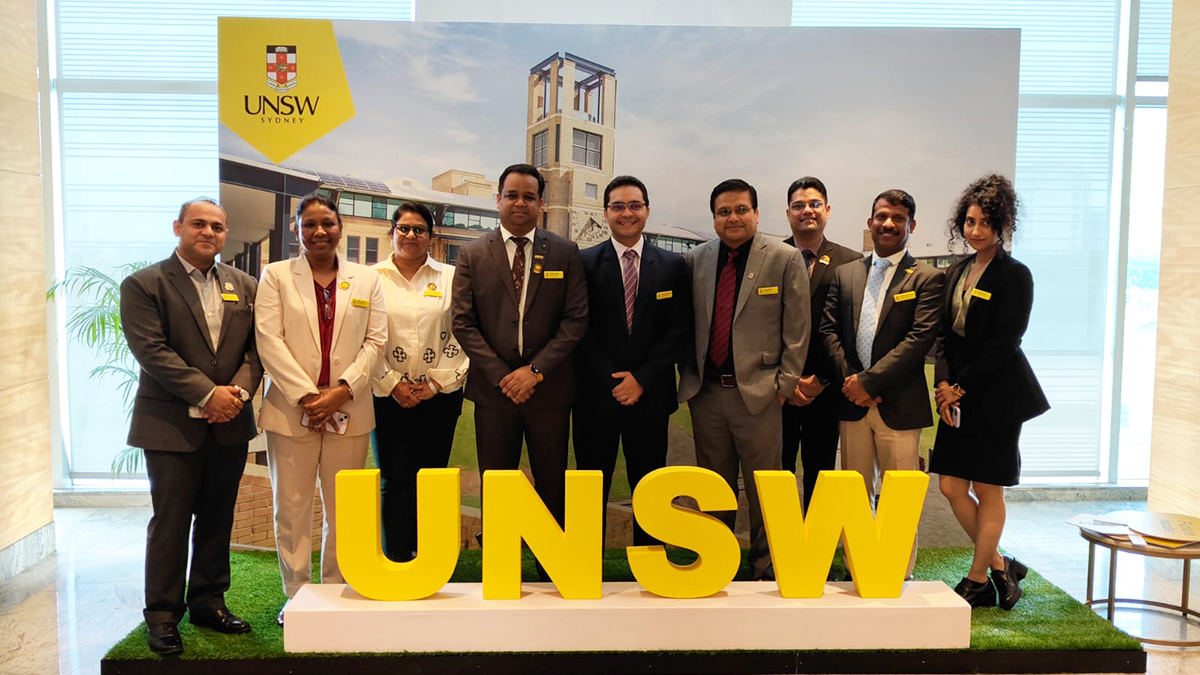
Careers in the private sector and diplomacy have helped shape the UNSW South Asia Managing Director’s approach to strategic thinking.
Dipankar Chakraborty is UNSW’s Managing Director, South Asia. Based in Delhi, he leads a team of 13 who are responsible for the University’s engagement within the region, including student recruitment, driving and facilitating partnerships with academic institutions, governments and industry, engaging with alumni and enhancing UNSW’s profile and reputation.
Dipankar moved to Delhi after a childhood in Kolkata in India’s east and time in Chandigarh, working with the British High Commission.
“Kolkata’s a city known for warmth, intellectual conversations, lots of culture,” he says.
He completed his studies in the city, including an MBA (silver medallist) from one of the country’s top universities, before starting work in the private sector. His experience includes work in tourism, media, manufacturing, management consulting and foreign government.
Like many people from his hometown, Dipankar moved away to pursue a career opportunity. He had left the private sector for a role with the British High Commission in Kolkata in 2012, and when a new embassy was due to open in Chandigarh in the northern state of Punjab, he applied for a position as Senior Sector Manager & Head of Trade.
It was this role, Dipankar says, that transformed his life and career.
“It was very different, because the people are different, tastes and cultures are different. It was my first time outside home as well. I think that helped me grow as a person and change my perspective on life.”
After a promotion to the highest grade available to a locally engaged embassy staff member, Dipankar moved to a role with the University of Birmingham. He established a partnership with the local state government and later worked from Delhi to deepen that university’s ambitions and objectives in the country.
He says moving sectors over the course of his career has been a valuable experience.
“It’s helped me understand a very diverse set of issues, which has shaped my strategic thinking.
“The education sector is something I'm passionate about because it transforms lives. It transforms society. We can help shape lives and make connections that help solve complex challenges facing society.”
Dipankar says one aspect of his role he particularly enjoys is the ability to make real change at a local level.
“The biggest problem that India is facing is air pollution. One in three children in Delhi suffers from asthma, bronchitis or respiratory diseases.”
Work in the fields of green steel development, decarbonisation and solar, including projects on the ground supported by partnerships with both the Indian government and the private sector, are helping to address this issue.
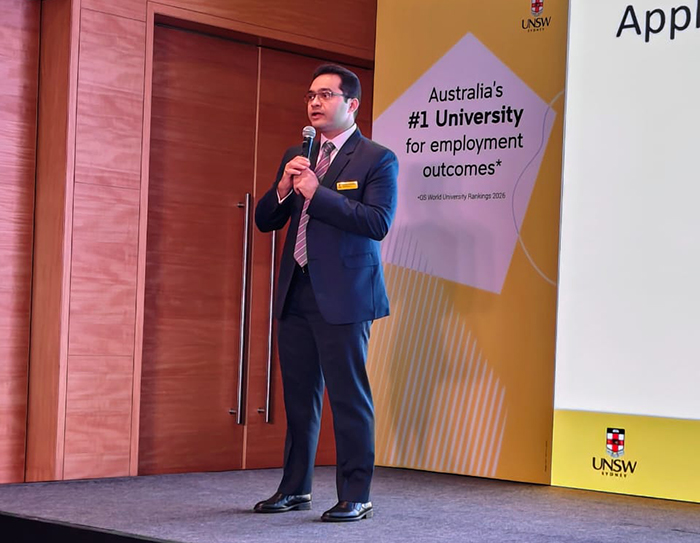
Capturing the moment
Alongside his career, Dipankar has fostered a love of street and nature photography.
“I love capturing portraits and street moments. I like to capture things that are unscripted, raw, capturing that moment.
“It's a hobby that changed my life, because it’s how I met my wife. She was a visitor at an event that I was covering. I asked her, ‘Can I take a photo of you?’. And she said, ‘Why not?’. That's how it started.”
One of his first photography exhibitions was with a friend from Kolkata.
“We covered the streets and lanes of Kolkata, and I took up the theme of the UK because I was travelling frequently for my role in the British High Commission. The exhibition was a combination of India and the UK through the lens of two photographers.”
Dipankar has also been shortlisted for and won photography competitions, including a British High Commission photography prize. The winning photo was of a new development being built in the hills between Simla and Chandigarh. The photo now hangs in the British High Commissioner’s office.
“Photography isn’t about the device, it’s about the perspective,” he says.
“It’s seeing the world differently: noticing details, appreciating diversity and telling stories through images.”

What's something that might surprise your colleagues?
I practice yoga every single day – and I once weighed over 100 kilograms! Through consistent yoga practice, I’ve transformed my health and wellbeing, and it’s now an essential part of my daily routine.
What's the best advice you’ve ever received?
We don’t have to break the rules to do something different, but we do need to understand them deeply, push the boundaries and take risks.
What makes you happy?
Creating impact – when I see that my work makes a difference and leaves a positive mark.
What day in your life would you like to relive?
The day I met my wife. It taught me two things: that unexpected moments can change the course of our lives and, most importantly, the best shots in life aren’t planned.
What’s the best thing you watched, read or listened to in the past year?
A TedX talk by Dr Alia Crum titled Change your mindset, change the game. It was a great reminder that our mindset shapes how we experience challenges and opportunities and that shifting perspectives can transform outcomes.
Main image: Members of the UNSW team in India (L–R) Vikrant Vashisht, Sudha Mary Xalxo, Harriet Raj, Akshay Samuel, Dipankar Chakraborty, Sumit Gupta, Nishal Joseph Thaikattil, Ramesh Veluchamy and Aayushi Pandey.
- Log in to post comments