
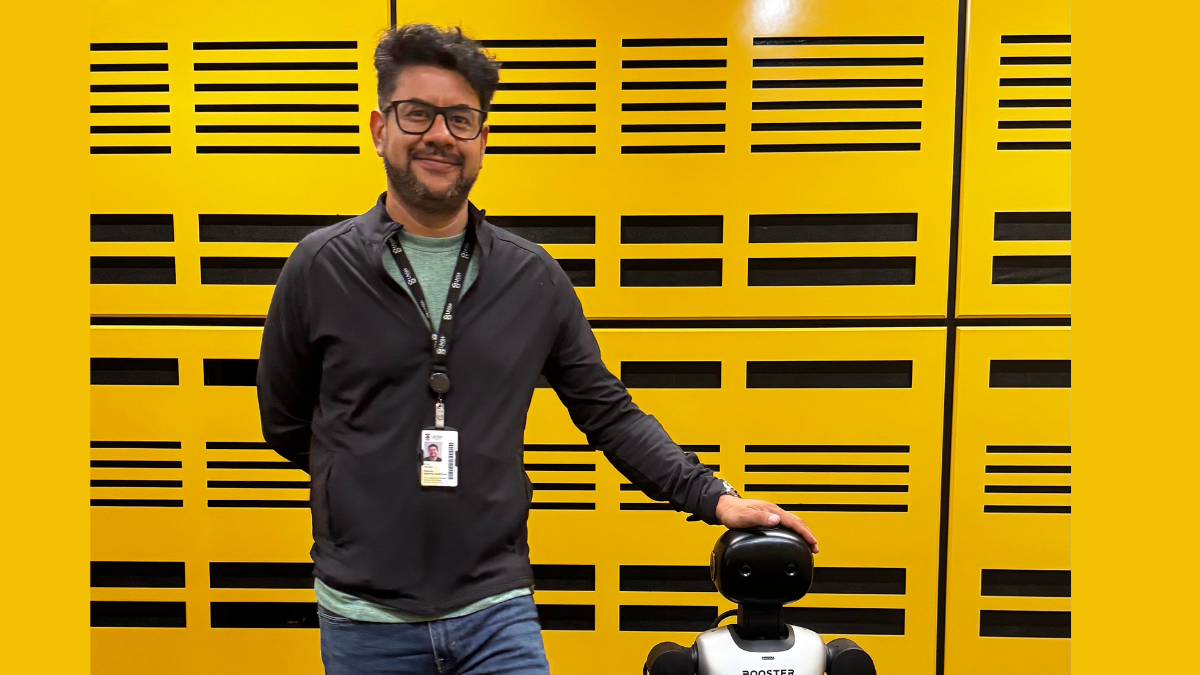
From his childhood in Mexico City to researching robotics in Sydney, there is one thing this Scientia Fellow and Deputy Director of the Creative Robotics Lab values above all else – community.
Growing up in Mexico City, Dr Eduardo Benitez Sandoval, in the School of Art & Design, learnt the importance of community at a young age.
“I grew up with my aunt Delfina and my uncle Juan as if I were one of their own,” Eduardo said. “My aunt and uncle only went to school for two or three years, yet they were incredibly successful in life.
“My aunt had this natural curiosity, and my uncle had a quiet wisdom about doing the right thing. My mother Inés, a primary school teacher, has a strong work ethic and community spirit. That combination of curiosity, discipline and care for others shaped who I am.”
Eduardo fondly recalled Christmas with cousins, Independence Day celebrations and the resilient community spirit during economic crises.
“In Mexico, we survived a lot of economic hardship, which made us resilient financially and personally, as you learn that you can live with very little,” Eduardo said.
Despite hardship, Eduardo always had access to books, which he credits as having a huge impact on his life – he learnt to read with encyclopedias.
Persistence pays off
Attending a vocational high school, Eduardo found many of his teachers studied at Instituto Politécnico Nacional (IPN). His principal referred to it as “the best institution for a technical education” and Eduardo was sold – this is where he would study, too.
Eduardo found himself at IPN’s Interdisciplinary Professional Unit in Engineering and Advanced Technologies (UPIITA) – a high-performing faculty requiring excellent grades for admission.
“UPIITA changed my life for the better, but it wasn’t easy. I failed many times and the experience was emotionally intense. My mum suggested I find another school, but I didn’t want to quit.
“It's where I learnt resilience, and that enduring difficulties builds character.”
While completing his master’s degree, Eduardo undertook a research stay at Osaka University, working alongside renowned roboticist and engineer Professor Hiroshi Ishiguro, which inspired his work with intelligent robots.
In 2012, he arrived at the University of Canterbury in New Zealand to pursue a doctorate in Human Interface Technology.
When he applied for the position, Eduardo was rejected but wrote to the supervisor asking them to keep him in mind for other opportunities. Months later, the original candidate pulled out, and Eduardo was invited to take the place.
A similar pattern played out when applying for UNSW’s Scientia program.
Eduardo received an email saying he’d been shortlisted but not selected, only to get a follow‑up asking him to “please disregard the previous email” because they had chosen him after all.
Creating communities
Chasing his dreams wasn’t always easy. As an international student, Eduardo sometimes found it hard to fit in.
Now at UNSW, Eduardo's main purpose is to help students thrive.
“I try to mentor them by sharing my experiences and encouraging them to try new things, hoping they can learn from that and create their own paths,” Eduardo said.
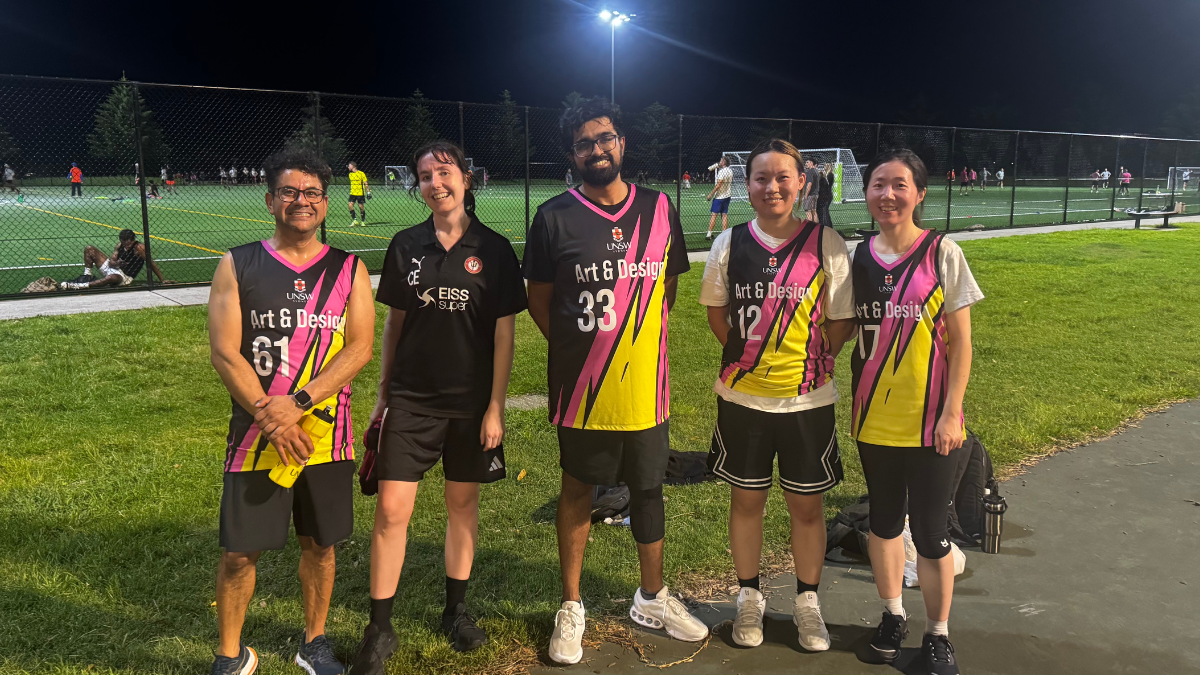
Eduardo is also encouraging connection with a social basketball team.
“I'm the captain of the team for the School of Art & Design. Imagine a bunch of artists, designers and researchers trying to play basketball. It's exactly what you’d imagine,” he said.
Eduardo’s community building extends outside of work. He volunteered at a local community centre tutoring children struggling with maths and regularly brings robots into his son’s childcare to entertain and teach the kids.
Seeking a long legacy
All this, and Eduardo is still in the “first third” of his life.
“I am 45 now, but I plan on living to 120,” he said. “Maybe I can even put my brain into a robot body!”
Eduardo wants to continue developing as a leader so he can have a greater impact on the UNSW community. He was appointed Deputy Director of the Creative Robotics Lab a few weeks ago.
“Humans are the most important part of academia,” Eduardo said. “They’re more important than ideas, reputation, grants and citations.
"As academics, we must appreciate the people around us so we can all feel satisfied and support each other's development. I think an academic leader is someone who knows how to serve others.”
What’s something about you that might surprise your colleagues?
I learned English late in my life; I have lived in five countries; and I managed to lose 16 kilos in six months by eating more healthily and exercising consistently!
What’s the best advice you’ve ever received?
I was told the most precious thing we have is our reputation. I believe that having a reputation as a good, decent human is the best reputation you can have.
What makes you happy?
A few years ago, I thought naps and tacos made me happy. Now what makes me happy is playing with my son.
What day in your life would you like to relive?
The first time my son said “Papá, I think that...” because it caught me by surprise. It was the first time I realised he was becoming a full human by himself – an individual with his own thoughts and emotions, not just a receptor of inputs from the world.
What’s the best thing you’ve seen in the last year?
I rewatched the movie Gattaca. It inspires me a lot and gives me a renewed hope for humans.
Know a colleague with a good story? Email us at insideunsw@unsw.edu.au
- Log in to post comments