
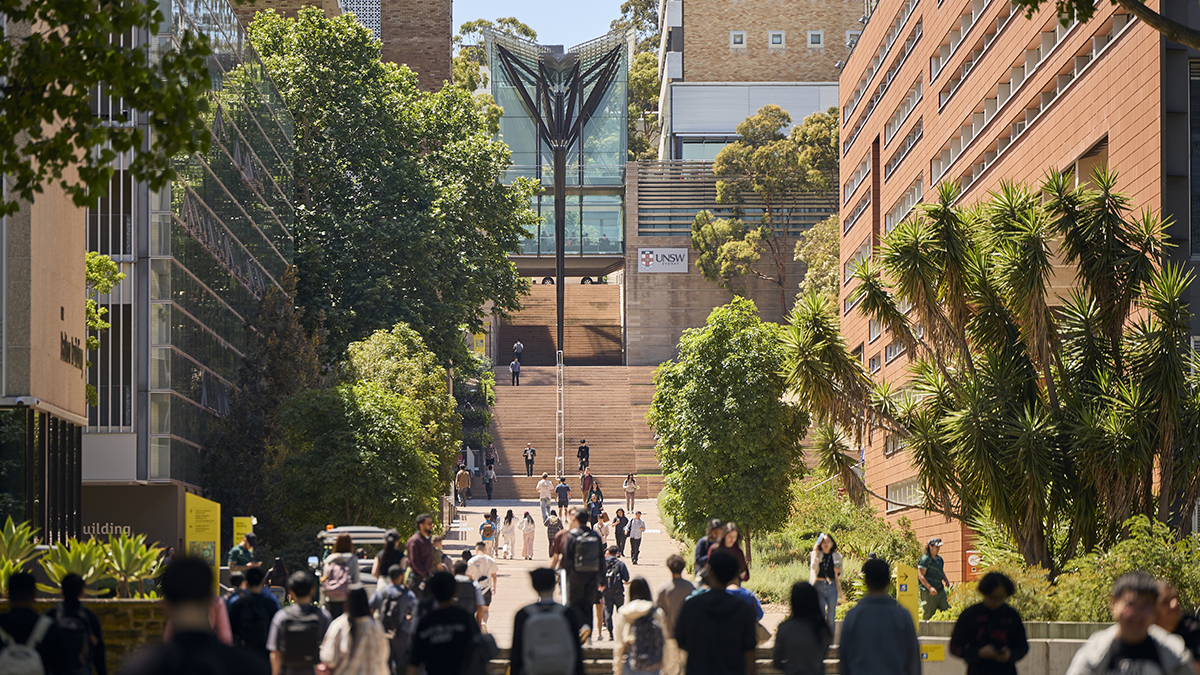
Alex Steel, Justine Nolan, Lana Tatour and Catherine Rowe share their thoughts about being on UNSW Council.
Members of UNSW Council, the governing body of the University, include official members, ministerial appointments, members appointed by Council, and elected student and staff members. As President of Academic Board, Professor Alex Steel is an official member of Council under the UNSW Act, Professor Justine Nolan and Dr Lana Tatour are elected by and from academic staff, and Catherine Rowe is elected by and from professional staff.
Professor Alex Steel: official member as President of the Academic Board

President of the Academic Board and professor in UNSW Law & Justice, Alex Steel is a relatively new member of UNSW Council, having joined in January 2026. Under the UNSW Act, the Chancellor, Vice-Chancellor and the President of Academic Board are the three official members of Council.
“I haven't yet had the chance to fully appreciate all that the Council does, but it is clear that the mix of internal and external expertise means that there is thoughtful debate over what is best for the University and how it can best support progress for all,” Alex said.
“My role is to provide expertise to the Council on the academic aspects of the University – both students and staff. It’s a perspective that is independent of the executive but sometimes broader than the elected staff or student perspective. I am in many committees across the University and speak to many colleagues, all of which helps me to provide that independent advice.”
Alex reports to the Council on behalf of Academic Board “on matters relating to the conduct and standards of teaching, scholarship and research within the University”. Like the Vice-Chancellor, he is both a member of the Council and also someone who has reporting responsibilities, and so can be quizzed by Council to better understand the reports.
Alex has held numerous leadership positions at the University including Pro Vice-Chancellor Education and Director Teaching Strategy. He has led initiatives to develop and implement a University-wide digital assessment platform, develop the UNSW’s strategic responses to generative AI in education, and respond to the educational impacts of the COVID-19 pandemic.
He is a Principal Fellow of the Higher Education Academy and Fellow of the UNSW Scientia Education Academy. His contributions to legal education have been recognised with the Council of Australian Law Dean's Outstanding Career Achievement Award, and a Commonwealth Government Citation for Outstanding Contributions to Student Learning.
Professor Justine Nolan: elected by and from academic staff
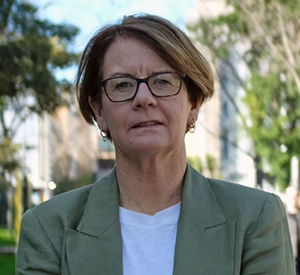
Director of the Australian Human Rights institute and Law & Justice professor, Justine Nolan, is one of two current elected academic staff members on UNSW Council. She has published widely on business and human rights, advises companies, NGOs and governments and is a member of the Australian Government’s Modern Slavery Expert Advisory Group.
As a lawyer, Justine was familiar with the theory of how boards operate and their place within organisational structures, but she found participating in the process quite different in practice.
“It has been a really interesting, instructive and rewarding experience, but it comes with a serious commitment and a significant workload. The ability to learn from really experienced people like David Gonski has been amazing.
“UNSW Council is really open to listening to all members – debates, disagreements and laughter – have all been part of the journey. It’s a wild ride and one I strongly recommend,” she said.
Justine had two principal motivations for standing for Council.
“The first was to connect university governance more closely with the pressing concerns experienced by staff, particularly in relation to workload, and have our voices heard. The second was to advocate for a comprehensive review of the 3+ system and its consequences for both staff and students.”
Justine has found being on Council was a valuable opportunity to listen to and learn from UNSW leaders and fellow Council members on so many issues.
“But it’s also an opportunity to speak up and press for reconsideration of issues that warrant fresh thinking or a new perspective. I certainly enjoyed that part!
“The learning curve is steep, and the Council’s remit is broad, spanning financial oversight, governance responsibilities and highly practical institutional matters. For me, it was great to get more experience in understanding organisational budgets and to gain insight into the extensive work that takes place behind the scenes long before matters are brought before Council.”
Aspiring Council members could look forward to forging new relationships and getting real insight into the complex balancing act of being involved in the governance of a massive organisation, according to Justine.
“Collaborating with other staff and student representatives has been a real highlight. Bringing the staff perspective into decision-making processes is critical, as it shapes how the Council understands and engages with key issues.”
Dr Lana Tatour – elected by and from academic staff

A Senior Lecturer in the School of Social Sciences, Dr Lana Tatour works on settler colonialism, indigeneity, race and human rights.
Lana was motivated to run for UNSW Council two years ago because she wanted to bring staff voices, concerns, perspectives and experiences to the room.
“Universities, including ours, are undergoing massive changes with neoliberalisation and corporatisation. I wanted to ensure we continue to deliver the best education to our students and the best working conditions for staff to be able to do their research, teaching and public engagement,” she said.
“Being on Council enabled me to promote and insist on the vision of a public university that serves communities and advances social justice as part of its core mission.”
Lana said she was part of the crucial conversations on the academic calendar and transition to semesters, the UNSW strategy, issues of academic freedom and antiracism, and ethical governance that puts students, academics, professional staff, and the public at the centre of decision-making.“I am keen to continue to be part of these conversations and my commitment to represent staff remains as strong, and that’s why I am now running for a second term as a Council member.”
Catherine Rowe: elected by and from professional staff
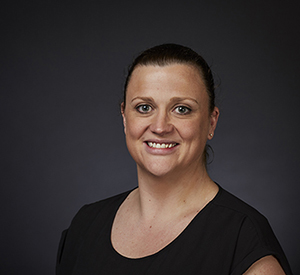
The Head of Quality & Compliance in People & Culture, Catherine Rowe, leads the University’s People & Culture compliance framework, ensuring UNSW meets legislative obligations as an employer and embedding a strong culture of compliance.
Now with more than 25 years of management experience, Catherine joined UNSW in 2011 and has held senior roles in both faculties and divisions. She has been a member of UNSW Council since 2022 and is nearing the end of her second term.
With deep institutional knowledge and a strong understanding of workforce, governance and compliance considerations, Catherine was highly motivated to represent professional staff on Council.
“I felt very strongly about the need to hear the voice of professional staff on Council. The great work of our academics can’t be done without the profound depth and breadth of our professional staff and most have a deep love of what we're doing and understand how we fit into the big UNSW picture.
“Within a few months of being on Council, I was blown away with the opportunity I had and the responsibility to be able to represent our point of view and to give a perspective into what we want, what we need and what our pressures are.”
Catherine said she “loves seeing how anything ticks”.
“I enjoy the decision-making and feeling like I'm part of something bigger as well as seeing the amazing things we get to do is such a huge enterprise organisation. I love being part of hearing all the ins and outs of a financial decision or of opening a campus in India. I feel so privileged to be part of that.”
For aspiring elected Council members, Catherine recommends the importance of listening to staff across the University because you are representing a large group and to critically read the documents.
“You have to ask questions to fully understand the decisions being made because you have an obligation legally as an officer of the University.
“It took me a little while to trust myself but now I feel confident asking questions. It’s made me realise that I do have a deep understanding of how the University works and how the multiple parts play into each other. I can see the bigger picture and competing priorities and how to put the greater good of the University first. It’s also tapped into my ability to problem-solve and prioritise.
“Ultimately, even though it’s a lot of work, being on UNSW Council representing professional staff is an honour for me.”
The election round for students and staff for the term from 1 July 2026 to 30 June 2028 is underway.
- Log in to post comments