
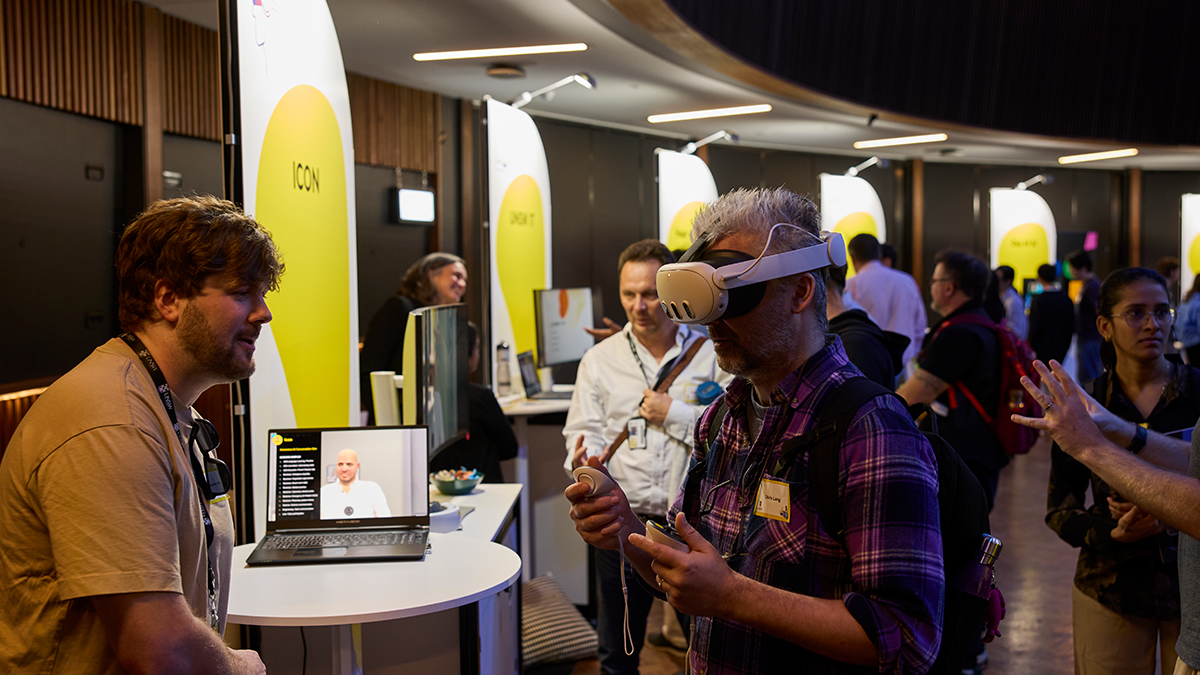
Thought leaders, practitioners and students explored how AI can be harnessed ethically and creatively to tackle global challenges.
An estimated 750 people – some as young as 13 – visited the Roundhouse on Tuesday 16 September for UNSW’s key AI event. They heard from experts, hacked with future experts and were inspired by students, researchers, teaching and professional staff about all that AI is enabling to achieve progress for all.
The event brought together thought leaders, practitioners and students to explore how AI can be harnessed ethically and creatively to tackle global challenges, with a strong focus on human-centred and responsible innovation.
Keynote speakers delivered powerful messages. Scientia Professor Jill Bennett and Dr Gail Kenning from the Big Anxiety Research Centre (BARC) showcased AI companions combating loneliness in aged care. Dean Moutopoulos from the National Justice Project spoke about the legal AI assistant tackling complaint fatigue and improving access to justice. Global experts, including Dr Catherine Ball, Scientia Professor Toby Walsh and Professor Simon Buckingham Shum, challenged the audience with a ‘call to arms’ to be involved in shaping a future where ethical, inclusive and impactful investment in AI is the norm.
From biodiversity, creative industries and ocean safety literacy, the diverse voices on the day made it clear that UNSW is not just keeping pace with AI innovation, but setting the agenda. It’s preparing graduates for the workplaces of the future, and ensuring AI is used for positive societal impact to benefit everyone, and not just a select few.
AI for Progress Hackathon: Fast Ideas, Real Impact
The AI for Progress Hackathon was a standout feature of the symposium. More than 100 participants came together the weekend before forming teams to develop AI-powered solutions for real-world problems. Five finalist teams returned on the Tuesday to refine their ideas, resulting in live competitive pitches on stage to close the symposium. Within a few days, people who may have never met before were able to come together with an idea – ranging from technology-powered health diagnostics to simplifying access to international visa applications – and build a viable product, thanks to some expert facilitation by UNSW Founders.
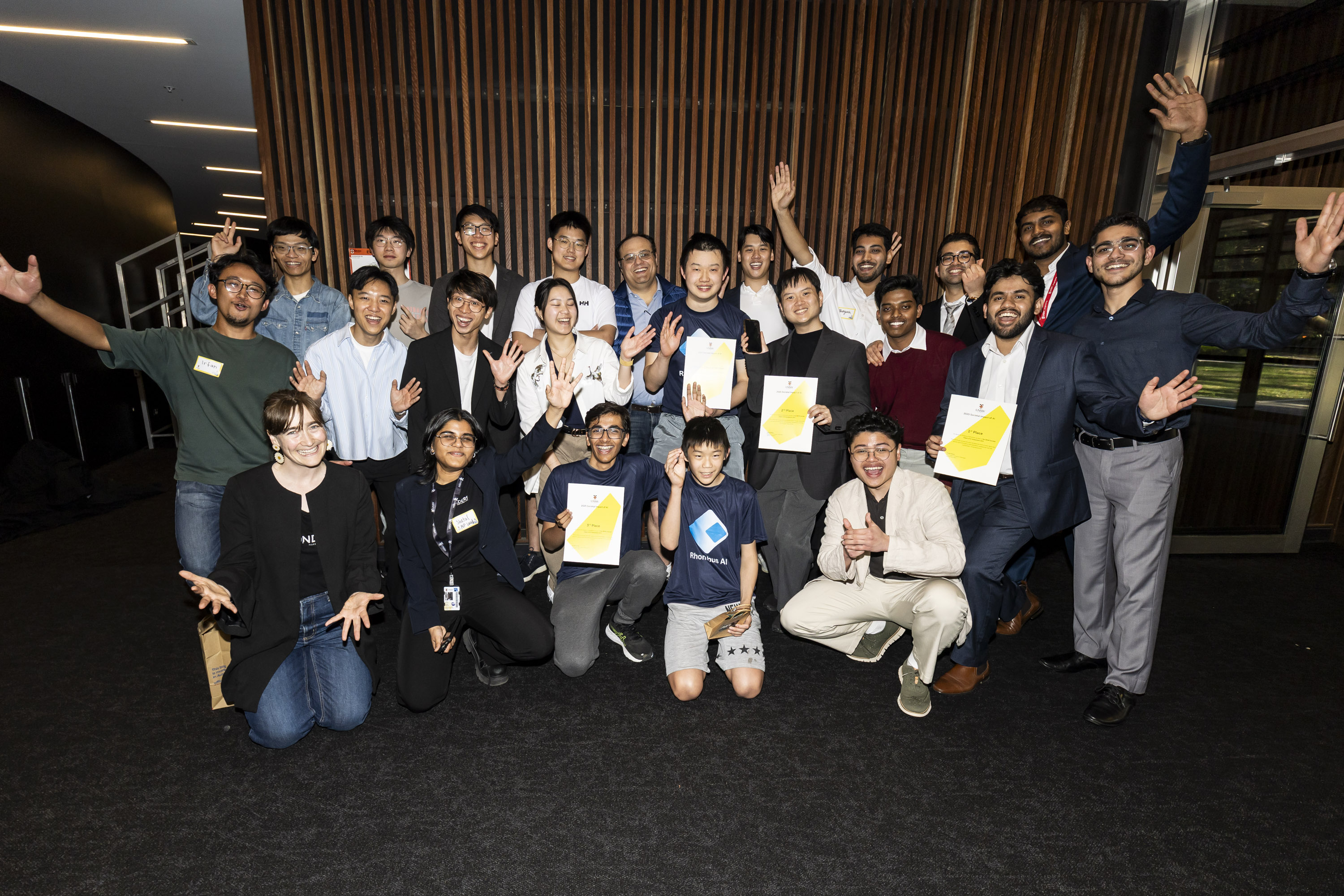
AI for Progress Hackathon participants.
Finalists were judged by UNSW IT and Founders leaders, with winners receiving support to develop their ideas further. There was even a people’s choice with live voting via the AI-me conference bot.
Congratulations to our winning teams:
- In third place and also winning the People’s Choice award: Team Whala, for their AI tool to identify retinal neuropathy and other optical health issues. This team was made up of high school kids!
- In shared first place:
- Team Teachi (Andrew Lee, Nalin Iyer, Von Viray, Jason Ye, Samuel Yee ) who developed an offline AI learning hub for rural schools, reducing teacher workloads and delivering curriculum-aligned resources without internet. Built with TypeScript, React, Python, and Ollama: qwen2.5:7b.
- Team J-AI-me (Aryan Gupta, Ved Khanolkar, Dhruv Sharma, Vipul Chiluvery) for their phone-based conversational AI tutor delivering real-time, local-language educational support – no internet or smart devices required!
We will watch with great interest to see how these products evolve.
Ready to invest in your AI tech skills and find out how you can start innovating? UNSW Founders will soon be starting AI meetups every Tuesday night (5pm - 8pm) to help people keep building and growing their tech skills. Sign up to their newsletter to stay across this, and many other, initiatives.
- Log in to post comments