Dear colleagues
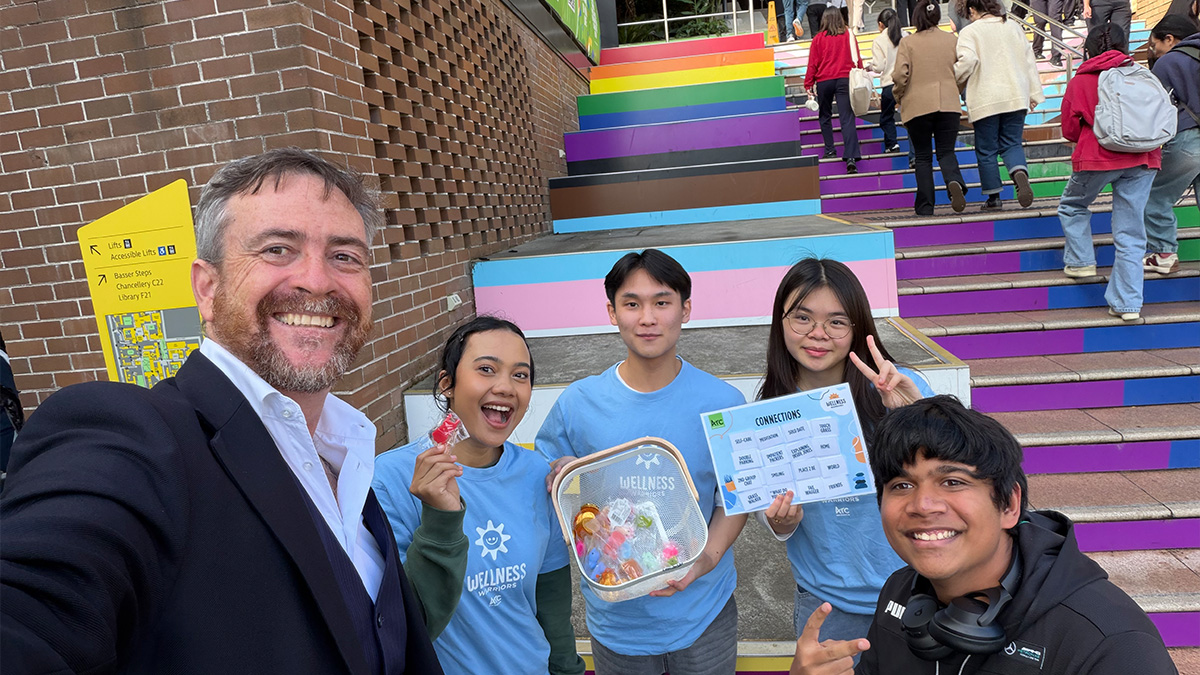
The new term has started with energy flooding back onto the Kensington Campus as students return. Arc and the clubs have been out in force welcoming new students and building a sense of belonging and excitement. As always, I pay tribute to the Arc Wellness Warriors (pictured top) whose delightful engagement with students and colleagues in innovative and creative ways helps keeps the importance of managing our wellness in mind.
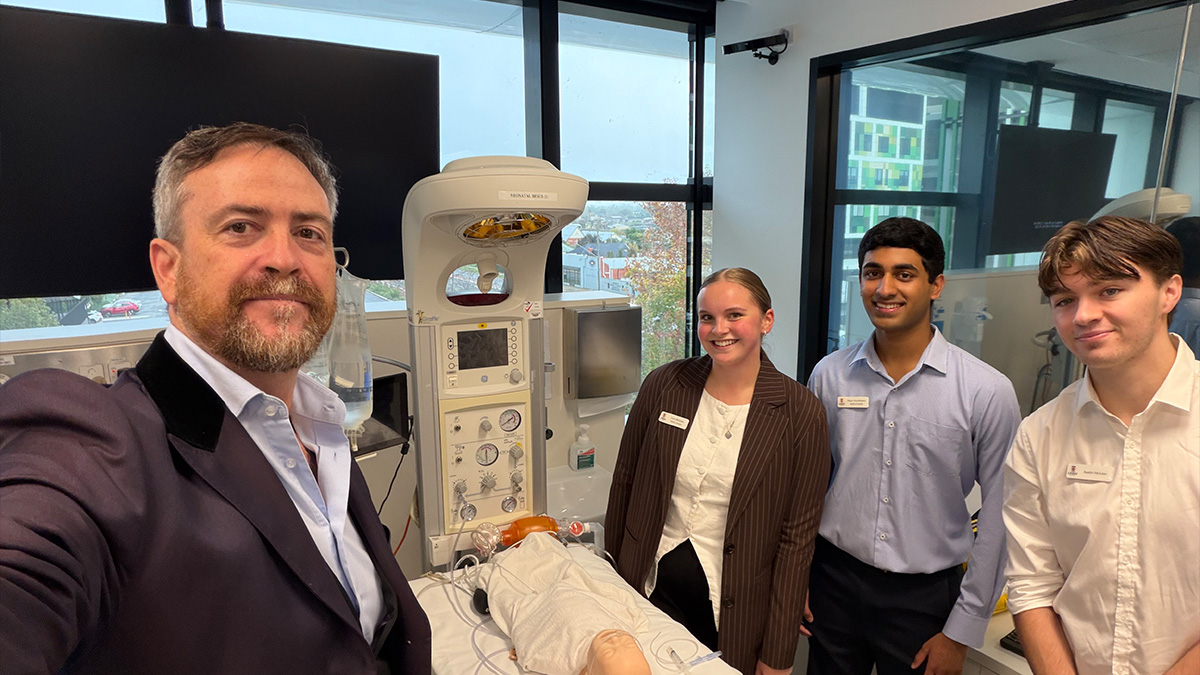
Last week University Leadership Team visited our relatively new facility at Wagga Wagga. We took the opportunity to have productive conversations with the local council and other key partners. A high point for me was meeting with student representatives. These wonderful students are studying at The Rural Clinical Campuses, Biomedical Sciences Centre. I found their commitment to enabling healthy lives through rural medicine truly inspiring.
Birthday Honours
I’m delighted to share that members of the UNSW community were recognised in this year’s King’s Birthday Honours. These honours recognise individuals whose leadership, expertise and commitment have delivered meaningful benefits to society.
Recipients from the UNSW community include our Chancellor, Warwick Negus, Professor Martin Bean, Scientia Professor Louise Chappell, Scientia Professor Valsamma Eapen, Emeritus Professor Ross Griffith, Adjunct Professor Glenn Kenneth Johnston, Professor Konrad Pesudovs, Associate Professor Christopher Stephen Pokorny, Conjoint Professor William Rawlinson, Emerita Scientia Professor Rosemary Rayfuse, Scientia Professor Matthaios Santamouris, Conjoint Professor Balasubramanian Venkatesh, Emeritus Professor Mark Wainwright and Dr Mark Alexander Williams. On behalf of the University, I congratulate all recipients and thank them for the positive impact they have made in their professions, communities and beyond. The values recognised by these awards – service, equity and impact – are closely aligned with UNSW’s commitment to Progress for All. They reflect our shared belief that universities exist as a public good for the benefit of all, with a responsibility to expand opportunity, advance knowledge and contribute to a more just, inclusive and prosperous society
I was also recognised with a King’s Birthday Honour, an accolade owed to the hard work and success of all those I’ve worked with. I have been extraordinarily lucky and privileged to work alongside some of the most brilliant, dedicated and altruistic people in Australia, including world-leading educators, researchers, professionals and innovators. Read more about this year’s Kings Birthday Honours recipients on the UNSW Newsroom.
Teaching, assessment and curriculum transformation
The move to UNSW’s new academic calendar gives us a valuable opportunity to rethink our programs and teaching for a rapidly changing world. Curriculum Transformation builds on this work to enhance the student experience through four key areas: aligning with the flex-semester calendar, simplifying programs, improving assessment and feedback, and embedding pedagogical principles that reflect UNSW’s Progress for All strategy.
A particular focus is secure assessment. As generative AI reshapes learning and work, we need assessment practices that maintain confidence in the quality and integrity of UNSW degrees, while ensuring our graduates are capable in an AI-enabled world. Secure assessment can take many forms, including presentations, performances, oral assessments, labs, studios, demonstrations, placements and authentic professional tasks. What matters is that assessment supports learning and provides credible assurance that graduates have achieved the capabilities expected of a UNSW degree.
Across faculties and schools, colleagues are mapping where Program Learning Outcomes are taught, assessed and assured across the student journey. By the end of the year, each program will need to show that every Program Learning Outcome is assured through at least one secure assessment point, and that this is recorded in ECLIPS.
The new Assessment and Progression Policy is now available. I encourage all colleagues to find it on SharePoint, review what it means for your courses and programs, and work with your faculty teams to record secure assessments for all Program Learning Outcomes in ECLIPS by the end of the year.
Support is available through the Curriculum Transformation Support Model, including online resources, Week 6 professional development, workshops, seminars, drop-in sessions and tailored faculty-aligned support. The Curriculum Transformation Hub on SharePoint brings these resources together and provides a place to engage with expert guidance and shared practice from across UNSW.
Business Sydney event – the transformative potential of AI
Last Wednesday, I joined Business Sydney for a UNSW-hosted conversation on AI’s transformative potential. My central point was that Australia’s AI future depends on the questions we ask: how this technology can strengthen our economy, institutions and national capability while broadening opportunity.
The discussion highlighted both the opportunities and responsibilities that come with this technological innovation. While AI is already delivering remarkable outcomes, it is essential that human judgement, expertise and critical thinking remain at the centre of decision-making. As AI transforms the way we work, we must ensure it expands opportunity, supports learning and contributes to a more prosperous and inclusive society.
We are working to prepare students to use AI critically and responsibly through our ‘Can, Can’t, Must’ approach to assessment, a strong focus on future-ready skills and closer links with employers. As AI continues to reshape the workforce, collaboration between universities and industry will be essential to ensuring technology expands opportunity and delivers broad societal benefit.
UNSW Cyber Security Summit
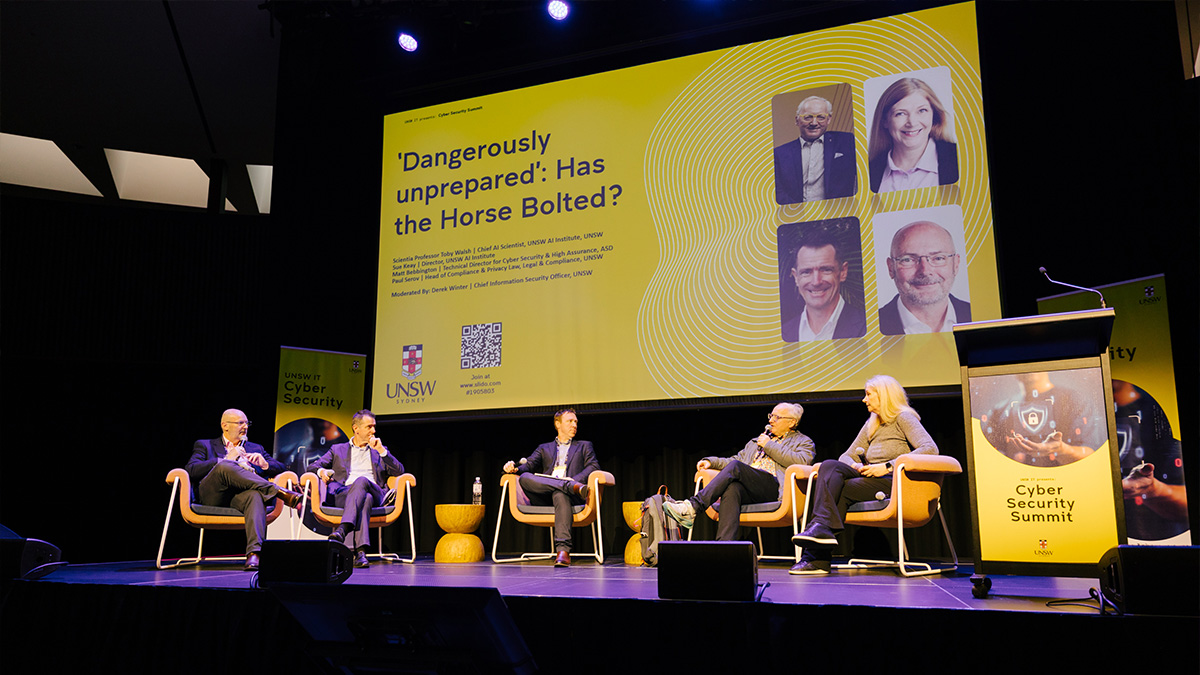
I was pleased to open UNSW’s second Cyber Security Summit, bringing together more than 700 participants from across government, industry, higher education and cyber security.
Cyber security is now a strategic priority for every major institution. As centres of world-leading research, innovation and global collaboration, universities play a critical role in Australia’s future prosperity and resilience. At the same time, we operate in an increasingly complex threat environment, particularly as AI rapidly transforms both cyber defence and cyber-attack capabilities.
The summit highlighted the importance of bringing together expertise from across research, policy, industry and national security to address these challenges. No organisation can do this alone. Building resilience will require ongoing collaboration, shared capability and long-term thinking across sectors.
Thank you to UNSW’s Chief Information Security Officer Derek Winter, Deputy CISO Nivi Newar and the teams across UNSW who organised the event, and to all the speakers and participants contributing to this important national conversation.
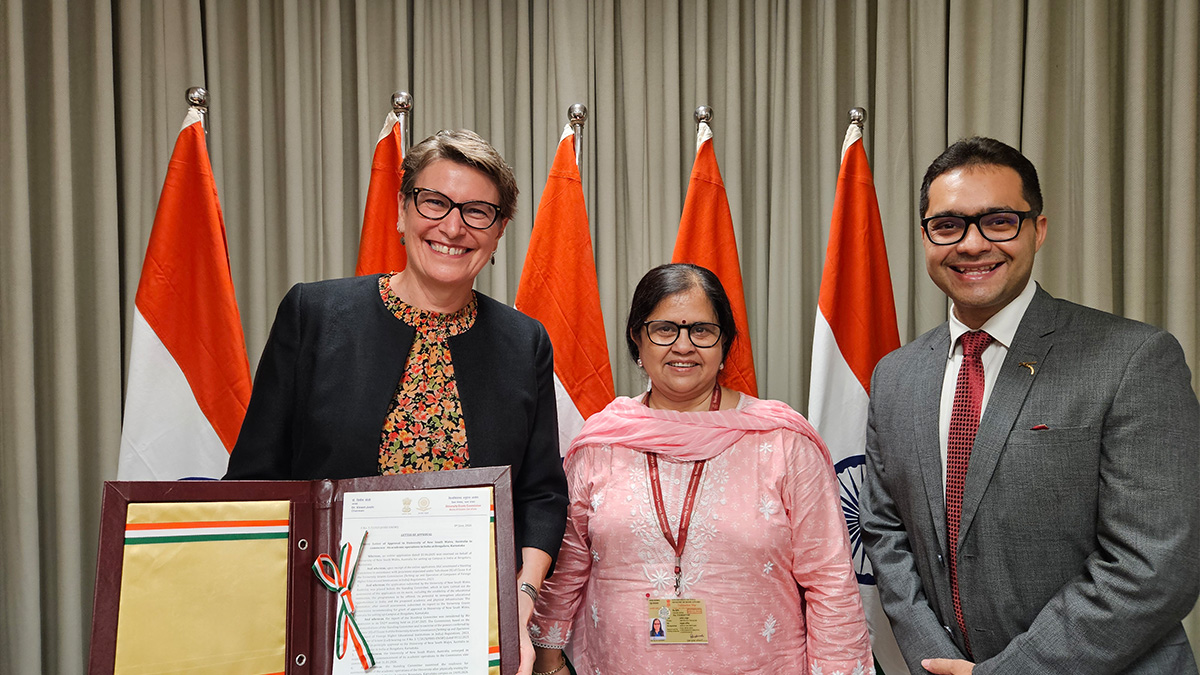
Joint Secretary, University Grants Commission and Dipankar Chakraborty, Managing Director South Asia.
Major milestone for Bengaluru campus
UNSW has reached a major milestone in establishing our Bengaluru campus, with India’s University Grants Commission (UGC) granting our university a Letter of Approval (LOA) (pictured top) to operate as a higher education provider in India.
The LOA enables UNSW Bengaluru to move into its next phase, including student enrolment, campus launch and the delivery of academic programs. It marks a significant step in strengthening UNSW’s global presence and long-term engagement in India.
Approximately 120 students are expected in the inaugural intake ahead of the campus launch on 31 July and the commencement of teaching on 10 August. Read more in this edition of Inside UNSW.
Warrane College scholars’ dinner
It was a pleasure to speak at the Warrane College Scholars Dinner last Wednesday, recognising students whose academic achievements reflect the talent, discipline and commitment required to excel at university.
Like I do at my welcome to students each year, I spoke about the importance of looking beyond academic achievement to the contribution that education makes possible.
I also reflected on the role that community plays in helping students thrive. Behind these achievements is a network of peers, staff, mentors, friends and family who provide support, encouragement and perspective. Universities are at their best when they bring people together, expose them to different ideas, and foster a sense of belonging alongside intellectual growth.
There’s more to read Inside UNSW …
- Congratulations to UNSW scientists Professor Cyrille Boyer, Scientia Professor Andrew Dzurak and Professor Timothy Schmidt who have been elected 2026 Fellows of the Australian Academy of Science for outstanding work in their fields.
- UNSW has welcomed the inaugural Green Fellows cohort, attracting world-leading experts in critical minerals, sustainable architecture, constitutional law and population health from a global field of 400 applicants across 58 countries. Congratulations and welcome Professor Saleem Ali, Professor Edward Ng, Professor Gautam Bhatia and Professor Jennifer DeVoe.
- Nominations for the Australian Mental Health Prize are now open, recognising Australians who have made outstanding contributions to mental health.
- UNSW has released our 2025 Sustainability Report in Numbers, highlighting progress made across climate action, nature, the circular economy and sustainable operations.
- Dr Thomas Dixon in the School of Physics found the shift from structured learning at school to independent learning at UNSW difficult when he was a student. Now much of his work centres on teaching and supporting first-year students. Read more in this edition’s staff profile.
- In this edition of AI Insider, Professor of Information Systems and Technology Management Manju Ahuja explores managing bias in AI systems.
Best regards
Attila
Professor Attila Brungs
- Log in to post comments