
Dear colleagues
Last week saw the release of the Strategic Examination of Research and Development (SERD) report, Ambitious Australia, which provides a timely assessment of Australia’s research and innovation system. The report highlights the critical role of research in driving productivity, economic growth and sovereign capability, while underscoring the risks of continued underinvestment. It reinforces many of UNSW’s longstanding priorities, and points to where change is needed to ensure Australia remains globally competitive.
The report recognises both the opportunities and challenges facing the sector. Australian researchers are already advancing breakthroughs in areas such as critical minerals, green iron, emissions reduction and emerging technologies, including AI and quantum. But there is a need to focus national effort, strengthen collaboration between government, industry and universities, and significantly increase support for research funding and infrastructure.
Our nation’s research environment is entering a period of both opportunity and complexity with the Australia–European Union Free Trade Agreement and participation in Horizon Europe — the European Union’s flagship research and innovation program. These developments will place Australian researchers and institutions within one of the world’s largest collaborative R&D ecosystems, enabling deeper partnerships, greater influence in setting global research agendas, and stronger pathways to translate discovery into impact.
The success of the SERD review will ultimately depend on timely implementation and sustained investment to ensure Australia remains globally competitive and able to translate research into real-world impact. UNSW will continue to work with government, industry and our partners to ensure Australia’s research system delivers meaningful benefits for society and the economy.
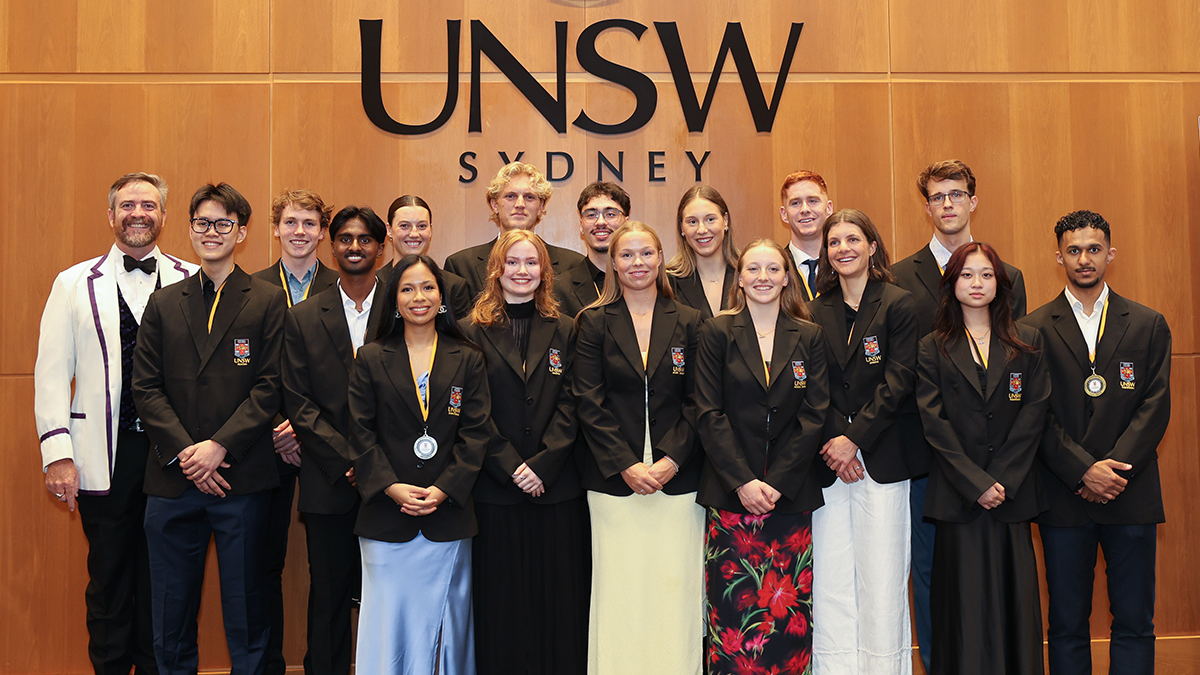
2026 UNSW Blues Awards
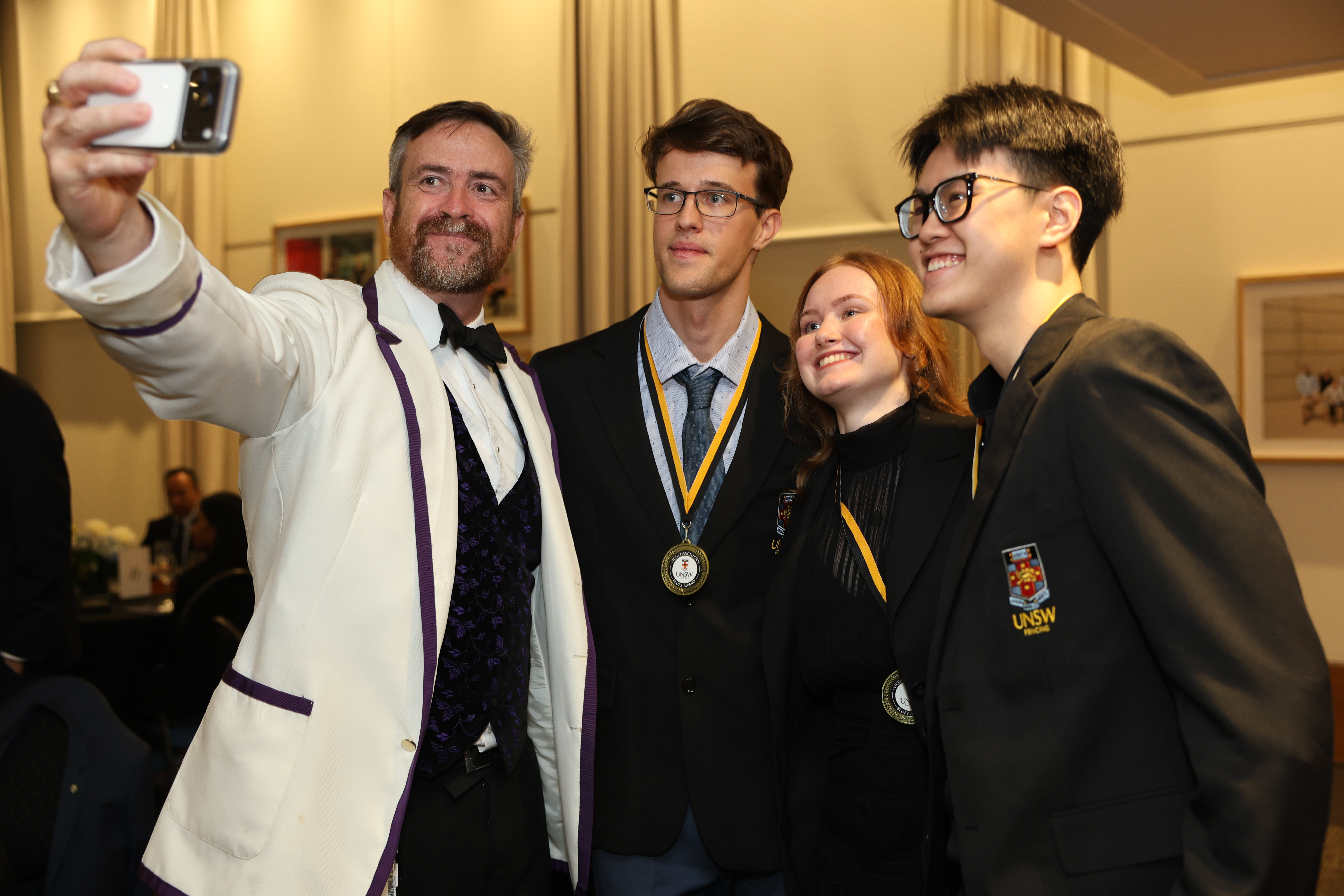
Above: UNSW Vice-Chancellor and President Professor Attila Brungs with Fencing Blues Zeno Radnoti, Sienna Stephens and Caleb Yong.
One of my favourite events on the University calendar is the UNSW Blues Awards, which celebrates student athletes who embody the very best of our University.
Since 1955, the Blues Awards have recognised students who compete at the highest levels of sport while excelling academically. This balance reflects extraordinary discipline, resilience and commitment. These experiences build skills that extend far beyond sport, including teamwork, leadership and the ability to perform under pressure – qualities that matter more than ever in a rapidly changing world.
We also celebrated some outstanding achievements from the past year, including Charlotte Wilson representing Australia at the Milano Cortina Winter Olympics, where she delivered an exceptional performance to finish sixth in the women’s moguls final – an incredible moment of pride for the UNSW community.
Congratulations to our Blues awardees and thank you to everyone who supports them in their sporting endeavours. Read a full wrap up on the UNSW Sport website.
Photo top: (L to R) Prof. Attila Brungs, Caleb Yong, Logan Campbell, Christopher Geordas, Madeline Hendrie, Kaitryel Pelaez, Timothy Putt, Sienna Stephens, Lucas Velasque, Chloe Jackson, Montana Ham, Charlotte Wilson, Sidney Harvey, Lucy Coleman, Zeno Radnoti, Vanessa Lam, Osama Almabrouk (photographer: Lorraine Callus).
25 years UNSW Rural – Port Macquarie
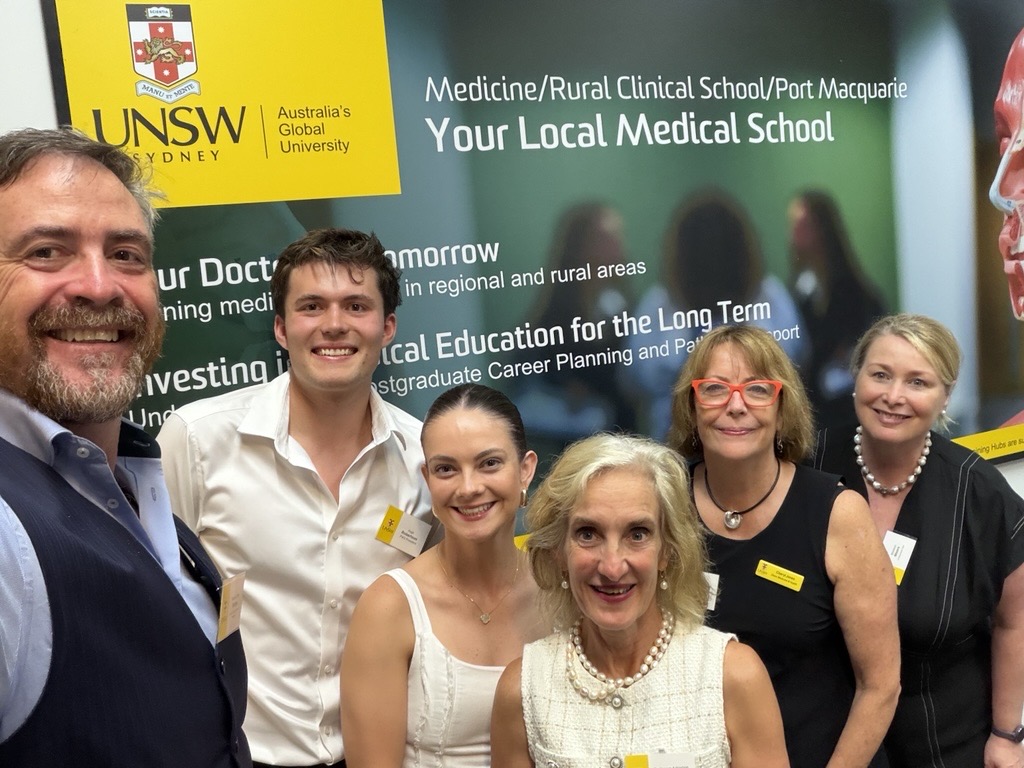
Above: UNSW Vice-Chancellor and President Professor Attila Brungs, President of Port Macquarie Medical Society (PMS) and fifth year medical student Hugh Robertson, secretary of the PMS and final year medical student Sarah Palmer, Head of UNSW’s School of Clinical Medicine and Vice Dean of Medicine & Health Professor Adrienne Torda, Dean of Medicine & Health Professor Cheryl Jones, and Bronwyn Moore from the rural medical support team.
It was a pleasure to be in Port Macquarie to mark 25 years of UNSW’s contribution to rural medical education and to recognise the people who have made it possible.
From a small student placement program in 1996 to Australia’s first Rural Clinical School at Wagga Wagga in 2000, UNSW’s School of Clinical Medicine now operates across four metropolitan clinical campuses and five rural clinical campuses, including Port Macquarie, Coffs Harbour, Albury, Griffith and Wagga Wagga.
This reflects our belief that UNSW is not just a university for Sydney, but for the whole of NSW. More than 1100 students have graduated through UNSW Rural programs, with many going on to serve the communities in which they trained.
Today, students can complete their entire world-class medical degree at a rural campus, staying connected to their communities and families, and helping address workforce needs across regional NSW.
Thank you to the Mid North Coast Local Health District, government and community partners, our educators, alumni and the Port Macquarie community for 25 years of support.
UNSW Engineering & Technology ranks number one in Australia
UNSW has maintained our strong global standing in the 2026 QS World University Rankings by Subject, with 39 subjects ranked in the top 100 worldwide. Our University was ranked first in Australia for Engineering & Technology for the ninth consecutive year, while Mineral & Mining Engineering remained our highest-performing subject, placing third globally and marking a decade in the global top 10. These results reflect the strength of UNSW’s research and teaching, and our impact through innovation, industry partnerships and student experience, made possible by the dedication of our colleagues and students. Read more on the UNSW Newsroom.
Lang Walker AO Medical Research Building wins Boomtown! Award
I was pleased to attend the Western Sydney Leadership Dialogue’s Boomtown! Awards, where UNSW’s role in establishing the Lang Walker AO Medical Research Building in Campbelltown was recognised with the Outstanding Health, Education & Research award. Judges praised the facility for bringing together researchers to address health inequity in Greater Western Sydney, as well as for its partnership model involving multiple universities, the NSW Government and health services. UNSW has a strong and longstanding partnership with Greater Western Sydney, and it’s terrific to see this collaboration recognised. By co-locating research, education and clinical care, the precinct is helping to address health inequity and accelerate the translation of research into real benefits for local communities. Read more on the UNSW Newsroom.
Celebrating our graduates
I hope you enjoyed the vibrant, celebratory atmosphere of last week’s March Graduation Festival as much as I did. Around 20,000 guests and graduates came together across 32 ceremonies in two venues, with more than 5200 graduates crossing the stage, including 138 PhDs.
The Graduation Festival is always one of the highlights of campus life. It captures that unique mix of pride in years of hard work and a sense of optimism and excitement about what lies ahead.
A special thank you to the Graduation Events team for creating such a memorable experience for our newly minted graduates and their supporters. Their contagious energy was a powerful reminder of the impact and purpose that drive our work in education and research.
Supporting our students
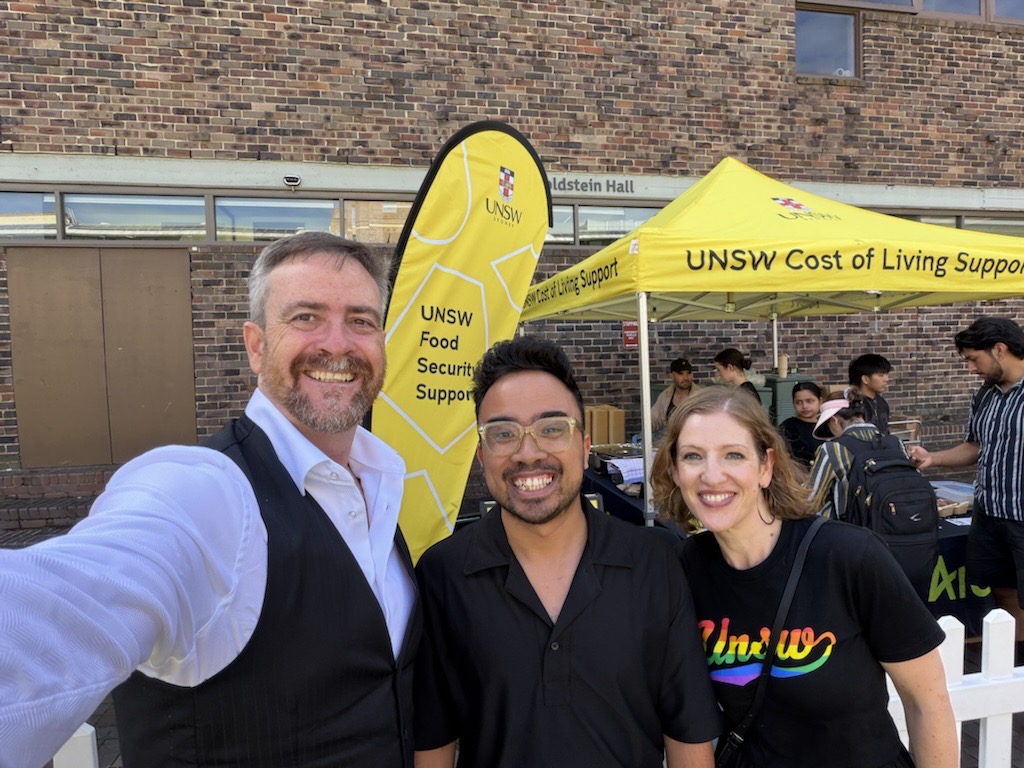
Above: UNSW Vice-Chancellor and President Professor Attila Brungs with student volunteers providing information and support to their peers.
Over the past fortnight with the impacts of increasing oil prices, I’ve been reflecting on the very real cost-of-living pressures facing our students, and the important role we must play as a university community in responding with practical, compassionate support. In partnership with Arc, we are continuing to expand initiatives designed to ease these pressures — from accessible food programs and emergency assistance, to clearer pathways for students to find help when they need it most.
It was a pleasure meeting students dedicated to helping their peers at the information stall pictured above, and seeing firsthand the strong collaboration between our teams and Arc in supporting students in need.
As I mentioned in my last newsletter, this work sits alongside the development of our broader Food Security Strategy — a coordinated, long-term approach to ensuring students have reliable access to affordable and nutritious food. Thank you to everyone who is contributing to this important work. Your efforts are making a tangible difference in the daily lives of our students.
Leadership in ACTion forum
At the recent Leadership in ACTion forum in Canberra, I introduced three impressive leaders – Chair of the Productivity Commission, Danielle Wood, journalist and broadcaster, Patricia Karvelas, and the newly re-appointed Dean and Rector of UNSW Canberra, Professor Emma Sparks.
The university sector is rightly focused on equity. However, the opportunity education offers will only lead to equitable outcomes if students graduate into an economy that allows them to prosper. Australia’s future prosperity depends on productivity improvements. It was encouraging to be part of a forum in the nation’s capital focusing on the leadership needed to implement reforms that benefit everybody in society.
Vale Sir Anthony Mason
I was saddened to hear of the passing of Sir Anthony Mason AC KBE GBM KC at the age of 100. Sir Anthony was a towering figure in Australian law and a highly respected and valued member of our UNSW community. As Australia’s ninth Chief Justice of the High Court and a central architect of modern Australian law, Sir Anthony’s influence on the legal profession and public life was profound. He served as UNSW’s fifth Chancellor from 1994 to 1999 and maintained a long and generous association with the University, contributing to legal scholarship, education and the work of the Gilbert + Tobin Centre of Public Law.
A lawyer of deep learning and immense wisdom, Sir Anthony embodied the belief that legal principles should respond to society and shape it for the better. His example lives on in the principles and purpose of our University.
Sir Anthony’s leadership, intellect and deep commitment to fairness leaves an enduring legacy to UNSW and Australia. My deepest condolences to his family, friends and colleagues. Read more about Sir Anthony Mason’s legacy on the UNSW Newsroom.
There’s more to read Inside UNSW…
- This edition of Inside UNSW marks the launch of a new series spotlighting the voices of our UNSW Council, beginning with our student Council members. They explain how their roles empower them to shape decisions that affect their education and future, while developing valuable leadership skills for their careers and broader civic engagement.
- Expressions of interest (EOIs) are now open for staff who would like to enter this year’s Australian Financial Review Higher Education Awards.
- Entries for the 2026 Australian Museum Eureka Prizes – Australia’s leading science awards – are now open.
- UNSW Arts, Design & Architecture's Scientia Professor Jill Bennett and her team have developed a suite of AI skilled companions, with a focus on loneliness and isolation in aged care and among Chinese international students. Read more.
- As you know, safety is a top priority for our University. Find out more about the new resources to support psychosocial safety at UNSW.
- Dr Roxanne Francis's highly varied work in the Centre for Ecosystem Science includes waterbird monitoring and management in Australia and Botswana. She has also created an affirmation website which helps students and staff quieten their critical inner voice and develop confidence. Read more in this edition’s staff profile.
Best regards
Attila
Professor Attila Brungs
Vice-Chancellor & President
- Log in to post comments