
Dear colleagues
We are fortunate that UNSW is a great community, but as I mention to new colleagues at every one of my welcome presentations to incoming staff, we are all responsible for this and it is not something we can ever take for granted. The Vice-Chancellor’s Awards recognise wonderful colleagues who make UNSW a better place each and every day. Please take the time to nominate a worthy colleague – the closing date is only days away (Monday 18 May).
This week the Federal Treasurer handed down the 2026/27 budget. It was good to see some focus on reform, including encouraging commitments towards intergenerational equity. There was also the start of the critical work towards improving our national productivity with a Productivity Package aimed at increasing innovation and reducing unnecessary compliance costs across many sectors. It is pleasing that the Government has committed much-needed, additional funds to CSIRO – a national asset – and increased disbursements under the Medical Research Futures Fund (MRFF). Disappointingly this has come as a result of shutting down the Australia’s Economic Accelerator program, stripping $800 million from universities engaging with industry in research translation. The foundational aspects of the Ambitious Australia report will commence. Also very welcome is the commitment to Horizon Europe that I’ve previously talked about. However, there was no commitment to the investment in crucial education, innovation and research that our country needs at this time. This omission runs counter to the growth and equity agenda of the government.
While the budget is viewed by many as a mixed bag and not sufficiently reform focused, we must remember that there are more opportunities and avenues to prosecute debate and reform that will drive increased equity and prosperity for all Australians.
As part of this national debate, I launched a UNSW occasional paper led by Scientia Professor Richard Holden ‘An Australian Productivity Roadmap for Policymakers’ last week at UNSW CBD Campus. Supported by Productivity Commissioner Dr Catherine de Fontenay and CEO of ACOSS Dr Cassandra Goldie AO, guests from business, finance, government, community groups and peak bodies were part of a panel discussion about the reforms needed to respond to Australia’s anaemic rate of productivity growth but ensuring that all Australians benefit from productivity increases. This is exacerbated with the impending danger that the AI revolution could increase and entrench existing wealth disparities in our country.
Progress for All is a strategy that has been whole-heartedly embraced at UNSW and beyond. However, real equity and opportunity will only come if our students graduate into an economy where the benefits of broad-based productivity are shared by all sections of society. Unless we as a nation take action to confront the challenge of weak productivity growth, the next generation of Australians will be worse off than their parents and grandparents. Poor productivity is already costing every Australian $11,000 per annum on average, with the burden falling disproportionately on young, working families.
The roadmap is a call for a different approach to reform – one that places more value on long-term improvements to health, clean energy, housing and standard of living than a short-term calculus of winners and losers in a federal budget. As part of the UNSW community we all share in the mission to have a beneficial impact on society and make sure the innovations that come through our research and education are available to everyone.
My op-ed on broad based productivity published in the Australian Financial Review last week is available on the UNSW Newsroom.
Royal Commission into Antisemitism and Social Cohesion
As we end the first hearing block of the Royal Commission into Antisemitism and Social Cohesion, focusing on the lived experience of Jewish people, we see again the distressing stories of fellow Australians being abused or targeted based on their religious or cultural identity. The cumulative impact of intolerance and bigotry, regardless of how incidents are categorised, has no place in the Australian society we all aspire to.
We have seen other patterns of heightened division in recent years. During the Voice referendum, individuals and segments of society felt emboldened to ramp up their vitriol, causing misunderstanding, fear and hate against Indigenous Australians. At times, members of our own UNSW community felt so unsafe that they preferred to sleep on campus rather than go home facing the torrent of abuse on public transport. These experiences reinforce why our work to address all manifestations of racism and religious vilification is both so important and urgent.
UNSW, like any other community within Australia, must strive to eliminate all forms of racism and religious vilification across our own community, but more, we must leverage the generosity and tolerance endemic to UNSW to create positive and inclusive experiences for all in our community. Further, we must use our UNSW values, our research prowess and the graduation of 12,000+ incredible graduates each year to help change behaviours and approaches across society more broadly.
Bringing urgency, our augmented anti-racism and anti-discrimination program is a critical part of this. A foundational piece of the new work is listening to the experiences of people right across our UNSW community. From 28 May we will be holding dozens of listening sessions for students and staff across UNSW. This is an important opportunity for you to contribute to the shaping of UNSW’s anti-racism and anti-discrimination program and also to help eliminate this scourge in society.
Read more about the UNSW listening sessions, including how to sign up, in the next edition of Inside UNSW, but importantly please continue to lead and to act so that UNSW is welcoming, supportive and safe for all.
Minderoo Children’s Comprehensive Cancer Centre opens
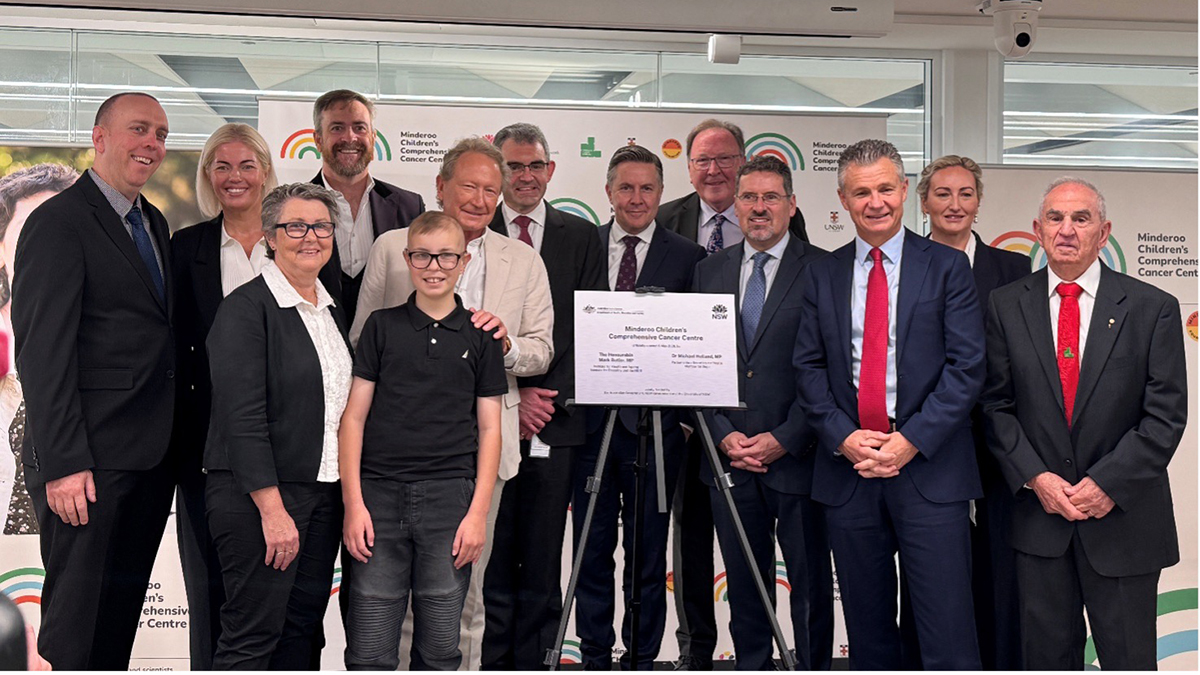
Last week, the Minderoo Children’s Comprehensive Cancer Centre (MCCCC) was officially opened by Federal Health Minister Mark Butler MP, NSW Parliamentary Secretary for Health Dr Michael Holland MP and Dr Andrew Forrest AO, Founder of Minderoo Foundation. The MCCCC is Australia’s first dedicated comprehensive cancer centre for children. The centre represents a truly world-leading partnership between the Children’s Cancer Institute, Sydney Children’s Hospitals Network and UNSW. It brings together research, clinical care and education in one place with the aim of transforming outcomes for children with cancer and their families.
The opening was a powerful reminder of why this work matters so deeply. One of the most moving moments came when Tanya O’Neill shared the story of her son Jack and their family’s experience with childhood cancer. Her words highlighted the reality faced by too many families and reinforced that every scientific breakthrough and clinical advance has the potential to profoundly change the lives of children with cancer. UNSW is proud to be a partner in this extraordinary endeavour. Through the centre, our University will help educate and train the next generation of clinicians, scientists and healthcare leaders who will carry this vital work forward. By bringing research, clinical care and education together under one roof, discoveries can move more quickly from the laboratory to the bedside, ensuring children and families benefit directly from the latest innovations in treatment and care. At its heart, the MCCCC reflects a shared commitment to giving every child with cancer the strongest possible chance at a healthy future. Read more on the UNSW Newsroom.
Photo top: Andrew and Tanya O’Neill, Executive of Sydney Children’s Hospitals Network Cathryn Cox, UNSW Vice-Chancellor and President Professor Attila Brungs, patient Jack O’Neill, founder of Minderoo Foundation Dr Andrew Forrest, Kids Cancer Centre Director at Sydney Children’s Hospital Network and Co-Director of MCCCC Dr Richard Mitchell, Federal Minister for Health Mark Butler, Parliamentary Secretary for Health Dr Michael Holland, Executive Director of Children’s Cancer Institute and Co-Director of MCCCC Professor Louis Chesler, Member for Kingsford Smith Matt Thistlethwaite, Member for Coogee Dr Marjorie O'Neill, Children’s Cancer Institute founder Jack Kasses. Photo: Children's Cancer Institute.
UNSW’s Interpreting and Translation program celebrates 20th anniversary
Last week UNSW celebrated the 20th anniversary of our Interpreting and Translation program. Over the past two decades, the program has grown to encompass 13 international and community languages, reflecting UNSW’s commitment to diversity, excellence and global engagement. The program has played an important role in preparing graduates for careers across law, healthcare, diplomacy, education and industry. The celebration highlighted the essential role translators and interpreters play in enabling understanding across cultures and communities, and explored how the field is evolving alongside rapid advances in AI and language technologies. In today’s geopolitical climate we need to build shared understanding across languages and cultures more than ever. Thank you to the founder of the program Professor Ludmila Stern who is retiring this year. Ludmila has been a wonderful advocate of the program and the profession.
New book offers insights into cancer care

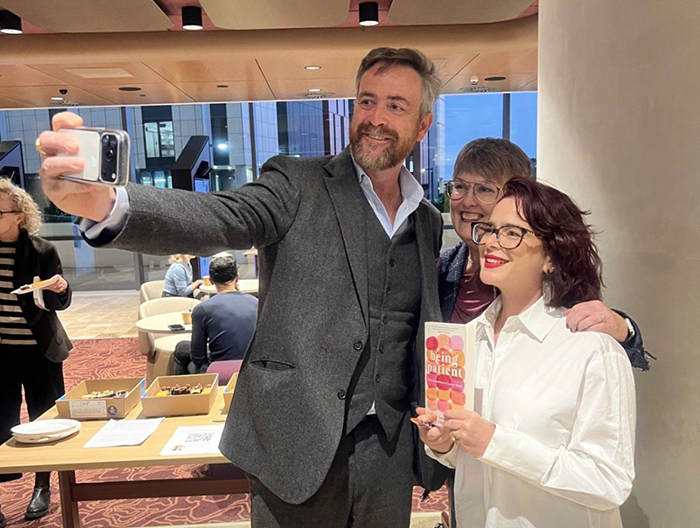
It was a pleasure to be part of the launch of Being Patient: Close Encounters in Cancer World at the Health Translation Hub last week, alongside colleagues, clinicians, researchers and members of the cancer survivorship community. Co-authored by Dr Na’ama Carlin, Scientia Professor Louise Chappell and the late Dr Siobhan O’Sullivan, this insightful and powerful book reflects the strength of collaboration across disciplines and the importance of bringing lived experience into conversations about healthcare.
Drawing together expertise from the faculties of Law & Justice and Arts, Design & Architecture, alongside the Australian Research Centre for Cancer Survivorship, the book offers a richer understanding of cancer not only as a medical condition, but as a lived experience shaped by social, legal, emotional and systemic factors. Being Patient is a reminder of the importance of listening and designing systems of care that recognise the individuality of every experience. My thanks to the authors, and to all involved across UNSW and our partner institutions, for making this important work possible.
There’s more to read Inside UNSW…
- Congratulations to Professor Ashish Sharma from the School of Civil & Environmental Engineering, who has received the 2026 Arid Lands Hydraulic Engineering Prize from the American Society of Civil Engineers recognising his research on long-term climate patterns affecting water systems which is helping improve flood and drought prediction and support of future-proof infrastructure.
- Skye Becker, Events and Communications Assistant in UNSW’s Music Performance Unit, also has a career spanning musical theatre, film and TV. Read more in this edition’s staff profile.
- This edition’s AI Insider looks at designing assessments in a world with AI.
- As I mentioned, Vice-Chancellor’s Awards are a fantastic way to recognise colleagues who make UNSW what we are and there’s still time to nominate. Nominations for the VC Awards close on Monday 18 May.
Best regards
Attila
Professor Attila Brungs
- Log in to post comments