
Dear colleagues
Last week, the Royal Commission on Antisemitism and Social Cohesion conducted hearings into universities. UNSW has been appropriately engaged with this important inquiry. UNSW staff and alumni have made submissions to the Commission and several have been witnesses at Commission hearings. On Wednesday, I appeared before the Commission representing UNSW.
I was saddened to hear the distressing details of what many Jewish students and staff have had to experience. I recognise that the hearings may have had considerable impact on our students and colleagues, their friends and family. If you are experiencing distress or have concerns for yourself, your friends or your family and would like to talk to someone, I encourage you to contact the University’s Employee Assistance Program (EAP), Converge International, which provides free and confidential counselling for UNSW staff and, importantly, family members.
Going forward, we must learn from the findings of the Royal Commission, and continue to work together to foster a culture that tackles and prevents racism, celebrates diversity and ensures everyone in our community feels safe, valued and respected. I recently wrote to you about our current approach to combating antisemitism and all forms of racism and discrimination through a dedicated program of work in our Inclusive Communities team in the Division of Societal Impact, Equity and Engagement. We will soon conclude several months of listening sessions with hundreds of members of our community with experience of marginalisation and discrimination. These sessions have provided valuable insights into what further steps can be taken to make our campuses places which actively tackle racism and where all students and colleagues feel a sense of belonging. With these insights, we are working towards an Anti-Racism and Anti-Discrimination Action Plan that commits us to improvement, innovation and review over coming years. There will be opportunity for everyone across the UNSW community to hear about the development of that plan and to provide feedback in relation to it in coming months.
We recognise that there is much more to do, and always remember to speak up if something you have experienced or witnessed doesn’t feel right. You can report it via our SpeakUp portal. You will be heard and supported.
Gateway Students Campus Orientation
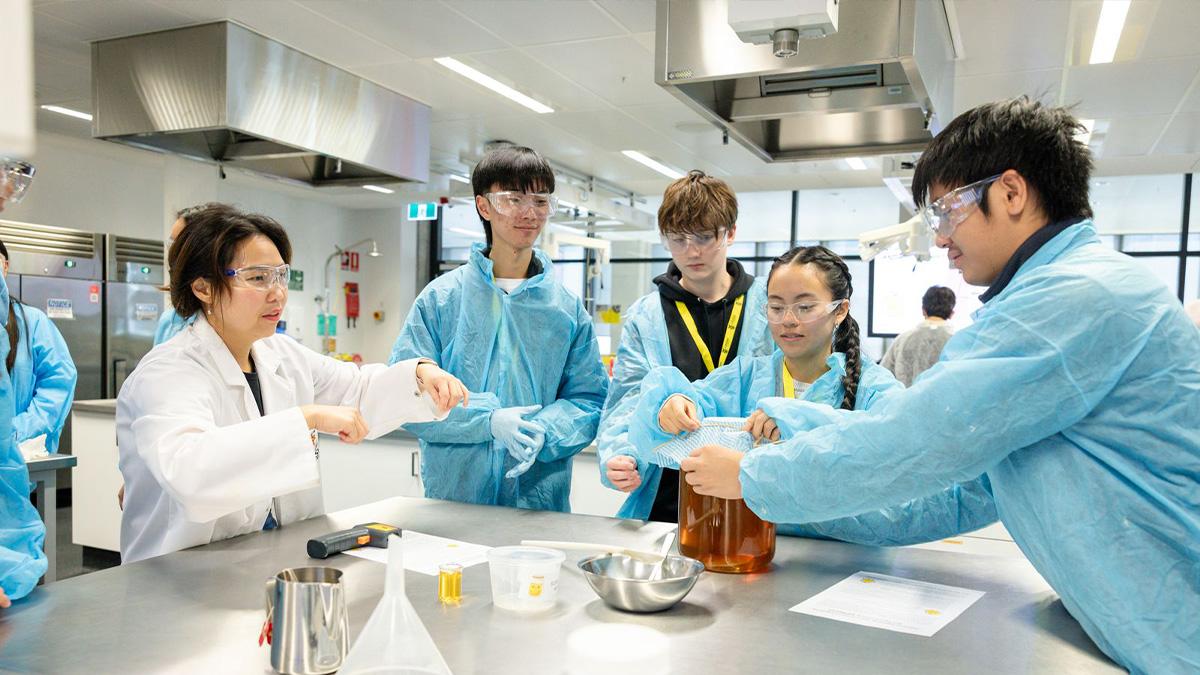
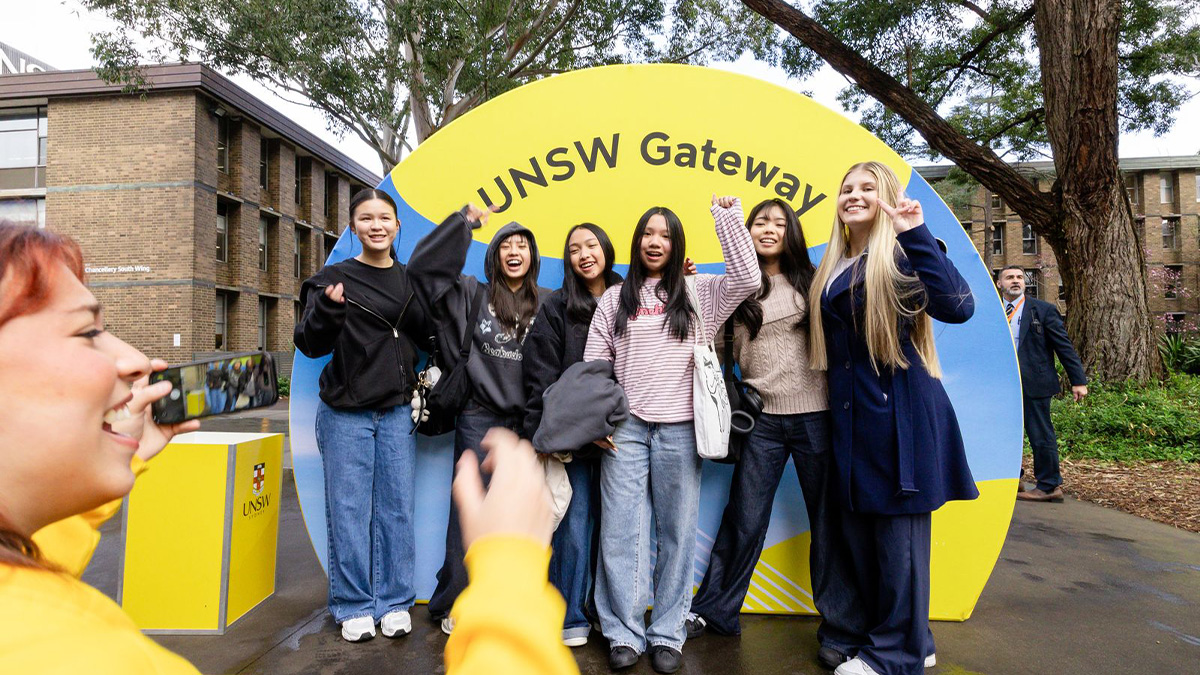
I had the chance to once more celebrate UNSW achieving our Widening Participation target when speaking to Year 11 & 12 Gateway students at our recent Campus Orientation [see top picture]. Students from Gateway partner schools and other students from under-represented or Indigenous backgrounds take part in UNSW’s Gateway Program to try our various faculties, workshops, lectures and labs and have a taste of the university experience at a Student Life Fair.
There was incredible excitement and enthusiasm from the Gateway students, and from our UNSW Ambassadors, many of whom have come through Gateway themselves. All the workshops and labs were packed with keen and curious participants. These are students of extraordinary calibre. Many of them will go on to apply to study at UNSW. Having met this bright and energetic group of Gateway students, I’m even more certain that the wonderful diversity of our student body is a key contributor to our continued standards of absolute excellence.
Belonging for All Report
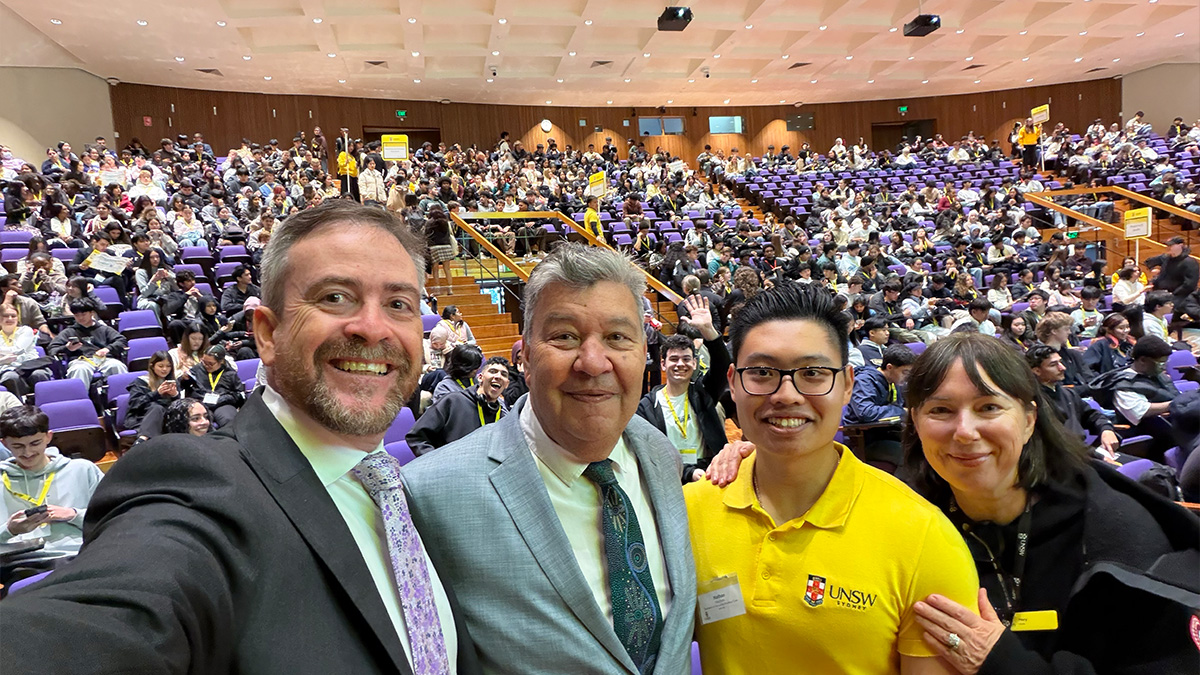
At the Gateway welcome and at student orientations throughout the year, I have the unique pleasure of welcoming new students to UNSW. I always mention my own experience of sitting in Clancy Auditorium on the first day of O-Week knowing absolutely nobody and feeling quite isolated. Within a short time, I’d made lifelong friends and by the time I graduated from UNSW I felt a powerful sense of belonging. From all the research – and my own experience – we know how important a sense of belonging can be for student experience.
According to our UNSW Belonging for All report, students who feel they belong are more likely to seek help when they need it, engage more deeply with their learning, build the peer relationships that sustain them through difficulty, and remain enrolled when life gets hard. You can read the report now.
I’m grateful to everyone who worked on the report, but also to everyone in our UNSW community who worked over the three years covered by the report, to improve student experience in ways that have real impact. The seven-point increase it measured in students’ personal sense of belonging is heartening because it shows that programs like our Food Security Strategy, Buddy up, the First Year Festival and the new mentoring platform are reaching people who need them.
Fixim Sola Vanuatu
In the last edition of Inside UNSW, I celebrated the recipients of the 2026 Vice-Chancellor’s Awards. The winners of the Collaboration Award – Team Fixim Sola Vanuatu appear in this edition. This terrific project is a great example of collaboration between Engineering and Arts, Design & Architecture, specifically the School of Humanities & Languages and the School of Social Sciences. It also exemplifies UNSW values in action: sustainability, support for a Pacific neighbour, empowerment for a disadvantaged community and genuine societal impact. It really is an achievement worth celebrating.
All-staff Town Hall Q&A
During the All-staff Town Hall earlier this month, there were many more questions raised than we were able to answer in the time available. As mentioned, this time rather than just writing back to the colleagues who posted and providing thematic responses in Inside UNSW, I’m also posting the answers to many of the individual questions which are relevant to the whole university. Leadership in our faculties and divisions have been prompt in preparing responses to these questions. While there are still a small number to go, I am keen to publish the answers to these questions where all colleagues can read the answers as soon as possible. Please read the first set of questions and answers. You will need your zID to log in.
Australia-India Economic Roadmap
Congratulations are due to Scientia Professor Veena Sahajwalla, Director of UNSW’s Sustainable Materials Research and Technology (SMaRT) Centre, who spoke at a panel at the Australia-India Economic Roadmap Business reception attended by both Prime Minister of India, Narendra Modi and Australian PM Anthony Albanese. Professor Sahajwallah’s work in sustainable manufacturing is wonderfully aligned with UNSW Progress for All strategy. Her contribution to the research partnership between Australia and India comes at a crucial time for both countries and UNSW.
There’s more to read Inside UNSW…
- Alisa Tian, Associate Lecturer in the School of Humanities & Languages, is an Education Focussed Academic teaching translation and interpreting. Her career also spans the law and TV. Read more in this edition’s staff profile.
- Since his first day at UNSW in 2005, Professor Fabio Luciani in the School of Medical Sciences has been working with machine learning in his field of systems immunology. Read more in this edition’s AI Insider.
- If there is anybody who embodies the success of UNSW it is Scientia Professor Martin Green. Professor Green has received China’s highest honour for international scientific collaboration, the International Science and Technology Cooperation Award.
Best regards
Attila
Professor Attila Brungs
Vice-Chancellor & President
- Log in to post comments