
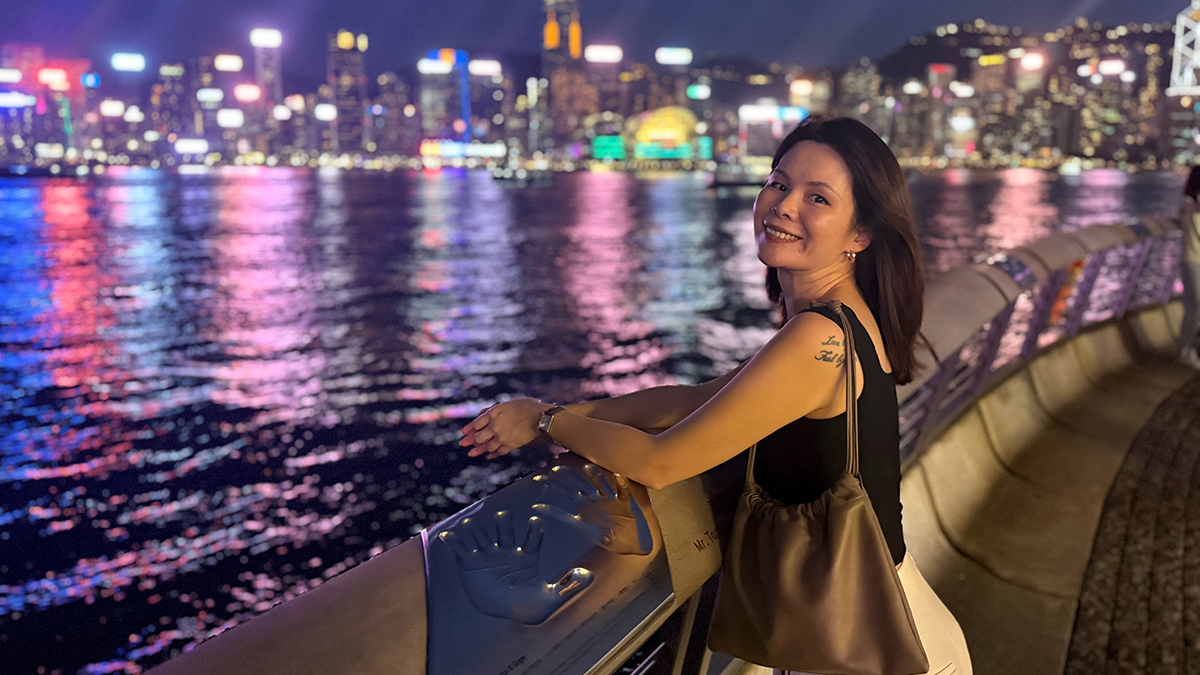
The translator, interpreter and Education Focussed Academic’s career has spanned the law, television and education.
Alisa Tian’s connection with UNSW reaches back to her earliest days in Australia. She first came to Sydney in 2005 as an undergraduate to study Linguistics and Advanced Chinese Studies.
“The day I landed in Australia, I came to this campus,” she says.
She’s now an Associate Lecturer in the School of Humanities & Languages, teaching translation and interpreting.
“This is amazing place, with many amazing people,” she says of the University.
Alisa grew up in Guangxi, China.
“It was a time when China wanted to join the World Trade Organization, so globalisation was something I grew up seeing. I always wanted to go to an English-speaking country to study and see the world.”
Alisa attended summer camp in New Hampshire at 15 and originally hoped to study in the US. The timing, soon after 9/11, made getting a visa difficult. Instead, a family friend suggested she apply for university in Australia.
She intended to return to China to teach English after her degree but changed plans when she fell in love with the lifestyle here.
Navigating nuance in live court translation
Alisa’s first job was with a law firm, helping clients talk with lawyers and translating statements. She continues to work as a legal translator and court interpreter for both the accused and witnesses.
Interpreting in court is an intense experience, she says.
“You need a good understanding of how the legal system works. I interpret for people who mainly come from China, which doesn’t use common law. It’s similar to civil law, and the legal procedures and terminologies are often very different.”
There are also linguistic challenges when interpreting in court for Chinese-language speakers.
“There are a lot of traps between these two languages,” Alisa says.
“There are words that are similar, but they mean different things. And there are words that are common in Australia that are foreign to Chinese speakers and vice versa. You have to be careful with what you hear and what you say.”
Alisa says the contextual and idiomatic meanings of a word sometimes need to be spelled out because of differences in connotation in the two languages. Body language, affect and tone are also used to make meaning and need to be captured for an accurate interpretation.
“It’s not just the words – we also interpret the style. When doing cross-examination, lawyers aren’t friendly. They want to challenge your credibility. So, while my brain is processing the words, I need to also make sure that my style is right. If the lawyer is being hostile, I need to be hostile so the outcome is fair for all.
“It’s a lot of pressure, but I’m really glad I’m part of the process. People who don’t speak English can find it really hard in the courtroom.”
Keeping human sentiment in translated text
Alisa first joined UNSW as a casual academic in 2010, drawing on her professional experience. In 2022, she took up an Education Focussed role and began her PhD, which she recently submitted. Her doctorate focuses on helping students work with AI-generated translations.
AI, she says, can be a useful translation tool, but it comes with challenges in specialised fields like the law or where colloquial language use makes meaning different from the surface words.
“AI seems great on the surface. It looks at a large amount of text and generates a fluent text output, but if you look closer, there can be a lot of mistakes. They’re subtle, hidden behind the surface fluency, so you don’t notice them unless you’re trained to.”
Alisa also translates for SBS, working on Insight and Dateline.
She previously translated for the Chinese dating shows If You Are the One and Meet the Parents. Nuance, context and subtext are vital parts of how people speak when they’re flirting and building a relationship, so a human translator was the key .
“We tried [pre-AI] machine translation, but there are a lot of oral colloquial idioms, so one word in the dating context may mean different things than its literal meaning. You really have to know the context to make a good decision, and technology is not so good at that.”
Insight is similar. Although AI is now good enough to produce a first draft, a human translator is still essential. Guests on the show often talk about things that are exclusive to the Australian context and don’t have direct equivalence in Chinese – for example Medicare and ideology-related topics – so creativity is required in decision-making.
Life after a PhD
Alisa says one of the unexpected outcomes of her PhD research is its impact on her teaching.
“When I was a practitioner, I was like an athlete in the field. I didn’t have time to analyse my performance. Being a researcher, I now feel like a coach. I take time to look at a student’s performance, analyse why they chose to perform this way and speak to them about their options to help them make informed decisions.”
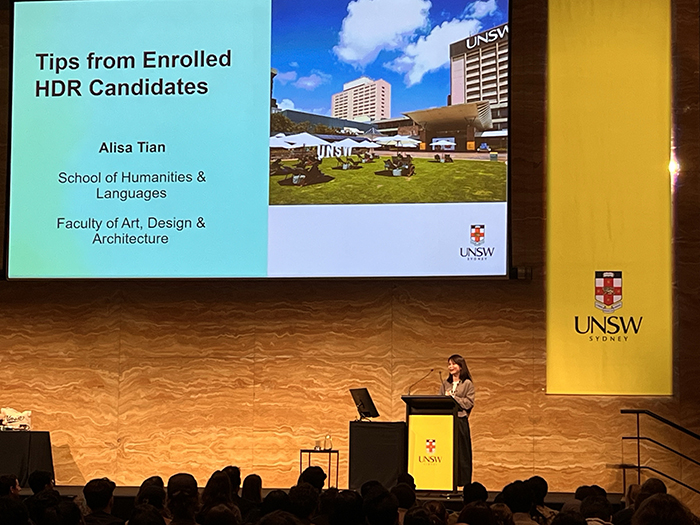
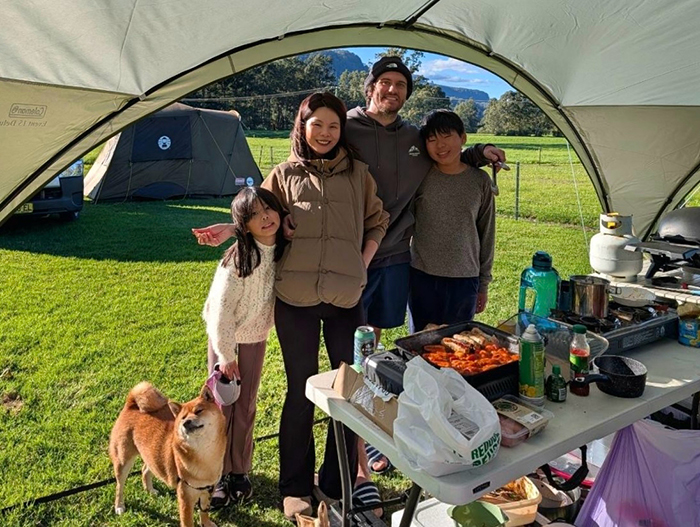
With her role at UNSW, her recently completed doctorate and her external translation and interpreting work, as well as a young family, Alisa says spare time is at a premium. Beyond work, she enjoys spending time with her two children and partner, who she met at a public UNSW event.
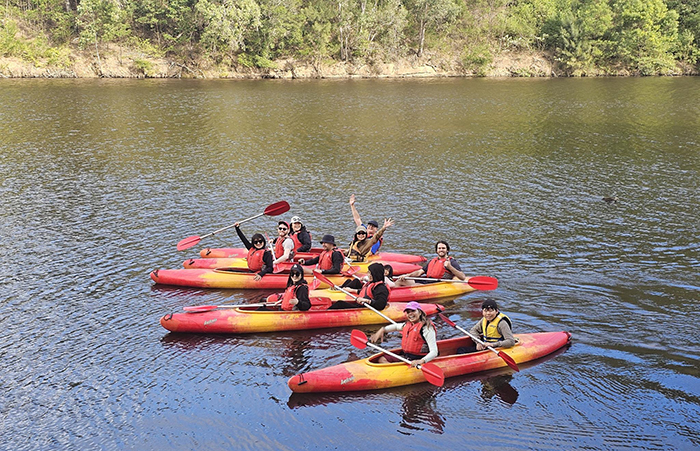
“We try to enjoy nature as much as we can. We’ve started camping, which is really fun.”
Alisa plans to visit family in China at the end of this year, after three years between visits. She’s excited to have more time, post-doctorate, for other aspects of life, including travel.
“Every time I go overseas, I come back feeling so grateful I chose to call Australia home because the nature and the multiculturalism we have are unique.”
What’s something about you that might surprise your colleagues?
I can bend my thumbs 270 degrees without feeling a thing. People often scream when they see it.
What’s the best advice you’ve received?
"Research is me-search" from my PhD supervisor Professor Mira Kim. I have gained much more than academic skills on my PhD journey because of the advice.
What makes you happy?
Nature, books and good coffee.
What day in your life would you like to relive?
The days that I welcomed my two beautiful children to the world – definitely the happiest days in my life.
What’s the best thing you’ve listened to in the past year?
A psychology podcast from Taiwan called Turn-Key Solution.
- Log in to post comments