
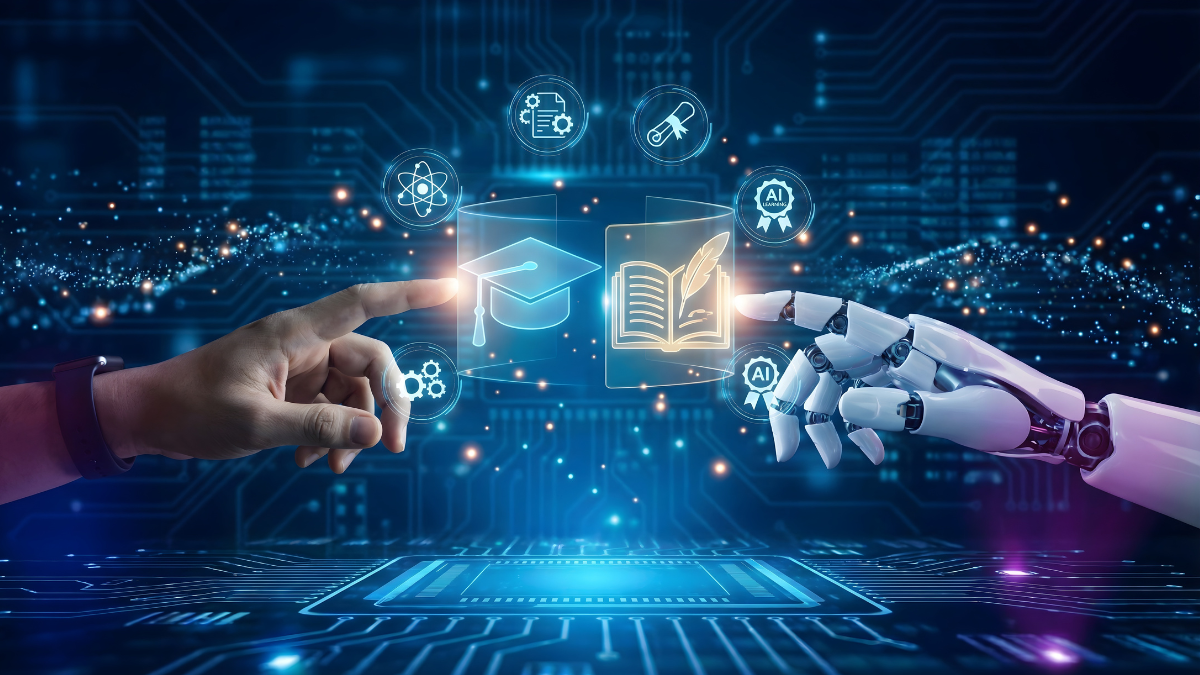
Lynn Gribble believes AI can exist alongside human connection in the classroom and have a meaningful impact for students.
Associate Professor Lynn Gribble is an Education Focussed Academic in the School of Management and Governance as well as a former Co-Lead of the AI Education Focused Community of Practice at UNSW Sydney. She is recognised nationally and internationally for her thought leadership in AI teaching and learning, and digital innovation practices.
“AI is here to stay, so we must adapt what we teach and how we teach it to prepare students for a world with AI,” Lynn says.
With a few adaptations and some fresh perspectives, she says that educators can meaningfully integrate AI into learning design while maintaining the human connection and critical thinking at the heart of teaching.
Rethinking education delivery
Lynn is bringing AI directly into her classroom. She sees it as a teaching partner, not a threat to education.
“We can rethink how we deliver content – what students do in the classroom with us,” Lynn says.

Rather than treating it as a search engine that simply relies on the information in the model, Lynn says that, used well, AI can become a ‘Socratic partner’, driving more curiosity, not less. It can help students probe deeper, test ideas and support further understanding. Instead of offering final answers, it can help users to ask better quality questions.
This rethinking might include replacing recorded lectures with interactive avatars or podcasts that students can interrogate in real time. Instead of passively consuming information, students could ask follow-up questions and explore alternative perspectives. The learning becomes an active dialogue rather than a passive listen at double or even triple speed.
In this model, the educator’s role becomes even more important. AI may support the exploration, but it is the teacher who guides interpretation, challenges assumptions and helps students evaluate the reliability of what they generate.
Co-teaching does not diminish the teacher, Lynn says, it reframes their role.
Preparing students for an AI-integrated workforce
Lynn says AI is not good or bad, it is just part of how we’re living now.
Students are going to be living and working with AI and, therefore, need to understand the affordances and risks. This also asks all of us to consider how disciplines are being and will be impacted by AI, and what the role of AI might look like in future industry.
“Educators need to take a step back and think beyond what they’re teaching to how that knowledge or those skills are used in the real world. Then, consider how AI has and will impact those skills,” she says.
“You must consider: What is the real work? And what should my students be able to do when they leave my classroom?”
Teaching students how AI impacts their disciplines means helping them understand both its capabilities and its limitations. It means preparing for jobs where AI integration is expected, not optional. Increasingly, graduates will be assumed to have a baseline AI competency from day one.
Taking the AI leap
For educators, the shift to co-teaching with AI can feel daunting, but Lynn says that confidence begins with understanding.
“It’s a little bit like if you didn’t learn to use a smartphone when smartphones came in,” she says. “Right now, you need to invest in yourself to know the AI basics.”
Lynn says all educators can ask themselves a few key questions about AI:
- How can it enhance learning?
- How can it make learning more equitable?
- How can we make learning more accessible through it?
Used thoughtfully, AI has the potential to personalise feedback, support students with diverse learning needs and remove barriers to participation. It can also offer new, creative ways to teach and learn that will improve classroom creativity and student engagement.
But Lynn is clear that the technology should not define the teacher.
“We need to consider all the ways we can use AI, but we don’t need to lose who we are in the process,” she says.
“Consider who you are and what your capabilities are, then decide how you can complement that with AI. It’s an aid, not a substitute.”
Co-teaching with AI means leveraging a powerful tool while preserving the core principles of learning at UNSW: transformative education, genuine engagement, social equity, and inspiring environments and systems.
As AI continues to evolve, so too must education. The challenge is not whether to engage with it, but how.
In Lynn’s classroom, AI does not replace the teacher. It sits alongside her.
- Log in to post comments