
Discover the steps we are taking to make our University a more disability inclusive place.
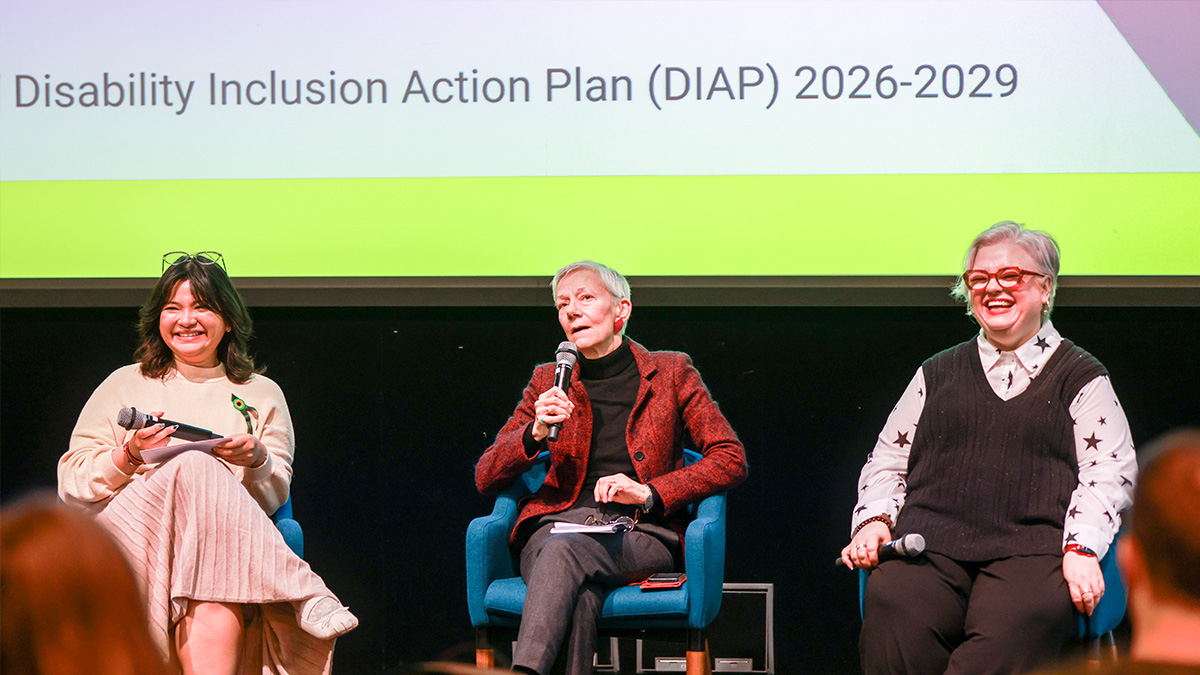
UNSW recently launched our new 2026-2029 Disability Inclusion Action Plan (DIAP).
We recognise that the diversity of our community is our greatest asset. It’s what makes us an innovative, world-leading university. We know that when we create environments that are accessible to all, our community thrives, and so does UNSW.
"UNSW is a community and our people our greatest asset. Excellence and innovation thrive when we ensure that our built and digital environments are accessible for all.
"The Disability Inclusion Action Plan continues the foundational work undertaken towards a truly diverse and inclusive UNSW community that welcomes and ensures full access and participation for students, staff and visitors with disability, said Professor Attila Brungs, UNSW Vice-Chancellor and President.
"In our previous DIAP [2023-2026], I committed to continuous review and improvement of our frameworks and strategic objectives. I’m proud of the work the team has done and continues to do as part of UNSW’s journey towards a truly diverse and inclusive community.”
Building on our progress
UNSW has already made important progress towards building an accessible and inclusive university. We were the first university in Australia to be assessed under the Autism Friendly Framework, recognised as a top 10 performer for the 2024 Australian Disability Network Access and Inclusion Index, and we’ve made it easier for Aboriginal and Torres Strait Islander students and students from lower socioeconomic backgrounds to access adjustments.
But we know there’s more to be done.
The Disability Inclusion Action Plan 2026-2029 builds on the progress we’ve already made, ensuring that inclusion is deeply embedded into our practices, environments, and processes.
DIAP 2026-2029
Our new DIAP has been developed over the last year, bringing together students and staff with lived experience of disability to make sure the plan was grounded in evidence, lived experience, and is responsive to the needs of our community. Through community engagement, we have identified four key pillars to guide our work. By focusing on our community, environments, societal impact and research, and embedding inclusion, we can bring about practical, meaningful results.
Every member of the UNSW community has a role to play in creating an accessible and welcoming environment for everyone. Inclusive Communities offer two short training modules to help you build your knowledge and awareness of disability inclusion.
The Accessibility@UNSW training includes a 15-minute module that builds foundational awareness about accessibility and experiences of disability, focusing on key concepts and terms, common barriers to inclusion, and how workplace adjustments work.
Find out more about Accessibility@UNSW training including how to sign up for the module or organise a one-off session for your leadership team.
UNSW also proudly supports the Hidden Disabilities Sunflower Scheme. You can complete the Hidden Disabilities Sunflower online training module to help increase your awareness of non-visible disabilities. Following the training you can get a sunflower supporter badge and signal your allyship. To take the module and get your supporter badge, find out how to sign up for training.
- Log in to post comments