
Dear colleagues
I’m delighted to share that UNSW has achieved our student equity and excellence target a year ahead of schedule, with one in four commencing domestic undergraduate students now coming from low socioeconomic backgrounds, Aboriginal and Torres Strait Islander communities and Gateway Partner Schools. This year also saw the highest intake through our Gateway Admission Pathway since it began in 2021, with close to 1800 students commencing through the pathway.

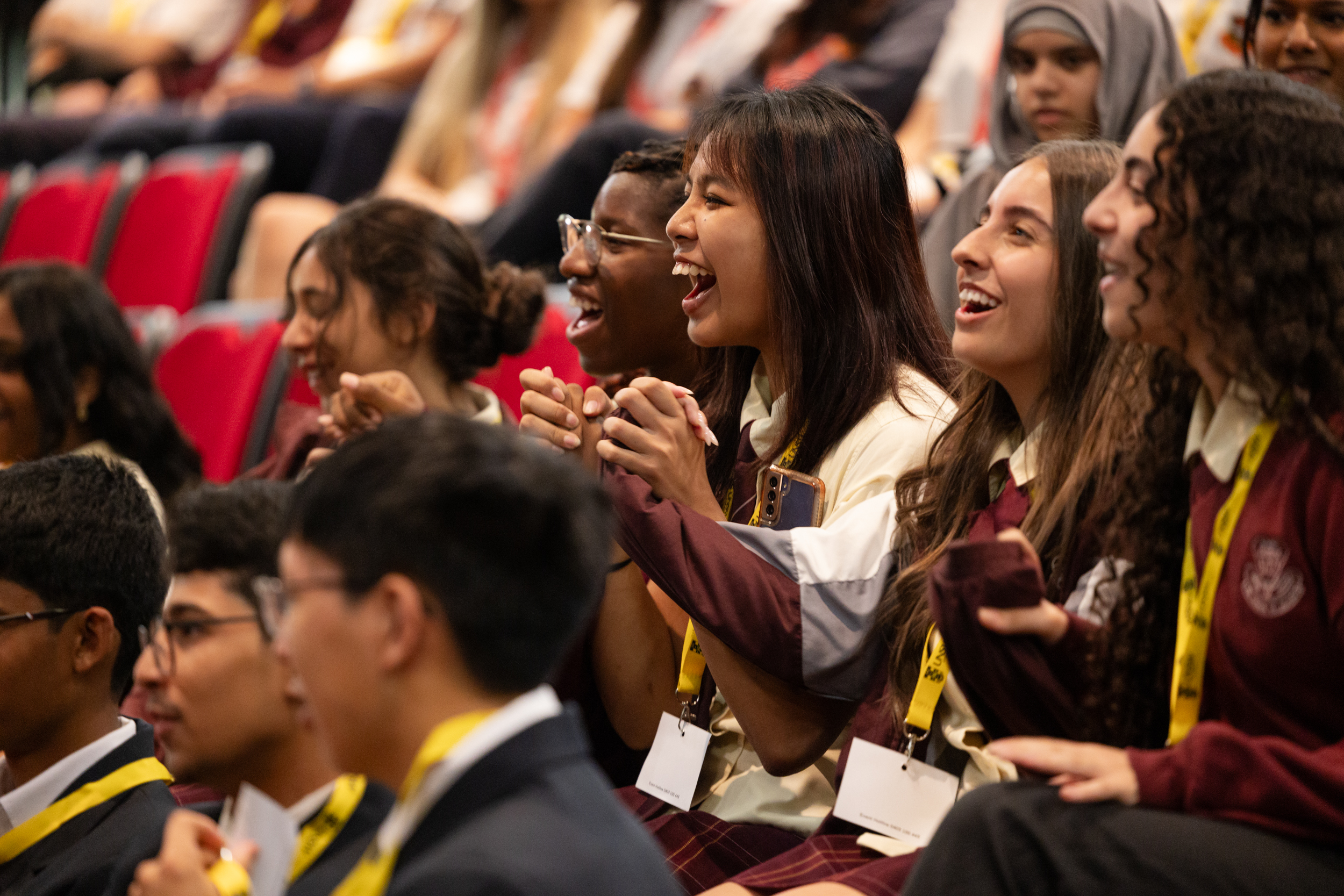
Importantly, these students are thriving at UNSW, with academic success and retention rates consistent with the broader student cohort. These numbers represent real journeys – students who may not have seen university as part of their future are performing at levels consistent with UNSW’s standing as a leading global university. This achievement reflects both the talent and ambition of our students and the dedication of staff across the University who continue to expand access to higher education and support student success. Their contribution at UNSW is a critical driver of our University's ongoing excellence.
By reaching our Widening Participation target, UNSW is demonstrating that equity and excellence go hand-in-hand. Broadening participation not only strengthens our University community, but it is vital for Australia’s future.
Programs such as UNSW Gateway demonstrate the impact of sustained, evidence-based engagement with schools and communities. Working with more than 400 socio-educationally disadvantaged schools across NSW, Gateway combines outreach, academic preparation, peer learning and financial assistance to assist students’ successful transition to university. The program’s holistic approach, including the contribution of current UNSW students from diverse backgrounds who help design and deliver the experience, strengthens our University community, expands opportunities and builds the future workforce Australia needs.
My thanks to Mary Teague, Director of Student Equity, for her leadership of this important work, and to the teams across Student Equity and the Widening Participation Working Group whose commitment and collaboration continue to expand opportunity and support student success across our University community.
Read more on the UNSW Newsroom.
Academic Success Monitor
Our focus on supporting excellence creates opportunities for lifelong careers and impact. The task now is to build on this progress – not just opening doors, but ensuring every student who walks through them is supported to thrive.
One example of this commitment is the Academic Success Monitor (ASM), an award-winning UNSW-developed learning analytics platform designed to help identify students who may be at risk of falling behind and connect them with timely support. Developed in-house by the Pro Vice-Chancellor Education Learning Analytics team, through collaboration with the Pro Vice-Chancellor Student Success, the Enterprise Data Office and IT, ASM reflects a strongly student-centred and evidence-based approach to teaching, learning and support.
Initially developed to support students at risk, ASM is already delivering measurable impact at institutional scale, now supporting teaching and learning across many UNSW courses. Convenors are using the platform to better identify and engage students who may need additional support, while early results point to improvements in student success outcomes and reductions in course failure rates. Importantly, the platform enables earlier and more personalised interventions, helping ensure students are not only admitted to UNSW, but supported to succeed once they are here.
The platform establishes a strong foundation for the future of personalised learning at UNSW. Over time, the same architecture will support skills development, personalised learning pathways, employability support and lifelong learning opportunities at scale.
Just as importantly, ASM reflects the culture of collaboration that underpins so much of the best work across our University. The project has brought together expertise from faculties, professional services, data teams and students themselves. It demonstrates what is possible when we combine deep care for students with innovation, design thinking and institutional partnership.
The successful implementation of our Progress for All strategy comes when achievements like reaching our Widening Participation target are integrated with programs like ASM which create a pathway from access to success.
National Reconciliation Week
Every year National Reconciliation Week takes place from 27 May to 3 June, commemorating the dates of the 1967 referendum and the High Court Mabo decision. At UNSW we acknowledge and celebrate the strength, resilience, cultures and contributions of Aboriginal and Torres Strait Islander peoples across Australia.
The theme of this year is ‘All In’. A list of events celebrating reconciliation week is available from Reconciliation Australia.
Keep your eye out for news of a student competition for creative contributions to run between Reconciliation Week and NAIDOC Week.
The impact of staff giving

I continue to be inspired by the generosity of our colleagues and their dedication to supporting the aims of our University. This was especially evident at the recent staff giving thank you event, which celebrated the meaningful impact that UNSW staff financial contributions have on our community, above and beyond their daily dedication of their time and skills to UNSW.
It was a pleasure to meet students whose lives have been positively shaped through staff giving, including Michael Kwan, a Civil Engineering student, Gateway Scholarship recipient, and winner of the 2025 Peter Farrell Cup People’s Choice Award. Michael shared his inspiring story and spoke about the opportunities that the scholarship has created for him.
Staff donations make a meaningful difference to the areas people care most about — from opening doors for students facing disadvantage, to enabling transformative educational experiences, and advancing pioneering research with local and global impact.
Please remember that every donation made by colleagues to internal UNSW causes is matched dollar-for-dollar by the University.
Thank you to all colleagues who are able to contribute philanthropically, in any amount.
Your support truly helps change lives. Find out more about Staff Giving.
There’s more to read Inside UNSW …
- As I mentioned in my last Inside UNSW newsletter, UNSW must continue striving to eliminate racism and religious vilification across our community, and drawing on the generosity, inclusion and diversity that define our University to create a safe and welcoming environment for everyone. A key part of this work is listening to the experiences of our students and staff. From Thursday 28 May we will host a series of listening sessions to help shape our Anti-Racism and Anti-Discrimination program and strengthen our collective efforts to drive meaningful change.
- UNSW has been awarded more than $9.1 million from the Australian Research Council (ARC) to support collaborative research projects addressing national priorities spanning biosecurity, sustainable farming, disaster resilience and quantum computing. Congratulations to all involved.
- UNSW PhD student and 2025 UNSW 3 Minute Thesis winner Tiana Wang, has been selected for the L’Oréal-UNESCO For Women in Science PhD Mentoring Scheme, recognising her groundbreaking RNA therapy research targeting incurable infectious diseases such as HTLV-1. Congratulations Tiana!
- Professor Dennis Stello and his team in the School of Physics are using AI to analyse massive starquake datasets and better understand the structure, age and evolution of stars. Read more in this edition’s AI Insider.
- This edition’s staff profile is Dr Prudence Gibson from the Faculty of Arts, Design & Architecture whose work examines how artists, writers and theorists can develop more respectful, imaginative ways of living with plants.
- The Learn to Lead 2026: Human Connection in a Digital World program, a free online course that helps build leadership skills in a changing, AI-enabled workplace, is now open to all staff.
Best regards
Attila
Professor Attila Brungs
- Log in to post comments