
The Dharriwaa Elders Group in Walgett and UNSW have developed an evidence-based alternative response to ‘youth crime’ that is receiving national attention.
An upcoming webinar hosted by the Yuwaya Ngarra-li team at UNSW will share the holistic, community-led model of youth diversion developed in Walgett as part of the University’s long-term partnership with the Dharriwaa Elders Group.
Communities and policymakers are grappling with how to effectively reduce children and young people’s contact with the criminal justice system and improve their wellbeing, health and education outcomes. This has become more urgent with recent media attention on ‘youth crime’, especially in regional areas, and increasingly punitive responses in some jurisdictions that are at odds with available data and research.
Supporting children and young people to thrive in their community was the first priority identified by the Dharriwaa Elders Group (DEG) in Walgett when they invited UNSW to collaborate with them in 2016 in what became the Yuwaya Ngarra-li partnership.
Since 2018, the partnership has developed and implemented the Baulaarr Bagay Warruwi Burranba-li-gu (Two River Pathway to Change) model. This approach recognises the protective factors of family, Community and Culture.
Using the model, the DEG coordinates holistic, flexible support for Aboriginal children and young people that works to avoid the criminalisation and marginalisation that can be a common experience in Walgett and elsewhere.
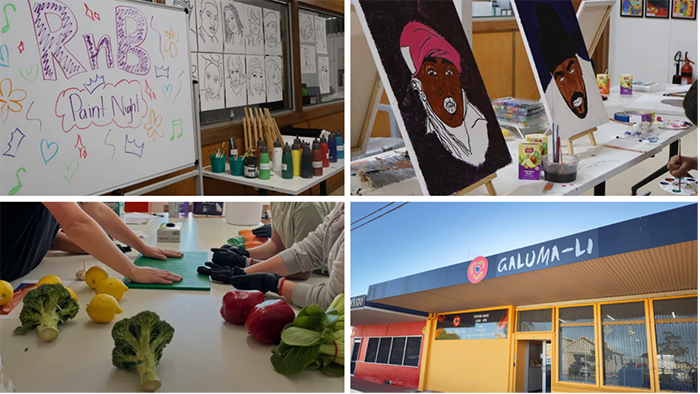
There is now a strong evidence base for the effectiveness of this work in improving the wellbeing of Aboriginal children and young people in Walgett. The model most recently featured in an Australian Human Rights Commission report, Evidence-based approaches to child justice.
The report includes six case studies grounded in research that provide evidence for alternative approaches to Australia's current punitive and harmful treatment of children and young people in contact with the justice system. Yuwaya Ngarra-li’s model is one of two featured from Australia.
The Australian Human Rights Commission selected The Two River Pathway to Change as a case study because, “The most effective and holistic services for First Peoples are those provided by Aboriginal-led organisations, who are more equipped to harness the strengths of First Peoples cultural and community knowledges to improve outcomes… The [Baulaarr Bagay Warruwi Burranba-li-gu (Two River Pathway to Change)] model centres the leadership of ACCOs [Aboriginal Community-Controlled Organisations] and has enabled a community-led approach that responds to the Walgett context to effect change.” (Australian Human Rights Commission 2025, p.24*).
Register for a webinar on developing the Two River Pathway to Change
Join a Yuwaya Ngarra-li webinar at 12pm on Friday 5 June to hear DEG staff and UNSW researchers discuss how the Two River Pathway to Change has been developed and refined since 2018, including the establishment of the Walgett Youth Wellbeing Service in 2024.
The team’s experience and reflections will provide valuable insight into a community-led, evidence-based method for responding to the needs of children and young people, families and communities and a tangible example of UNSW’s societal impact in action.
*Australian Human Rights Commission 2025, Evidence-based approaches to child justice. Supplementary paper to ‘Help way earlier!’: How Australia can transform child justice to improve safety and wellbeing.
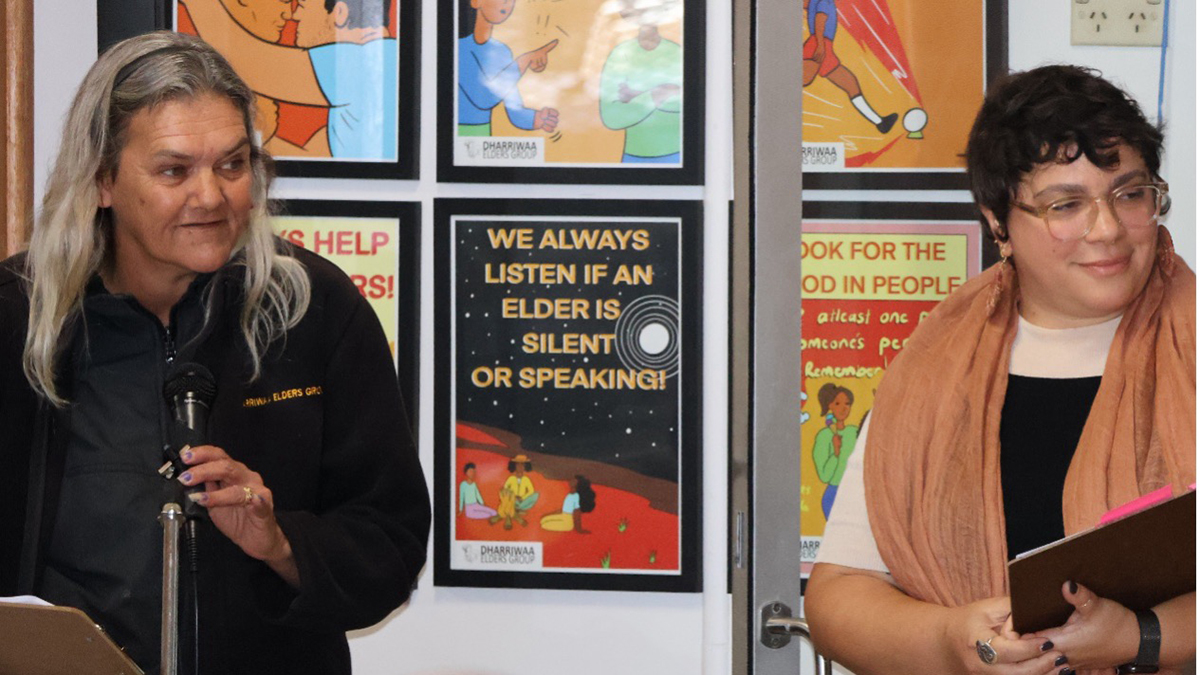
Main image: Vanessa Hickey, DEG Community Response Lead, and Peta MacGillivray, UNSW Senior Research Fellow, at the launch of the Galuma-li community hub in Walgett that houses the Youth Wellbeing Service.
- Log in to post comments