Dear colleagues
Last week, we celebrated the UNSW Staff Service Awards, recognising colleagues who have reached remarkable milestones of 10, 20, 30, 40 and even 51 years with UNSW. What a wonderful achievement! These dedicated members of staff have witnessed and contributed to decades of change and progress, helping to shape UNSW into the world-leading university it is today. It was a real delight to talk to colleagues across all parts of the University and hear about the ways, large and small, they make UNSW a better place to be, and ensure UNSW makes the world a better place to be. Hearing about both the change at UNSW but also the consistency from colleagues with firsthand perspectives of the past decades here was deeply thought provoking.

Above: UNSW Community Contribution Award winner Chaplain Mahmoud Jaame receiving his award from UNSW Vice-Chancellor and President Professor Attila Brungs.
This year, 408 colleagues reached service milestones — representing more than 7500 combined years of commitment to UNSW. My heartfelt thanks and congratulations to all of you. As I said in my speech, and frequently say, UNSW is extraordinarily fortunate in our people and the way we all contribute to our vibrant community. One highlight was the induction of five colleagues into the inaugural 50 Year Service Club, each receiving a commemorative blazer in recognition of their extraordinary contribution. Congratulations Associate Professor Richard Morris, Scientia Professor Ken Trotman, Scientia Professor Gordon Parker, Scientia Professor Martin Green and Scientia Professor Fred Westbrook who are now members of this exclusive club.
This year also marked the introduction of a new honour — the UNSW Community Contribution Award — recognising individuals whose dedication and impact have strengthened our community. It was a privilege to present Chaplain Mahmoud Jaame with this inaugural award. Mahmoud has been part of the UNSW community for more than 30 years, supporting students and staff of all faiths and fostering inclusion through his leadership as both Muslim Chaplain and Religious Centre Coordinator. His work has enriched the spiritual, social and emotional wellbeing of our students and deepened understanding across communities.
The other Community Contribution Award recipient, the Hon. Michael Kirby AC CMG, was unfortunately unable to attend the ceremony. He too has made an outstanding contribution to UNSW and to the broader community. Together, these awardees exemplify the values of service, integrity and community that define UNSW.
Celebrating creativity and community spirit at the UNSW Culture Awards
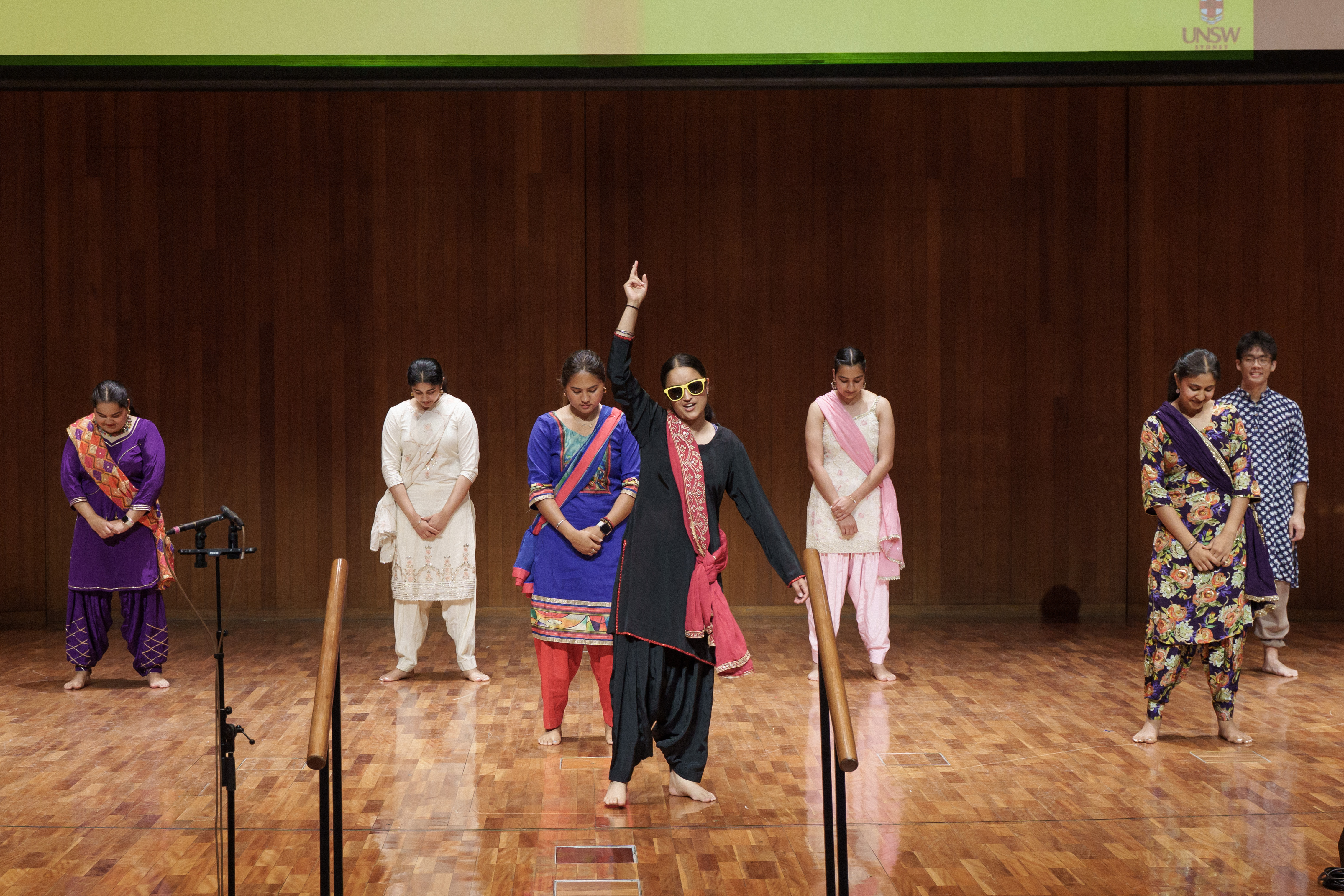
Above: The Punjabi Society perform at the UNSW Culture Awards.
It was a great pleasure to attend last week’s UNSW Culture Awards which recognised the individuals and student organisations who have made significant contributions to creativity, community impact and cultural life on campus.
Participation in our cultural programs reached inspiring new heights in 2025, reflecting the growth and extraordinary breadth and depth of cultural activities at UNSW. Entries for the Art Collection Writing Prize grew by 50%, with students from every faculty taking part. Our music ensembles now bring together around 690 members — including plenty of enthusiastic engineers, unlike when I was an engineering student here — who delivered nearly 300 hours of rehearsals to support 17 public performances. Across the year, more than 4500 participants engaged in cultural programs, events and religious activities, highlighting the inclusivity and energy that define the UNSW experience.
This year’s ceremony included 20 awards, recognising recipients who have helped make our campus come alive through art, music, storytelling and cultural connection — and who have shown extraordinary commitment to making a positive difference in the lives of others. Congratulations to all our nominees and award winners!
Staff Insight Survey results
You will have received an email from me and Chief People Officer Gemma Martin on Monday about the staff Insight Survey results. Again, thank you to everyone who took part in the survey. Our overall engagement was 73%, which is 5 percentage points higher than the 2023 Insight Survey for fixed-term and continuing staff and 9 percentage points higher than the average for Global Higher Education institutions.
Thank you also to everyone for the hard work and dedication to responding to the 2023 survey and making appreciable improvements. I know sometimes it is not easy in a complex organisation like a university, but the willingness of colleagues across all parts of the University to not just identify problems, but to personally commit time and energy to improvements, speaks volumes about our community.
This commitment from so many of us clearly demonstrated the ability of UNSW to take action, in fact our score for “seeing action as a result of the survey” improved by over 25% or 10 points, and though we still have a long way to go on this measure, we can be proud of our forward momentum.
Based on the Insight results we are analysing and further refining our triennium strategy roadmap and next year’s annual plan to incorporate these critical insights. Like 2023, listening to the survey, ULT has also agreed on two priorities that will guide our focus next year.
First, we will seek to improve the day-to-day experience of work. This includes simplifying systems and processes, strengthening workforce planning, and setting clearer expectations of leaders around designing healthy, sustainable work (a core part of Pillar 4 and 5).
Second, we will lift the quality of coaching, performance, development and recognition. We want every staff member to feel supported to grow and to have meaningful, future-focused conversations with their leaders, not just once a year but throughout the year.
In addition to these priorities, we will continue the work already underway to improve the experience of casual staff, who make up a significant and vital part of UNSW.
Probably the most important role of the survey however is the insight it provides to local areas. Over the coming months, colleagues across the University have the opportunity to analyse local insights and develop plans for the next two years which address the most pressing issues or largest opportunities for each group. Read more in this edition of Inside UNSW.
Connecting with alumni and partners in Southeast Asia
I had the great pleasure of visiting Indonesia and Singapore recently to meet our impressive alumni and explore new collaborations in education, research and innovation.
It was a privilege to join alumni in Jakarta at an event hosted by Australia’s Ambassador to Indonesia Rod Brazier, and to hear from the Honourable Meutya Hafid, Indonesia’s Minister of Communication and Digital Affairs and a proud UNSW alumna, and to meet with Nur Fatmah Syarbini, UNSW’s Country Director in Indonesia, and the team.
I had the opportunity to meet with the Indonesian Higher Education Minister, Head of the Indonesian Education Department and Director of Transformative Education to discuss how UNSW through partnerships on multiple on-ground facilities, online and hybrid microcredentials can support Indonesia’s education aspirations at scale.
In Singapore, I met with leaders from Nanyang Technological University and National University of Singapore to explore opportunities for collaborative research and teaching exchange. This marks two years that UNSW has had an on-ground presence for our startups in Singapore and it is going from strength to strength.
UNSW Founders also hosted the first Singapore edition of our Pioneering Investor Series, connecting Southeast Asia’s investment community with breakthrough technologies emerging from UNSW.
With more than 70 years of partnerships and collaboration, our regional ties continue to drive meaningful societal impact.
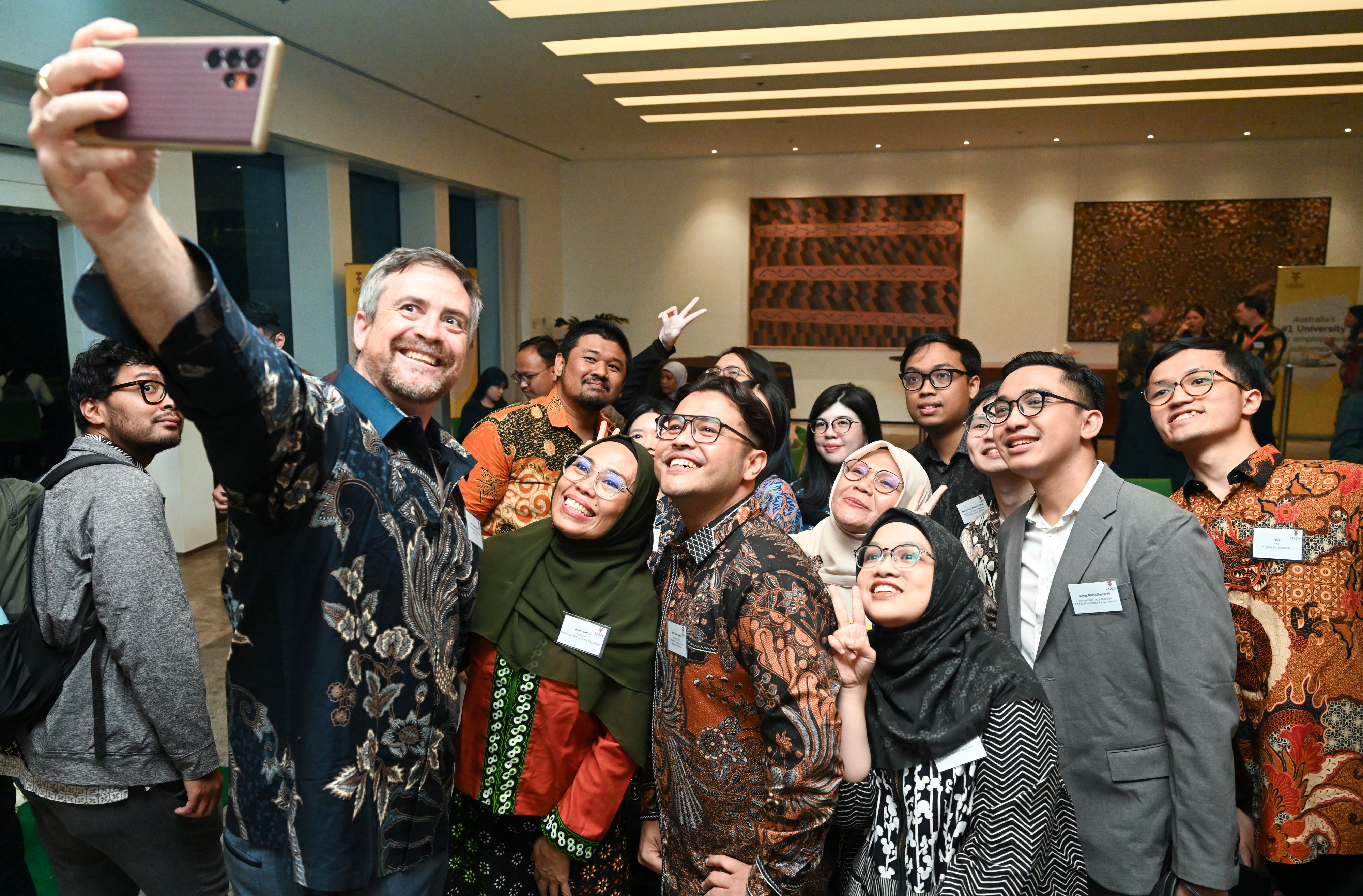
Pictured top: UNSW Alumni event in Jakarta
UNSW City Futures Research Centre celebrates 20th anniversary
UNSW’s City Futures Research Centre celebrated its 20th anniversary in October – an event I was unfortunately unable to attend due to travel commitments. The celebration recognised two decades of research excellence, innovation and societal impact, showcasing how the centre is helping to create more sustainable, equitable and liveable cities. The centre partners with more than 100 businesses, government and community organisations in Australia and internationally – translating research into practice, innovation and real-world solutions. Congratulations to City Futures Research Centre Director, Scientia Professor Chris Pettit and to Professor Bill Randolph who served as the first Director of the City Futures Research Centre until stepping down in 2020, and to everyone who has contributed to the work of the centre over the past two decades. Read more on the UNSW Newsroom.
Showcasing UNSW’s leadership in sustainability
UNSW hosted an interactive SDG Showcase last month, which I was sorry to miss while travelling in Southeast Asia. The interactive event highlighted how UNSW is advancing the UN’s Sustainable Development Goals (SDGs) through research, innovation and collaboration. As a global sustainability leader, UNSW is addressing some of the world’s most pressing challenges. From solar car innovation to seawall restoration, our researchers are turning bold ideas into real-world solutions, which starts right here on campus. I’m continually inspired by the remarkable work across our community as we empower the next generation of leaders to drive the transition towards a more sustainable future. Read more on the UNSW Newsroom.
There’s more to read Inside UNSW…
- UNSW Medicine & Health’s pilot Simulated Patient Program lets students develop their communication skills using AI-based simulations anytime, anywhere. Read more in this edition of AI Insider.
- This edition’s staff profile is Craig Leonard, former policeman turned UNSW Senior Security Manager who is committed to keeping our community safe.
- UNSW researchers have secured more than $35 million from the Australian Research Council (ARC) for 54 Discovery Projects that will generate knowledge and deliver cultural, social and economic benefits for Australia. Congratulations all!
- Congratulations to Dr David Khoury from the Kirby Institute at UNSW who was awarded the Prime Minister’s Prize for Science in recognition of his work using mathematical models to guide treatment for malaria, COVID-19 and mpox.
- Congratulations to Professor Valsamma Eapen, Professor Alta Schutte, Scientia Professor Julian Trollor and Conjoint Professor David Ziegler who have been elected as Fellows of the Australian Academy of Health and Medical Sciences and Professor Benjamin Newell, Emeritus Professor Hal Pawson, Professor Jan Breckenridge and Professor Angela Nickerson who have been elected as Fellows of the Academy of Social Sciences in Australia. This is fitting recognition of your outstanding achievements in your respective fields.
Best regards
Attila
Professor Attila Brungs
Vice-Chancellor & President
- Log in to post comments