Looking behind the scenes of the intensive program preparing UNSW academics for the world of public performance.
For the last 10 years, the UNSW Centre for Ideas (CFI) has invited selected researchers, academics and PhD students to step on stage and share how their research is making the world a better place. But it takes more than a light-bulb moment to engage the public with big ideas. Over several months, participants workshop their field of expertise through a series of content and performance skills classes until their idea is ready to be presented in an evening of live talks.
Now in its 10th year, the One Big Idea program has become an invaluable launchpad for emerging talent and a key platform for established thought leaders. Ahead of the One Big Idea: Tenth Anniversary Special, the CFI team sat down with Dr Alison Goldingay, a Postdoctoral Fellow at UNSW and Founder at QuantaLumi. Her work sits at the frontier of quantum physics and quantum optics. An alumna of the 2025 program and one of this year’s return speakers, she shares her experience with the months-long process to make a big idea fit for the public.
1. Why did you apply to the program?
I was actually at home sick, thinking about what I was doing in the lab and then thinking about how I really missed talking about my work and doing outreach. I think I saw the One Big Idea program in an email and thought I’d just throw my hat in the ring. I didn't expect that much of it, so was quite surprised when I was invited to be on the program.
2. What might people be surprised to learn about the experience?
You don't need to know what you're going to talk about on the stage when you apply or even in your first scripting session. It's okay, that’s the journey. It's about finding your voice. In the application, I talked about the nature of the experiments, about how cold we take our samples, which is basically as cold as you can get according to physics. And then I came to the first meeting with this script about quantum computers and it was good, but it was what every physicist was saying about quantum. I had to explore how my perspective gave something that people hadn't heard before.
What's always inspired me is the importance of wonder and awe. We get to do amazing things in the lab and sometimes we forget that they're amazing if we're doing them every day.
My grandma inspired me to have my mindset of wonder. I wanted to bring that same mentality to the audience through my talk and encourage them to take something familiar – light – and consider how amazing it is. We are never too old to learn something new, and to marvel at how fascinating the world is.
3. How did it feel to step on stage to present?
I've been performing all my life as a singer. I was in the Sydney Children's Choir and Gondwana Choirs, Australia’s national youth choir with whom I have travelled nationally and internationally. These days I am part of Sydney Philharmonia’s VOX choir. Obviously, performing as a group is a little different than by yourself.
I was actually less nervous than I thought I would be because the program prepared me really well. There were a lot of lead-up sessions which helped me to feel confident on the night. There's an aspect of performing which means that your nerves and your excitement are the same physiological response. Reframing my mentality from nerves into excitement helped. And I was excited because my family and friends were there and I could show them what I've been working on.
4. What has been the impact of the One Big Idea program?
This has been a really great platform for me to contribute a new perspective to the wider online discussion about quantum. It's meant a lot for me and my professional identity.
For the live event, having people sitting in front of you really makes your performance come alive. But I think the digital presence is a powerful part of the program as well. It’s been great to be able to share the video of my presentation with my friends and family, and it has helped them to understand some of what I'm doing. It has also built my public profile online, which has been incredibly helpful.
5. Any advice for UNSW staff, students or researchers looking to communicate their research with the public?
Storytelling is a really important part of our job. It's important that we make sure our work can be celebrated publicly. At the end of the day, that's what being a scientist is all about – learning about our world, using that knowledge in a way that improves our lives, and sharing that with people.
It’s also important to do these kinds of programs sooner rather than later. As soon as you learn these skills, you can start putting them into practice. It's about investing in yourself as a professional development activity. You don't have to get it right the first time, it's experimenting and seeing what works. You never know what will happen next.
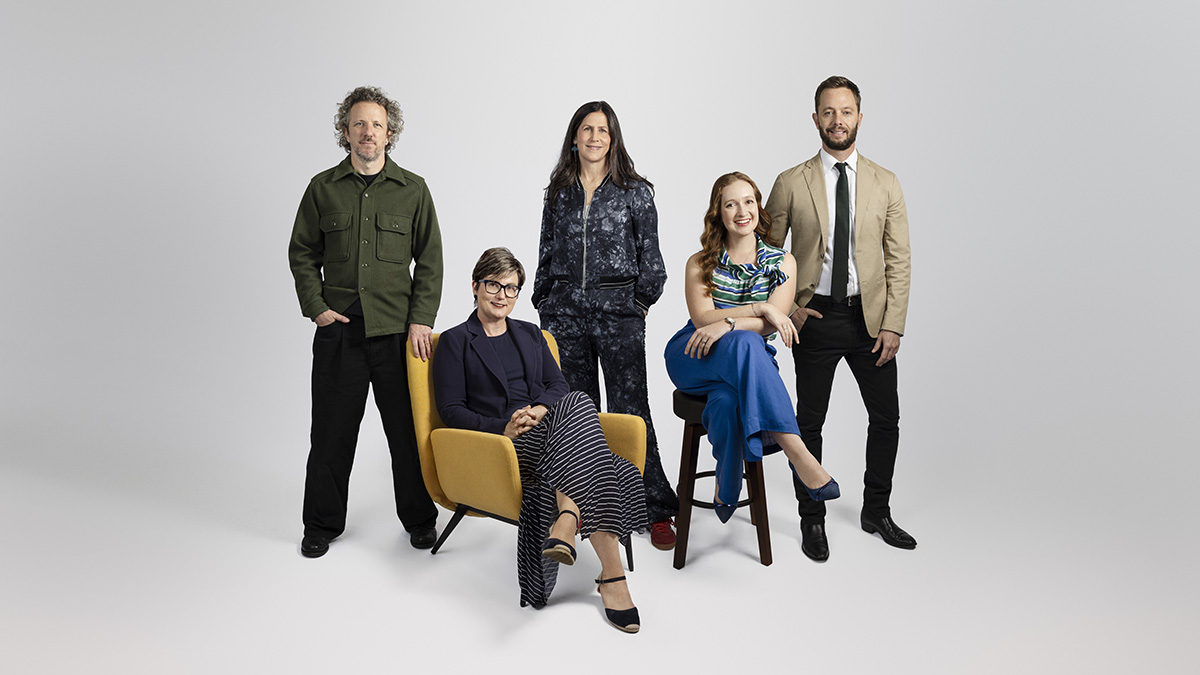
On Tuesday 3 November, see Adam Bayes, Alison Goldingay, Rosalind Dixon, Michael Richardson & Adriana Vergés live at the Sydney Opera House.
- Log in to post comments