
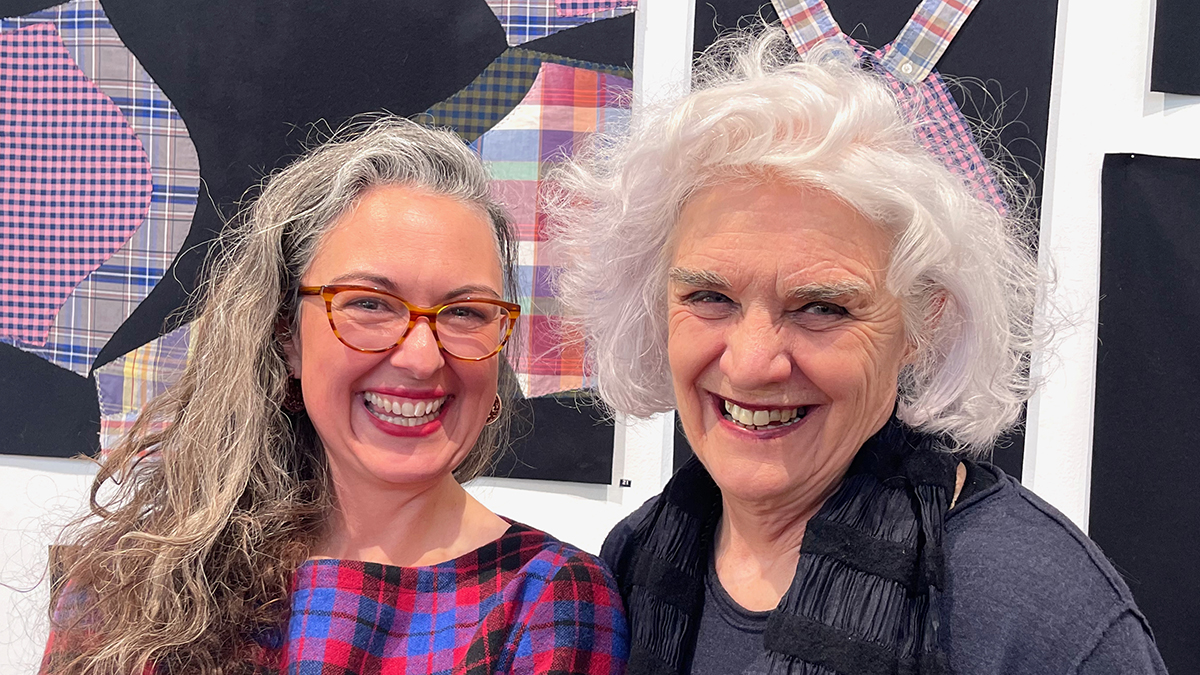
The Education Focussed Academic’s love of textile design was an unexpected discovery during her undergraduate degree.
Emma Peters is an Education Focussed (EF) Lecturer leading the Textiles Discipline in the School of Art & Design.
Born and raised in Sydney, her connection with UNSW began when she studied her Bachelor of Design at the University.
“I’ve been a long-term subscriber to UNSW,” she says.
She didn’t start her degree intending to focus on textiles.
“Early on, I hadn’t conceived of textiles as a viable creative discipline or career. It was only during my second year – queueing up to enrol and missing out on my initial preferences – that I turned to textiles. What began as happenstance became the foundation of my practice and career.”
While her love of textile design was an unexpected discovery, Emma says she was always a “maker” and grew up in a creative home alongside her three sisters.
“My creative foundation came from both sides: my feminist mother, who encouraged making without the traditional domestic expectations of sewing buttons or hems, and my father, who swapped playground trips for visits to art galleries. We were lucky to have our curiosity and creativity supported so unconditionally.”
That creative childhood has continued to inform her own practice as both a textile designer and artist.
“Textiles are a language of memory, stories and human connection. That emotional durability is at the heart of meaningful sustainability. When an object becomes tied to a person or an experience, we value it enough to keep it in circulation.”
During her studies, Emma met Liz Williamson, her future mentor, who was Head of Textiles at the College of Fine Arts (COFA), now the School of Arts & Design.
“My trajectory was profoundly shaped by tutors who saw promise in my work. Having mentors who recognise your potential creates the psychological safety and trust to step fully into your creative identity. I carry that into my own teaching today.”
After graduating, Emma worked as a commercial textile designer, creating patterns and prints for bed linen.
“I’d paint, draw and photograph motifs and then put them into the computer and into repeat. We’d work with manufacturers and talk to them about how to best create the design.”
It was Liz Williamson who first suggested Emma return to UNSW as a teacher.
“She was looking for casual tutors who brought real industry experience into the studio. After about 10 years of casual teaching, she persuaded me to do a Master’s degree under her supervision.”
With Liz’s retirement in 2020, Emma moved into an ongoing EF Academic role at the University.
“At the same time, I began my PhD at UNSW.”
Starting her full-time academic career during the pandemic presented unique challenges.
“In the studio, our four-hour classes always fly by, but when everything shifted online, maintaining that four-hour block was an immense challenge for students. When several mentioned our class was the one thing anchoring their week because the cohort came together, it motivated me to transform that virtual space into a truly connecting experience rather than just a marathon screen session.”
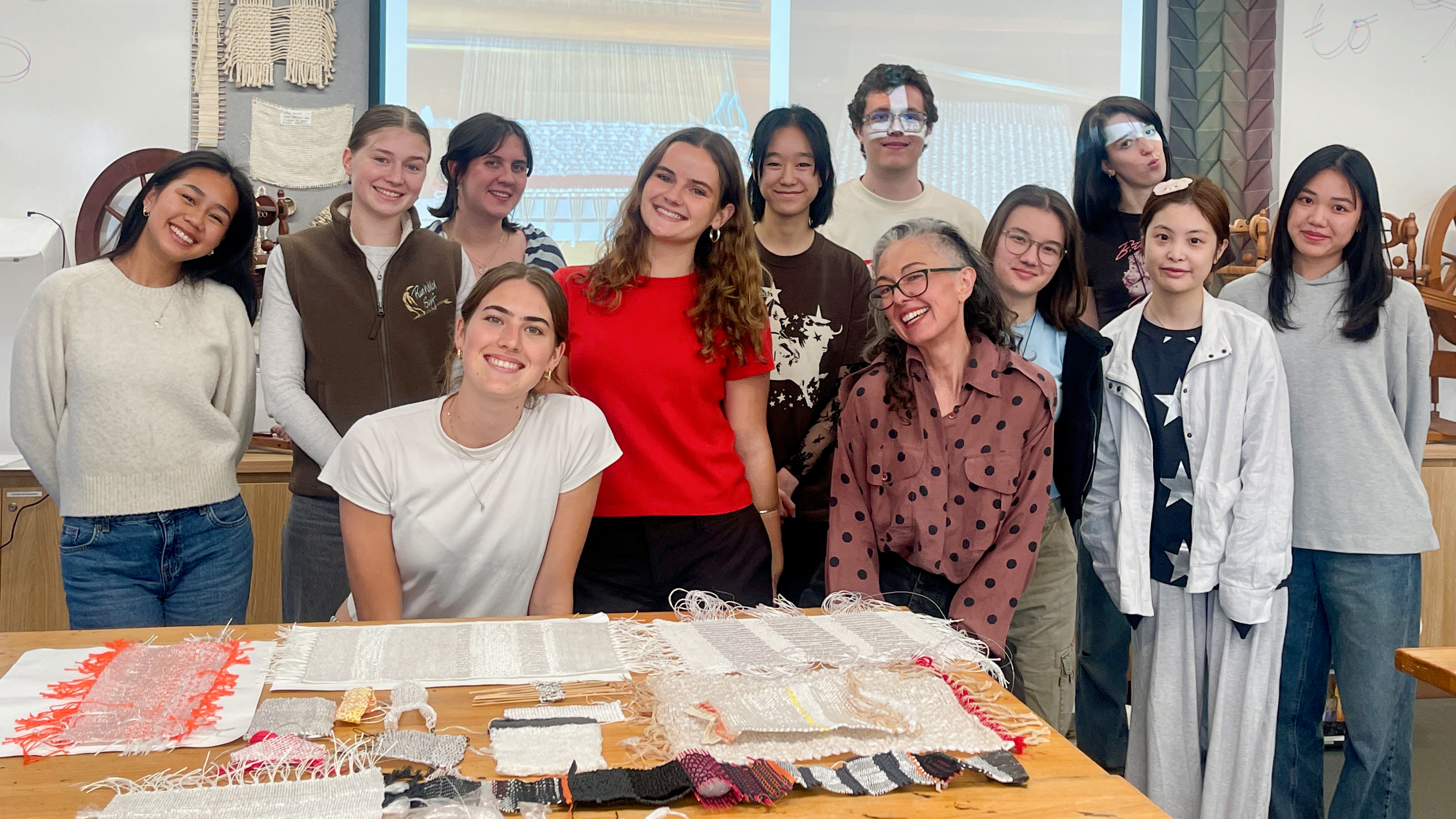
Creating impact through practice
Textile design is about more than creating fabric. It’s a critical practice shaping cultural narrative, sustainable systems and positive social impact.
“We explore weaving, knitting and felting alongside cutting-edge material innovations such as bioplastics, continually expanding what it means to construct a fabric,” Emma says.
Physical textile products can exist for many years, so sustainability is a key concern in educating future designers. So too is navigating cultural appropriation in past textile design practices.
“Disrupting a system with such an immense impact on communities and place demands creative courage. We aren’t training students to design for landfill. We’re preparing them to champion cultural integrity, material sustainability and genuine social impact.
“Through our EF-funded project, Embedding Cultural Awareness in Textile and Fashion Curricula, we’re collaborating with Monica Boța-Moisin and Nicole Crouch from CIPRI (Cultural Intellectual Property Rights Initiative) to address our own biases first. That will allow us to hold safe conversations with students, empowering them to celebrate their own heritage without relying on extractive design practices.”
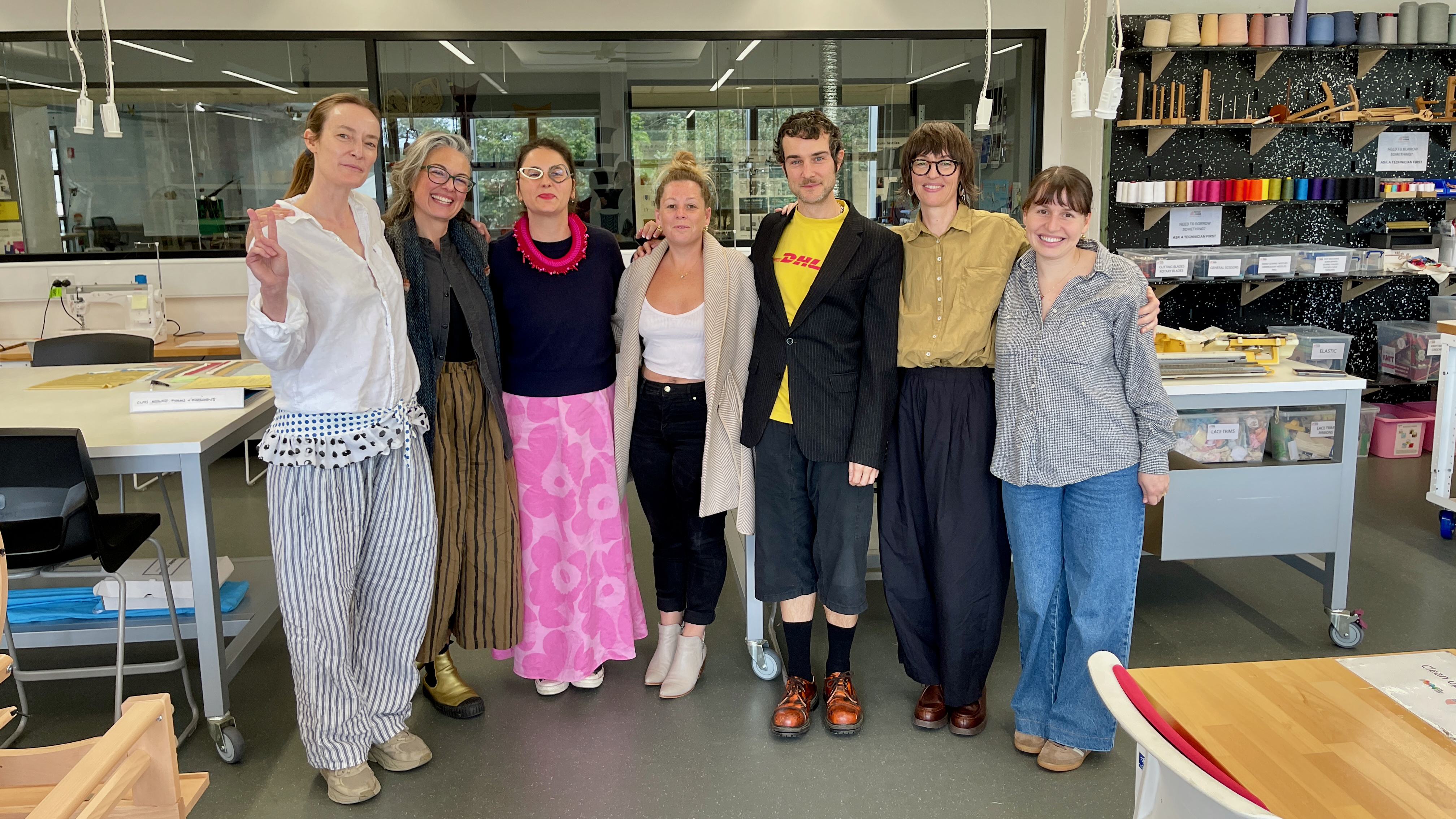
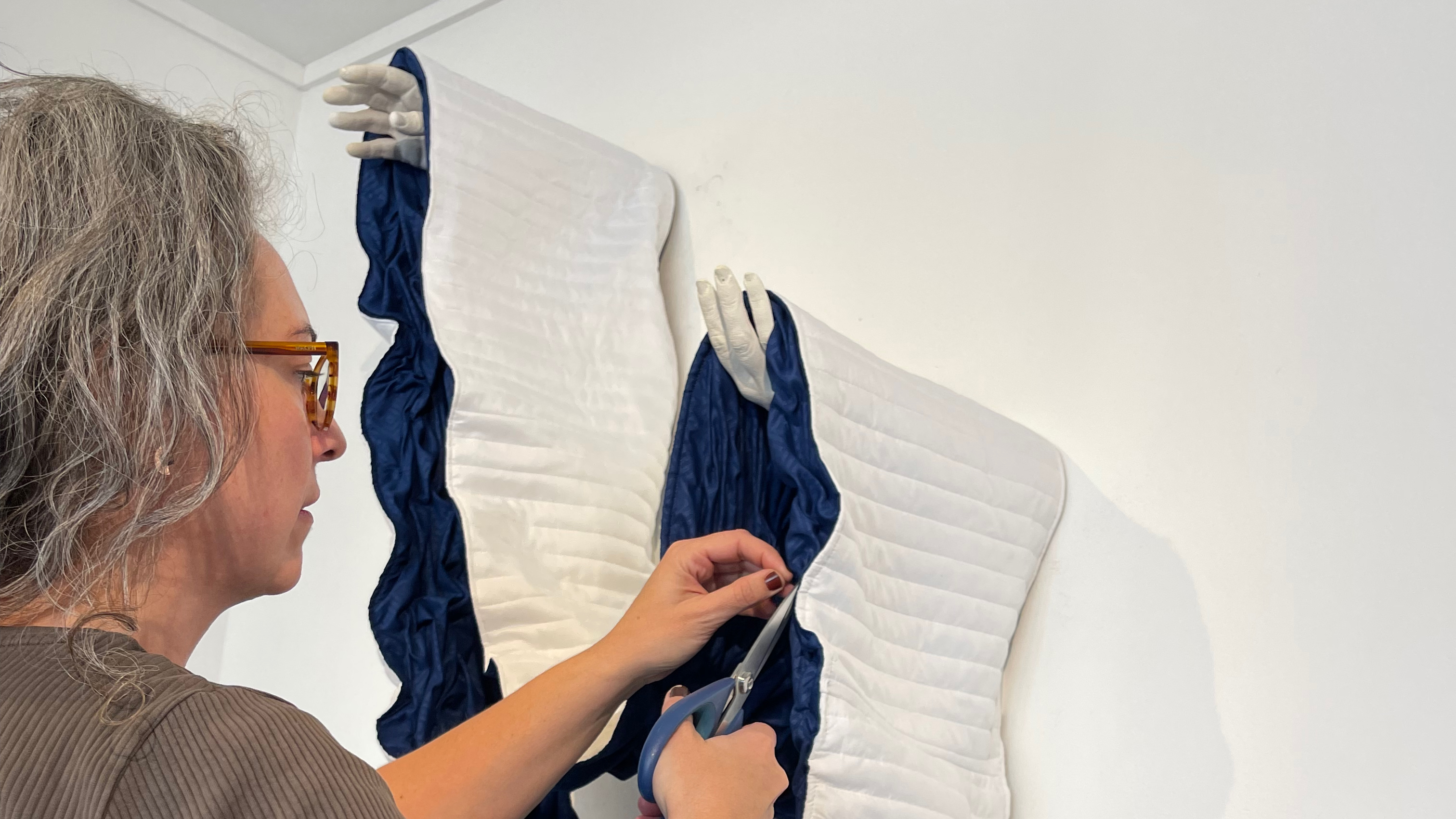
Emma’s doctoral research focuses on how we might revalue bed linen after its original use.
“Bed linen has almost no viable second-hand market, despite being a high-grade textile. Rather than rushing into conventional product design, I focus on experimental methods to unlock the untapped potential of this overlooked material.”
Emma says her own work sits between design and art, and she continues her art practice beyond UNSW.
“Even while working in professional studios and education, participating in art collectives, joint exhibitions and markets has given my work a clearer social purpose. Collective making and slow, meditative techniques like hand knitting allow me to explore craft as a collaborative language of care, connection and shared culture.”
Her ongoing practice and pursuit of societal impact mirror her sisters’ lives and careers.
“They started in creative disciplines and brought that mindset into unexpected areas. One transitioned from art history to driving change in the VET space, another moved from photography into social work, and our third sister shifted from advertising into mental health project management. It shows that creative literacy isn’t confined to studios and making. It’s a vital tool for community transformation.”
Emma says her interests outside work are now closely aligned with her kids, who are 13 and 11.
“I love that our interests intersect so naturally. From riding local bike trails with my son to collaging and browsing zine fairs with my daughter, having kids gives you a built-in buddy for every creative adventure.”
What’s something that might surprise your colleagues?
Despite leading a discipline centred on cloth, if you ask me to sew a garment from scratch, we’re both going to end up in tears.
What’s the best advice you’ve received?
Sustainable careers aren’t built on strategic climbing, but on creative integrity, following what sparks genuine passion, choosing collaborators based on character and shared values, and always making time to create just for the joy of it.
What makes you happy?
Quiet time in the studio to experiment without an agenda, paired with the joy of seeing others connect with their creative agency.
What day in your life would you like to relive?
A day when my grandparents were alive. I’d go for a walk with my Pom-Pom, my grandfather, on the farm. To have another day with him would be amazing.
What’s the best thing you’ve read in the past year?
A Language of Limbs by Dylin Hardcastle, who is a UNSW PhD.
- Log in to post comments